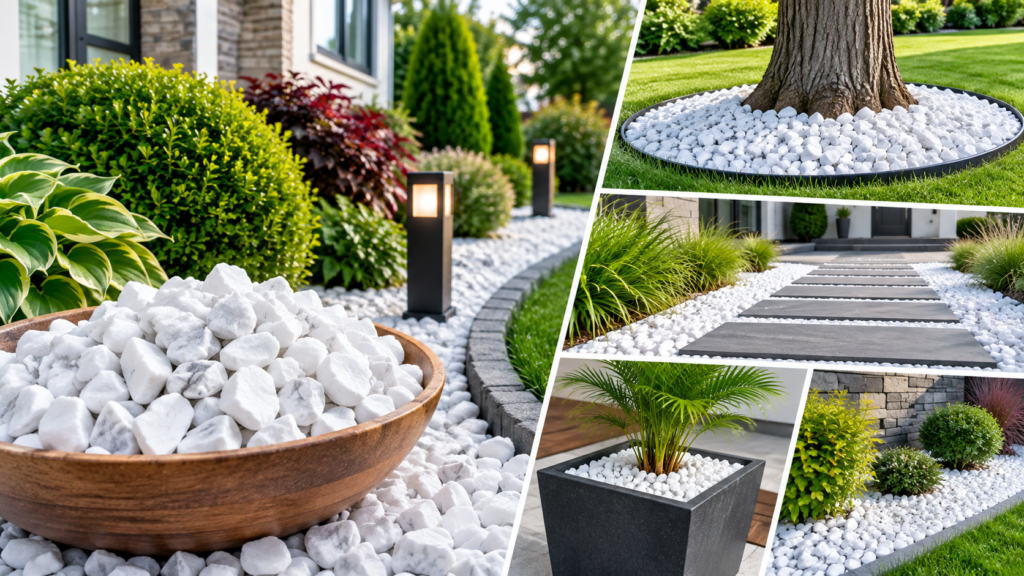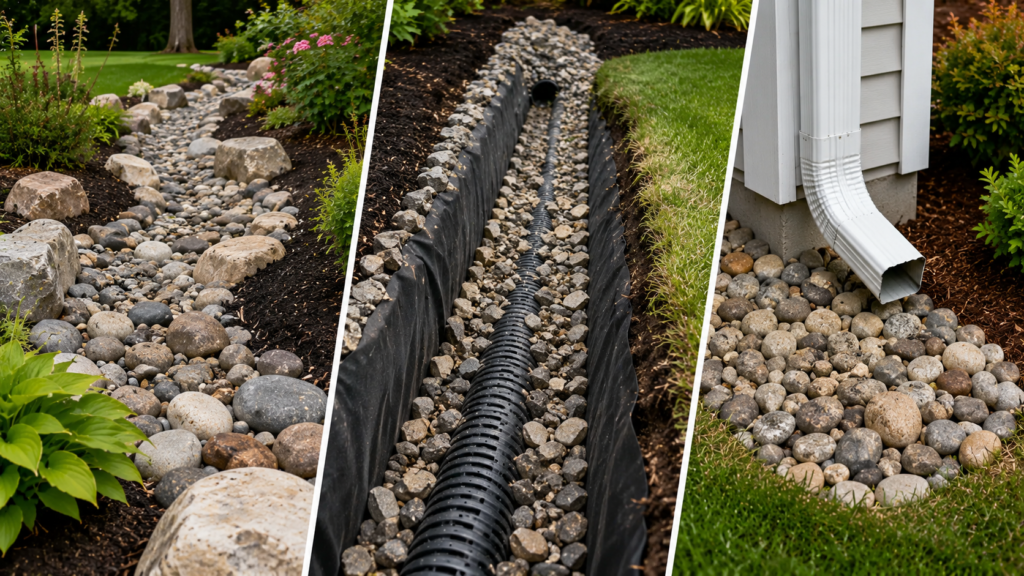
A homeowner walks their beds, looks at what’s left of last year’s mulch, and asks us the same question we’ve heard a thousand times. Rock or wood- which one actually makes sense for their yard, their budget, and the time they’re willing to spend out there on a Saturday?
Our crew at KD Nursery has installed both across more yards than we can count, and we’ve watched both hold up (and fail) in every kind of Western New York bed you can imagine, from tight foundation strips to wide-open perennial borders.
So here’s the honest breakdown, no sales pitch, just what we tell our own customers when they ask us this exact question over the fence.
The stone mulch vs wood mulch question isn’t really about which material is “better.” It’s about which one fits how you use your yard. A bed that gets fresh eyes every season handles wood just fine.
A bed you want to set and mostly forget is where rock earns its keep. Once you understand the tradeoffs, the decision usually makes itself.
Upfront vs Lifetime Cost
Wood mulch is cheaper to buy.
That part’s not close.
A yard of shredded hardwood or dyed mulch runs a fraction of what the same coverage in stone costs, and for a lot of homeowners that first invoice is the whole decision right there. But cost isn’t a one-time number; it’s a number that repeats every year you own the house.
Wood breaks down.
That’s the whole point biologically: it feeds soil long-term while decomposing, though initial nitrogen gets temporarily tied up; you’re buying it again next spring and probably the spring after that. Over five or six years, the wood you keep re-buying often costs more than the stone would have cost once.
Stone doesn’t disappear. It doesn’t rot, it doesn’t blow into your neighbor’s yard in a windstorm, and once it’s down correctly with fabric underneath, you’re not writing that check again for a long time.
So when people ask us about rock vs mulch purely on price, we tell them the truth. Wood wins the first year. Stone usually wins every year after that.
Weed Control
This is where we see the most disappointment, honestly.
People assume rock is a weed-proof surface, and it isn’t, not on its own. What actually stops weeds is the landscape fabric underneath, and that fabric works whether you’ve got rock or wood sitting on top of it. The rock’s real advantage is that it doesn’t break down into a soil-like layer that gives weed seeds somewhere to root.
Wood mulch, especially once it’s a couple of years old, starts acting a little like topsoil. Seeds land in it, find moisture, and take hold. We’ve pulled maple seedlings out of three-year-old mulch beds more times than we’d like to admit. Rock doesn’t offer that same foothold, so windblown seeds mostly just sit on the surface and dry out before they can establish.
Neither one is maintenance-free. Both need occasional spot treatment or hand-pulling. But if weed pressure is the number one complaint you’ve had in past years, rock over fabric is the stronger long-term answer.
Heat & Plant Health
Here’s the part people don’t think about until it’s already a problem.
Rock holds heat. It absorbs sun all day and radiates that warmth back out well into the evening, which is great next to a driveway or a foundation wall where you want dry, stable ground. It’s not so great two feet from a hydrangea or a hosta that likes cool, moist roots.
We’ve seen plants scorch along rock beds on south-facing walls in the middle of July, roots baking in soil that never really cools off overnight.
Wood mulch does the opposite. It insulates the soil, keeps moisture in, and moderates those swings between hot afternoons and cool nights. For anything with shallow or heat-sensitive roots, that insulation matters more than people expect.
This is one of the biggest factors in the gravel vs mulch for beds decision, and it’s plant-specific, not yard-specific. Foundation plantings and sun-baked beds can often handle rock fine. Perennial beds, anything with delicate root systems, or plants you actually want to thrive rather than just survive tend to do better under wood.
Maintenance
Wood asks more of you every year.
Beyond just topping it off, it fades in the sun, it compacts over time, and it needs the occasional rake-through to keep it looking fresh instead of matted. Most homeowners are refreshing wood mulch annually, sometimes twice if they want that just-installed look through fall.
Rock is close to hands-off once it’s in. No annual refresh, no color fading the way dyed wood does, and it won’t compact or wash away in a normal storm the way loose wood can on a slope.
The maintenance it does need is different, not less important. Leaves and debris settle between rocks instead of disappearing, slowly creating a dirty top layer where new weed seeds happily root more obviously than wood does. A blower or occasional rinse handles that, but it’s a task people don’t always plan for.
Best Areas for Each
We tell customers to think in zones instead of picking one material for the whole property. Rock works hardest around foundations, along driveways, in drainage areas, and anywhere drought-tolerant plants like ornamental grasses or junipers are doing the work. It holds up against foot traffic near walkways and doesn’t shift much even in heavy runoff.
Wood belongs in your planting beds, under trees, and anywhere you’re actively gardening or rotating annuals season to season. It feeds the soil as it breaks down, something rock will never do, and it keeps your beds flexible for easy digging, unlike stone, which makes future planting changes heavy, tedious work.
Plenty of the best-looking properties we’ve worked on use both, rock in the low-maintenance structural zones and wood in the beds that need to breathe.
That combination usually solves the rock vs mulch landscaping question better than an all-or-nothing approach ever does. It also spreads your budget out instead of committing every square foot to one material before you’ve lived with either.
Our Honest Take
If you want the lowest year-one cost and you don’t mind an annual refresh, wood mulch is the right call. If you’re after something you install once and mostly leave alone, stone earns its higher upfront price back over time. Most yards we work on end up somewhere in the middle, and that’s not us dodging the question; it’s just what actually holds up out there.
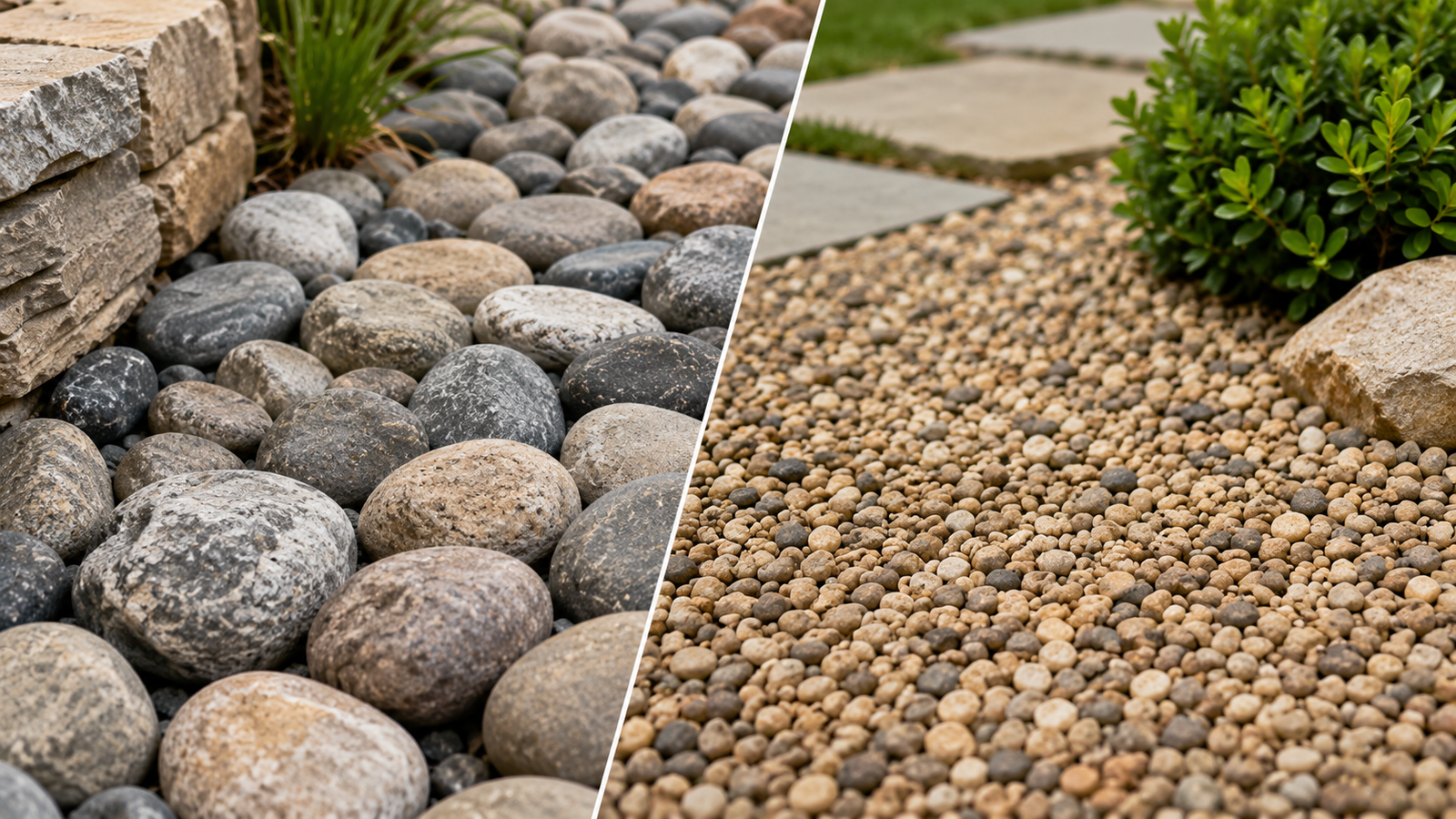
River Rock vs. Pea Gravel: Which Is Best for Your Yard?
Compare river rock and pea gravel for landscaping projects in Western New York. Explore differences in size, appearance, drainage, cost, maintenance, durability, and common uses to help you select the right stone for pathways, garden beds, drainage areas, and other outdoor spaces.
Continue Reading →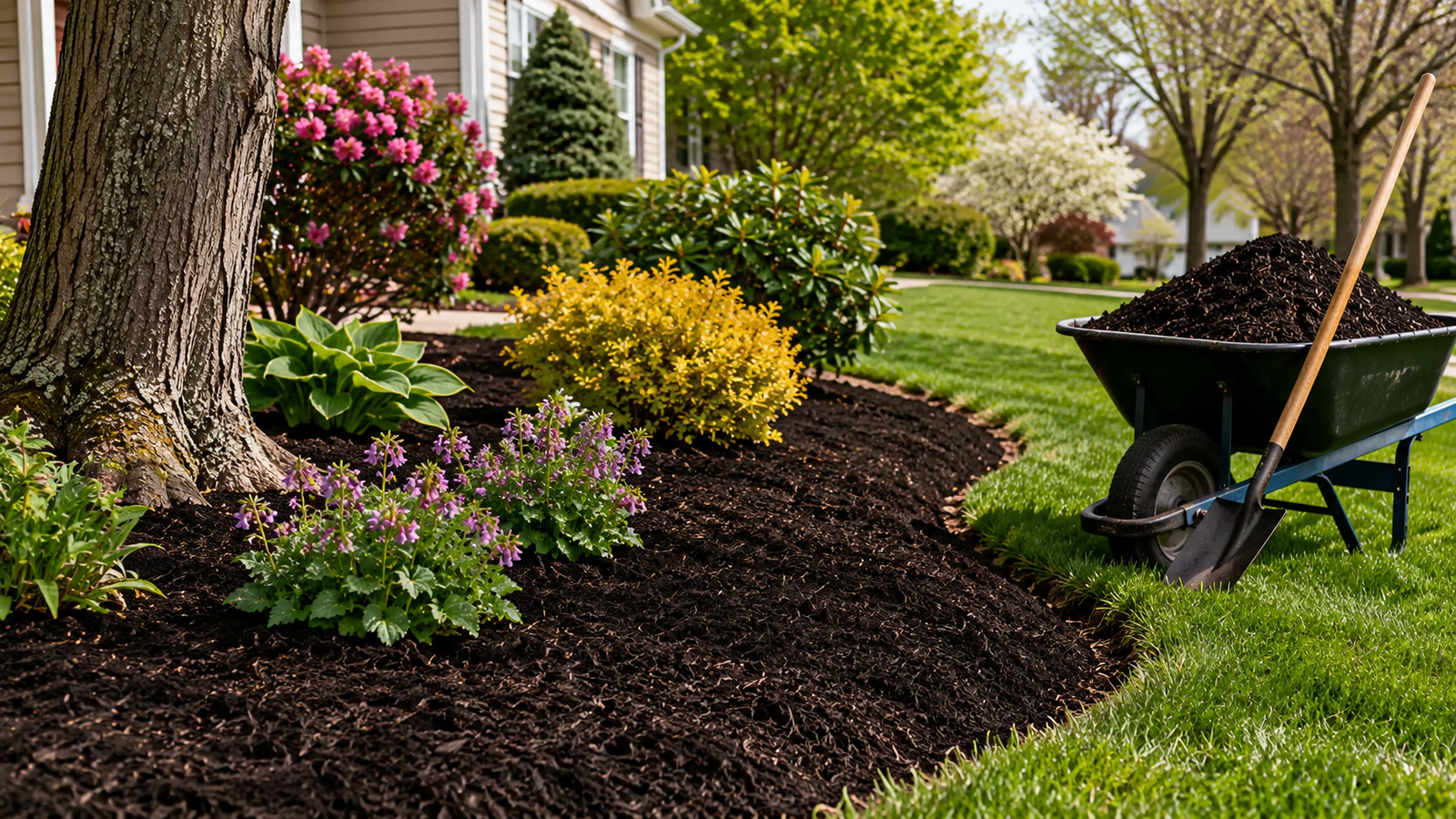
When & How Often Should You Mulch in Western New York?
Learn when to apply mulch in Western New York and how often landscape beds typically need fresh material. Discover recommended mulch depths, seasonal timing, signs that mulch needs refreshing, and tips for protecting soil, conserving moisture, and controlling weeds.
Continue Reading →At KD Nursery, we walk the property with you before recommending either one, because the right answer depends on your soil, your sun exposure, and what you’re actually planting.
We’re not going to sell you rock just because it’s a bigger invoice, and we’re not going to talk you into wood if your beds have been fighting weeds for three summers straight. We tell you what we’d do on our own property.
If you’re still weighing stone mulch vs wood mulch for a specific bed, walk it with someone who’s installed both in yards like yours. That conversation is worth more than any general rule we could give you here. Reach out to KD Nursery, and we’ll take a look at what you’re working with.
Frequently Asked Questions
Does rock mulch really last forever?
No material lasts forever, but rock holds up far longer than wood, often ten years or more without replacement. It can shift over time, settle into soil, or need topping off in high-traffic spots, but it won’t decompose or need annual refreshing the way wood does.
Can I put rock mulch directly over wood mulch?
We don’t recommend it. Old wood mulch breaks down into an uneven, organic layer that lets rock sink in and mix with soil over time. Removing the wood and installing fabric first gives you a cleaner base and better long-term weed control.
Is gravel bad for my plants?
Gravel isn’t harmful by itself, but it does hold heat, which can stress plants that prefer cool, moist roots. It works well around drought-tolerant plants and foundation beds, less well next to hydrangeas, hostas, or anything with shallow, sensitive roots.
Which is cheaper long-term, rock or wood?
Wood costs less upfront but needs yearly replacement, so the price adds up over several seasons. Rock costs more to install initially but doesn’t need re-buying, so most homeowners see it pay for itself somewhere between years four and six.
Do I need landscape fabric under both types?
Yes, fabric is what actually blocks weeds, not the mulch material sitting on top of it. Skipping fabric under rock is the most common mistake we see, since without it, rock eventually settles into the soil and weeds root right through.
Will wood mulch attract bugs or termites?
Wood mulch can attract insects like ants or beetles, but it’s rarely a termite risk if kept a few inches away from your home’s foundation. Keeping mulch pulled back from siding and monitoring for pests each season handles most concerns.
What’s the best mulch for a slope?
Wood mulch tends to wash out on slopes during heavy rain unless it’s a heavier shredded bark type. Rock, especially larger sizes, stays put much better on grades and is usually our go-to recommendation for sloped beds near driveways or drainage paths.