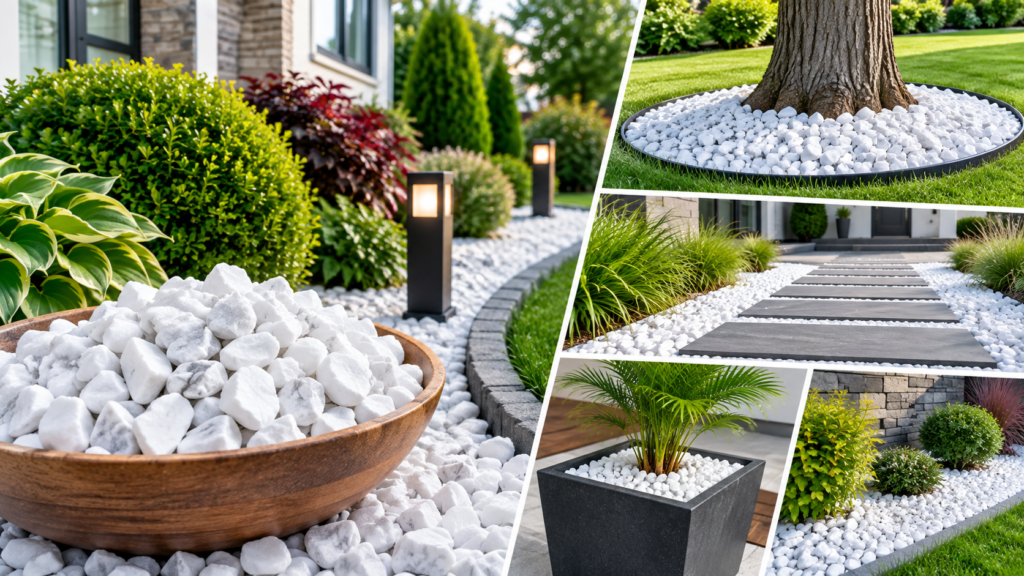
If you’ve driven through a nice neighborhood in Buffalo and noticed a bright, clean bed of white stone under a Japanese maple, there’s a decent chance you were looking at white marble chips.
Here at KD Nursery, we get calls about this material almost every week, usually from a homeowner who saw it somewhere else and wants to know if it’ll work in their own yard. Short answer: often, yes.
But there’s more to it than “it looks nice.” White marble chips landscaping has real trade-offs, and we’d rather walk you through them honestly than let you find out the hard way after a full pallet is already delivered.
This guide covers where the material works, where it doesn’t, what it costs, and what nobody tells you about upkeep. We’ve installed it in dozens of yards across Western New York, and we’ve also dug plenty of it back out when it wasn’t the right fit. That experience is really the whole point of this article.
What White Marble Chips Actually Are
Marble chips are crushed pieces of natural marble stone, usually sold in sizes ranging from small pea-sized fragments up to inch-and-a-half chunks.
The white variety comes from marble with a high calcium carbonate content and very little of the mineral staining that gives some marble its gray or pink veining. It’s quarried, crushed, screened for size, and bagged or delivered in bulk.
Compared to crushed limestone or dyed landscape rock, true white marble holds its brightness longer and doesn’t fade the way colored mulch or dyed stone does. That’s the appeal.
It’s also heavier and denser than a lot of decorative gravel, which matters more than people expect once you get into drainage and settling.
Common Uses Around the Yard
We see white marble chips landscaping projects fall into a handful of categories, and knowing which one you’re planning helps decide if the material makes sense.
Foundation beds-
This is the most common use we install. A band of white stone along the base of a house brightens up the siding, keeps mulch from splashing dirt onto brick, and creates a clean line between the lawn and the structure.
Accent beds and focal points-
Around a single specimen tree, a statue, or a mailbox post, a small pocket of white stone draws the eye without needing plants to do the work. It’s a low-maintenance way to add contrast.
Pathways and stepping stone borders-
White marble chips landscaping works well framing a flagstone path, especially in shaded areas where grass struggles anyway.
Xeriscaping and low-water zones-
For homeowners cutting back on lawn, marble chips paired with drought-tolerant plants create a modern, low-water look that still reads as intentional rather than neglected.
Water features and fountain surrounds-
The reflective white surface pairs nicely with moving water; it brightens the whole feature, especially at dusk.
One thing we always mention: this isn’t a material for large open areas meant for foot traffic or play. It shifts underfoot, it’s not soft, and kids running through it barefoot will complain fast.
Reflectivity and Heat – The Part Nobody Warns You About
Here’s where we get honest with clients before they buy, because it’s the biggest complaint we hear a year later.
White stone reflects a lot of sunlight. In a small bed, that’s a feature; the brightness is exactly why people choose it. But right up against a house in full southern or western sun, that reflected light and heat can bounce onto siding, windows, and nearby plants.
A few real consequences:
Vinyl siding can discolor or, in extreme cases, warp from prolonged reflected heat, especially with darker-colored siding.
Sun-sensitive plants placed too close to a marble bed can get scorched from reflected light on top of direct sun.
The stone itself gets noticeably hot to the touch in July and August, which matters if pets or kids are nearby.
None of this means skip the material.
It means place it thoughtfully. We generally recommend keeping a buffer of a few inches between white marble chips and vinyl siding, and choosing sun-tolerant plants for anything installed within a couple of feet of a bright white bed. In shaded or north-facing spots, none of this is a concern at all; the reflectivity actually helps brighten up a dim area.
What It Costs
Pricing varies by supplier and by whether you’re buying bagged material or bulk by the ton, but here’s a realistic range for the Buffalo market as of this writing: bagged white marble chips typically run higher per square foot than bulk delivery, so for anything larger than a small accent bed, bulk is almost always the better value.
Delivery fees, landscape fabric, and edging (if you’re adding a clean border) are the line items people forget to budget for. A basic foundation bed with fabric and edging usually costs less than most homeowners assume once labor is factored in; the material itself isn’t the expensive part; proper prep is.
Compared with marble chips vs gravel pricing, plain crushed gravel is usually the cheaper option, sometimes by a wide margin. You’re paying a premium for the brightness and the longevity of color.
Whether that premium is worth it comes down to how much visual impact you want from the bed and how much sun exposure it’ll get.
Maintenance and the Yellowing Problem
This is the question we get asked most after installation: why is my white stone turning yellow, or gray, or brownish after a couple of seasons? Marble is calcium carbonate, and calcium carbonate reacts with acidic conditions. A few common culprits:
Organic debris – leaves, pine needles, tree sap – breaking down on top of the stone and staining it.
Iron content in irrigation water leaving mineral deposits over time.
Tannins from nearby mulch beds washing into the stone bed during rain.
Lack of landscape fabric underneath, letting soil and weeds work their way up through the chips.
The fix isn’t complicated, but it does require actual upkeep, and our crew tells every KD Nursery client this upfront: white stone is not zero-maintenance; it’s low-maintenance. A yearly rinse with a hose or pressure washer on a low setting, prompt removal of leaf litter in the fall, and proper fabric underneath will keep the color close to original for years.
Skip all of that, and yes, it’ll gray out within two or three seasons. Some fading is normal and expected even with good care; that’s just how a natural stone product ages outdoors.
Pairing White Marble Chips With Plants
Good plant pairing is what separates a landscaping bed that looks intentional from one that just looks like rocks got dumped in a yard. A few combinations that hold up well in our climate:
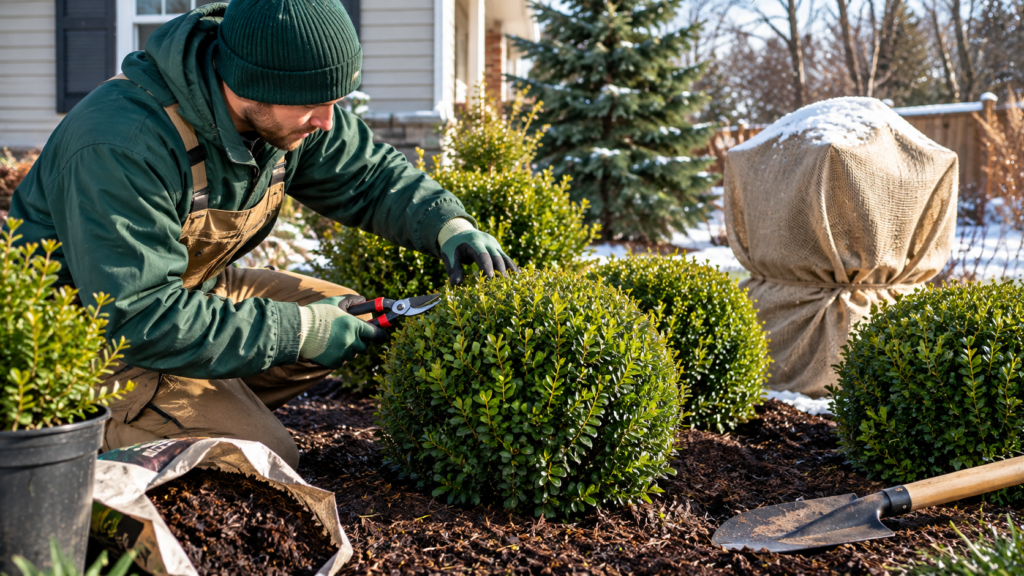
Boxwood or dwarf evergreens for year-round structure against the white backdrop, especially since they stay green through a Buffalo winter when most beds go dormant.
Ornamental grasses for movement and contrast – the texture reads especially well next to smooth white stone.
Hostas and other shade-tolerant perennials in beds that don’t get harsh afternoon sun.
Low, spreading groundcovers like creeping thyme along the edges to soften the transition between stone and lawn.
Avoid packing plants in tight next to the stone if the bed gets a lot of direct sun – leave breathing room so reflected heat doesn’t stress the foliage. This is one of those small decisions that makes a real difference in how the whole bed performs two summers down the road, not just how it photographs on install day.
A Note on Local Conditions
Buffalo winters are hard on a lot of landscape materials, and white marble chips actually hold up better than most. They don’t crack from freeze-thaw cycles the way some softer stone or concrete edging can, and they don’t need to be removed or covered for winter.
Road salt and plow overspray near driveways can cause staining over time, though, so we usually recommend keeping decorative stone beds a reasonable distance from areas that get heavy salt exposure in winter.
Is It Right for Your Yard?
There’s no universal answer here, and we’d rather tell you that than oversell a product that might not suit your situation. White marble chips landscaping tends to work best for foundation beds, accent areas, and low-traffic decorative zones where the brightness and low water needs are a genuine benefit.
It tends to disappoint homeowners who wanted a large, heavily shaded expanse to stay pure white with zero upkeep, or anyone hoping for a soft, walkable surface.
Every property is a little different: sun exposure, drainage, what’s growing nearby, how close it sits to the house. That’s really the deciding factor more than any general rule.
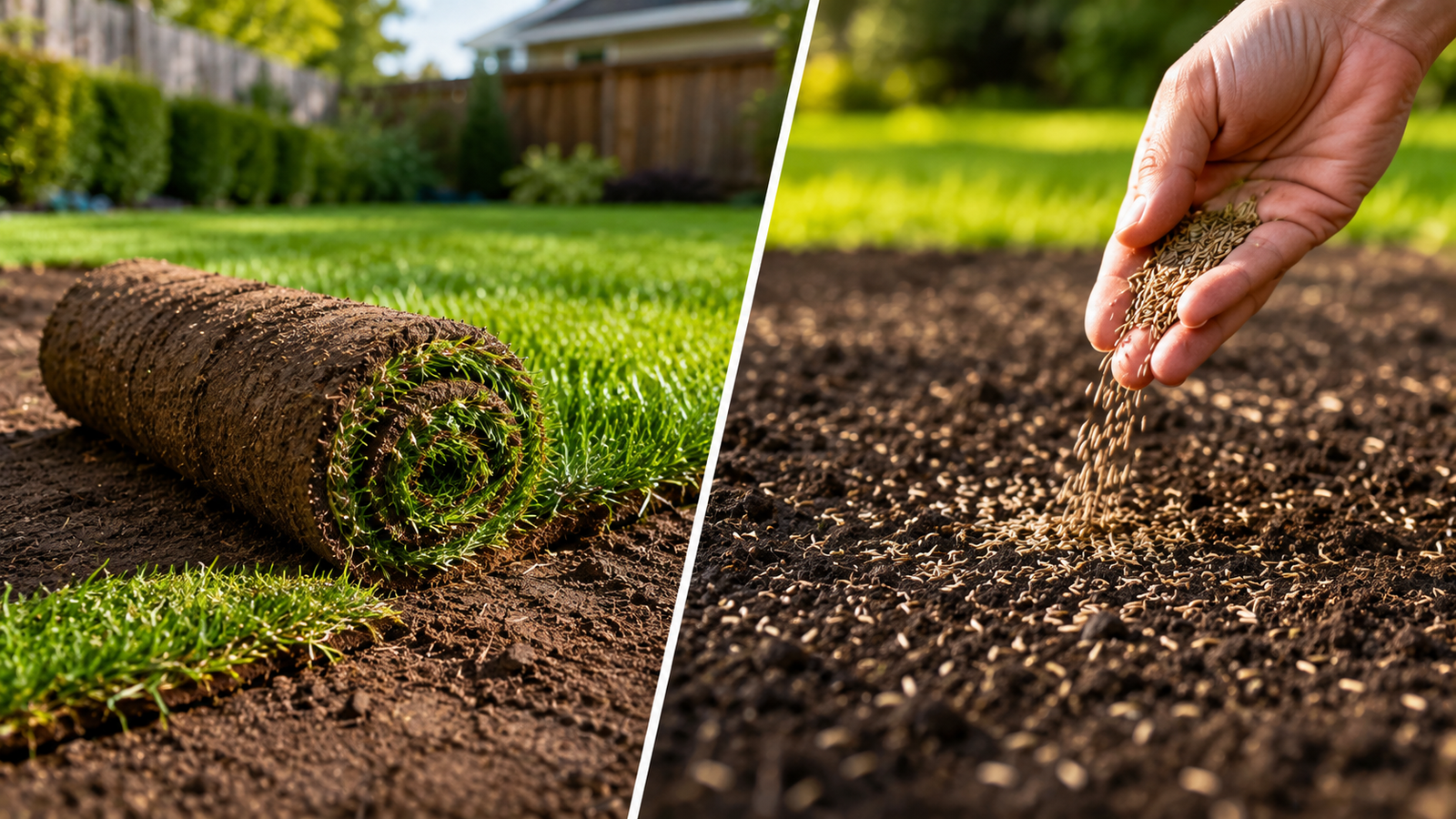
Sod vs. Seed: Which Is Better for a New Lawn in Western NY?
Compare installing sod with growing a lawn from grass seed in Western New York. Learn about installation speed, establishment time, upfront costs, watering needs, maintenance, soil preparation, seasonal timing, durability, and which option may work better for different lawn projects.
Continue Reading →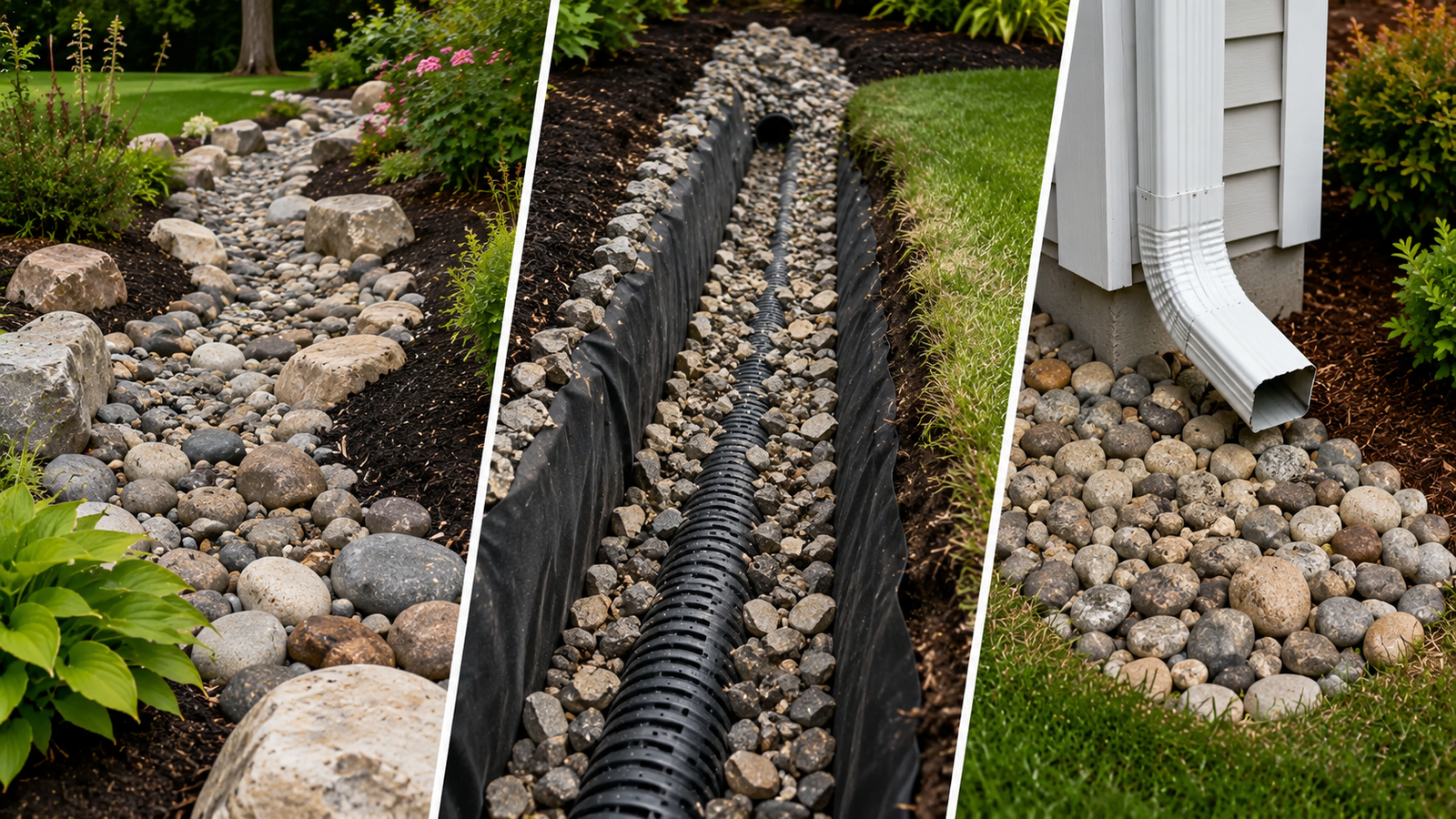
Landscape Stone for Drainage: Dry Creek Beds & French Drains
Learn how landscape stone can help manage excess water around residential properties. Explore practical applications for dry creek beds, French drains, downspout drainage, and other drainage solutions, along with material selection, placement, and installation considerations.
Continue Reading →At KD Nursery, we walk the site before we recommend anything, because a bed that looks great in a photo from another state doesn’t always translate to a shaded, snowy Western New York yard. If you’re weighing white stone landscaping against mulch or gravel for a specific spot, it’s worth getting eyes on the actual site before ordering material.
We’ve also worked with clients looking for other decorative rock ideas; river rock, pea gravel, lava rock; and sometimes a different material ends up being the better recommendation once we see the site conditions. That’s fine. The goal is a bed that still looks good in year three, not just on install day.
Frequently Asked Questions
Does white marble stay white permanently?
No natural stone stays perfectly white forever outdoors. Expect some gradual dulling from dust, minerals in water, and organic debris. With yearly rinsing and prompt leaf cleanup, the color holds up well for several years before it needs a refresh or occasional replacement.
How are marble chips vs gravel different for drainage?
Both drain well since neither holds water like soil or mulch does. Marble chips are denser and heavier, so they resist shifting from rain runoff better than lightweight gravel. Gravel is usually cheaper but fades or gets muddy-looking sooner in wet climates.
Can I install white marble chips myself?
Yes, for small beds. You’ll need landscape fabric, edging, and a way to move bulk material without leaving ruts in the lawn. Larger areas benefit from proper grading first, which is where most DIY installs run into trouble.
Will white stone attract more heat near my house?
In full sun against a wall, yes, it reflects noticeable heat and light. Keep a small buffer from vinyl siding and avoid placing heat-sensitive plants directly adjacent. In shaded or north-facing beds, this isn’t a concern at all.
Do I need a permit to install a decorative stone bed?
Generally no, standard landscaping beds don’t require a permit in most Buffalo-area municipalities. Larger drainage changes, retaining walls, or grading near property lines sometimes do. Check with your local building department before major regrading work.
How often does the stone need to be topped off?
Light settling happens over the first year as the material compacts. After that, most beds need only occasional topping off every few years, depending on foot traffic, wind, and how much organic debris blows in seasonally.
Is white marble chips landscaping pet-safe?
The stone itself isn’t toxic, but sharp edges can be uncomfortable for paws, and it holds summer heat. It’s not ideal for areas where pets dig or lie down regularly. A softer mulch works better for pet-heavy zones.