Western New York weather is famously unpredictable.
Our landscape survives everything from heavy lake-effect snow to humid, baking summer afternoons that can stress even the hardiest maples. Over the decades I’ve spent with my boots in the mud, I’ve seen countless homeowners struggle to keep their gardens thriving in this specific climate.
Understanding when to mulch isn’t just about making the yard look tidy for the neighbors. It is about creating a biological shield that protects your soil’s health and your plants’ longevity.
Keep it simple. Mulching is your yard’s best defense.
Living in Zone 6 means we play by a different set of rules than our friends further south. We deal with heavy clay soils that hold onto cold moisture in the spring and turn into concrete during a July drought.
After working with local properties for years at KD Nursery, I have learned that the timing of your application determines whether you are helping your plants or accidentally suffocating them.
If you lay it down too early, you trap the winter frost in the ground, delaying the very growth you want to see. Wait for the ground to wake up. Patience pays off in Buffalo.
Spring vs. Fall Timing
Spring is the season of renewal, and it is usually when the itch to get outside becomes unbearable. Most people think spring mulching is the only way to go because it provides that fresh, dark aesthetic just as the perennials start to peek through the soil.
From a contractor’s perspective, this is the ideal window to suppress weed seeds before they have a chance to germinate in the warming sun. You want to wait until the ground has thawed completely and the heavy spring rains have started to subside. Timing is everything here. Let the soil breathe first.
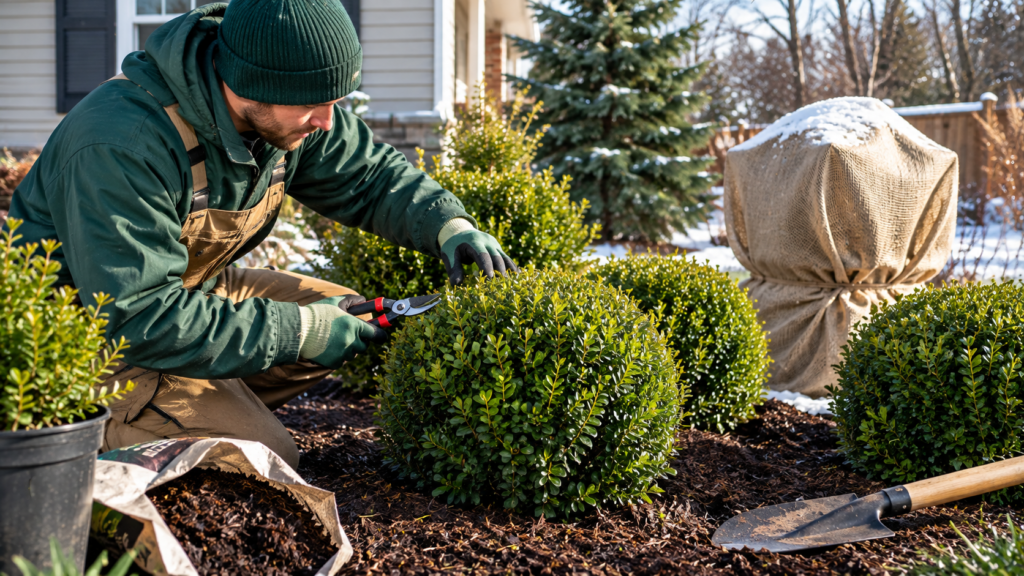
Fall brings a different set of priorities for the local property owner. While spring is about growth and weed control, fall mulching in zone 6 is entirely about insulation and protection. We use it to regulate soil temperatures so the ground doesn’t go through the violent freeze-thaw cycles that can heave new plants right out of the dirt.
A thick layer of wood chips in October or November acts like a heavy winter coat for your root systems. Winter is coming fast. Protect those delicate roots now.
Deciding when to mulch often depends on what you are trying to achieve in your specific corner of the yard. If you have a bed full of established hostas, spring is your best friend for moisture retention. However, if you just put a new ornamental tree in the ground last September, a fall application is non-negotiable for its survival.
I always tell my clients that if they can only pick one season, spring is for the gardener, but fall is for the plants. Both seasons have merit. Listen to your garden’s needs.
The Zone-6 Mulching Calendar
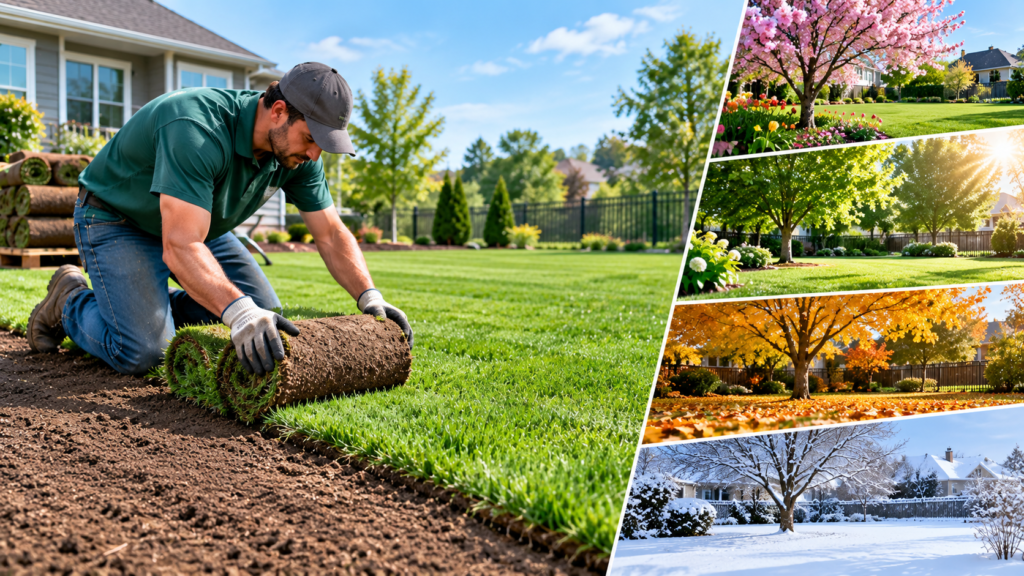
In Western New York, our “spring” often doesn’t truly arrive until late April or even mid-May.
The best time to mulch in our region is typically between Mother’s Day and the first week of June. By this point, the soil has warmed up enough to support root activity, but the summer heat hasn’t yet arrived to bake the moisture out of the earth. Applying it during this window ensures you catch the weeds at their weakest point. Don’t rush the thaw. Early June is often perfect.
Once we hit the dog days of summer, the soil is usually too dry for a new application to be truly effective without a massive amount of watering. If you missed the spring window, your next opportunity arrives as the leaves begin to turn in late September. This gives the material time to settle before the first hard frost hits the Buffalo area.
We see the best results when property owners clear out the spent summer annuals before laying down their winter layer. Preparation is half the battle. Clean beds make better mulch.
The winter months are generally a “no-go” zone for any serious landscaping work in our neck of the woods. Trying to spread wood chips over a foot of snow or frozen tundra is an exercise in futility and a waste of good material.
You are much better off spending that time planning your layout and ordering your bulk supplies for the coming thaw. At KD Nursery, we spend our winters prepping equipment so we can hit the ground running the moment the snow melts. Rest when the ground rests. Plan now, work later.
Refresh Frequency: How Often Is Enough?
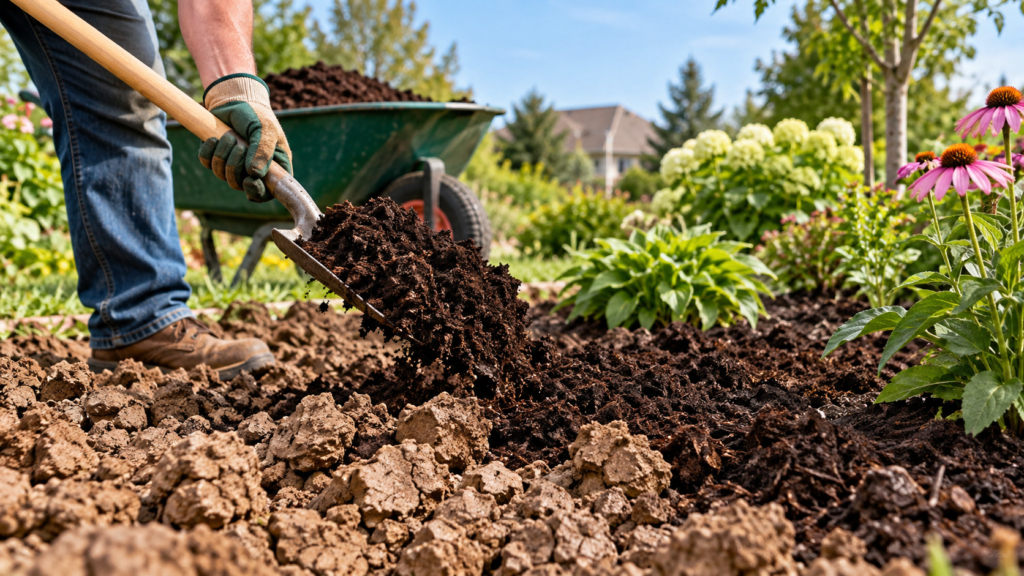
A common question I get on the job site is how often to mulch to keep things looking sharp. The honest answer is that it depends entirely on the type of material you are using and how much sun your beds receive. Organic mulches, like shredded bark or wood chips, naturally break down over time, which is actually a good thing because it adds nutrients back into our heavy clay soil.
Generally, a full re-application every year is overkill and can lead to a dangerous buildup of material. Every other year is standard. Check the depth before adding.
If you find that your mulch has lost its color but still has plenty of depth, a simple “refresh” is often better than adding a new layer. You can use a garden rake to stir up the existing material, bringing the unfaded chips to the surface and breaking up any crust that has formed.
This improves air circulation and water penetration without increasing the overall height of the bed. It saves you money and prevents the soil from becoming a compacted mess. Work with what you have. Raking saves time and money.
High-traffic areas or beds in full, scorching sun might need more frequent attention than a shaded backyard corner. If you notice the bare soil peeking through, it is definitely time to top things off to prevent erosion and moisture loss.
However, always aim for a consistent depth of two to three inches across the board. Anything less won’t stop the weeds, and anything more starts to cause structural problems for your plants.
Consistency is the secret sauce. Maintain that two-inch sweet spot.
Over-Mulching Risks: Too Much of a Good Thing
It is easy to assume that if two inches of mulch is good, then six inches must be great, but that logic will kill your trees. When you pile it on too thick, you create an impenetrable barrier that prevents oxygen from reaching the soil.
Root systems are living things that need to breathe, and suffocating them leads to “root rot” and a slow, painful decline of the plant. I have seen beautiful, expensive landscapes ruined simply because someone was too heavy-handed with the shovel.
Oxygen is vital for roots. Less is often much more.
Thick layers also tend to become hydrophobic, meaning they actually repel water instead of absorbing it. During our short WNY summer dry spells, a matted layer of old mulch can shed rainfall away from the root zone and into the lawn.
You might think you’re helping your shrubs, but they are actually dying of thirst underneath all that expensive bark. Always check to see if water is actually getting through to the dirt.
Don’t let your plants thirst. Water must reach the soil.
Furthermore, excessive mulch provides the perfect hiding spot for pests like voles and mice who love to chew on the bark of your trees during the winter. These critters feel safe under a deep blanket of wood chips where hawks and owls can’t see them.
By the time the snow melts in March, you might find your prize fruit tree has been girdled and destroyed. Keep the depth reasonable to keep the pests at bay.
Deep mulch hides hungry pests. Keep things visible and safe.
The ‘Volcano Mulching’ Mistake
The single most common error I see in Western New York is the dreaded “mulch volcano.” This happens when people pile the material up against the trunk of a tree in a high, pointed cone. It might look like a professional did it because you see it in commercial parking lots, but it is a death sentence for any tree.
Bark is meant to be exposed to the air, not trapped in a dark, wet environment against damp wood chips.
Never bury the tree’s flare. Give the trunk some space.
When the trunk is buried, the bark begins to rot, allowing fungi and bacteria to enter the tree’s vascular system. This weakens the structure of the tree and makes it much more likely to blow over during one of our famous autumn windstorms.
You want to see the “root flare”, the part where the trunk widens out at the base, completely clear of any debris. Think of it like a donut shape: plenty of mulch in a ring around the tree, but a hole in the middle. The donut is the goal. Keep the flare bone dry.
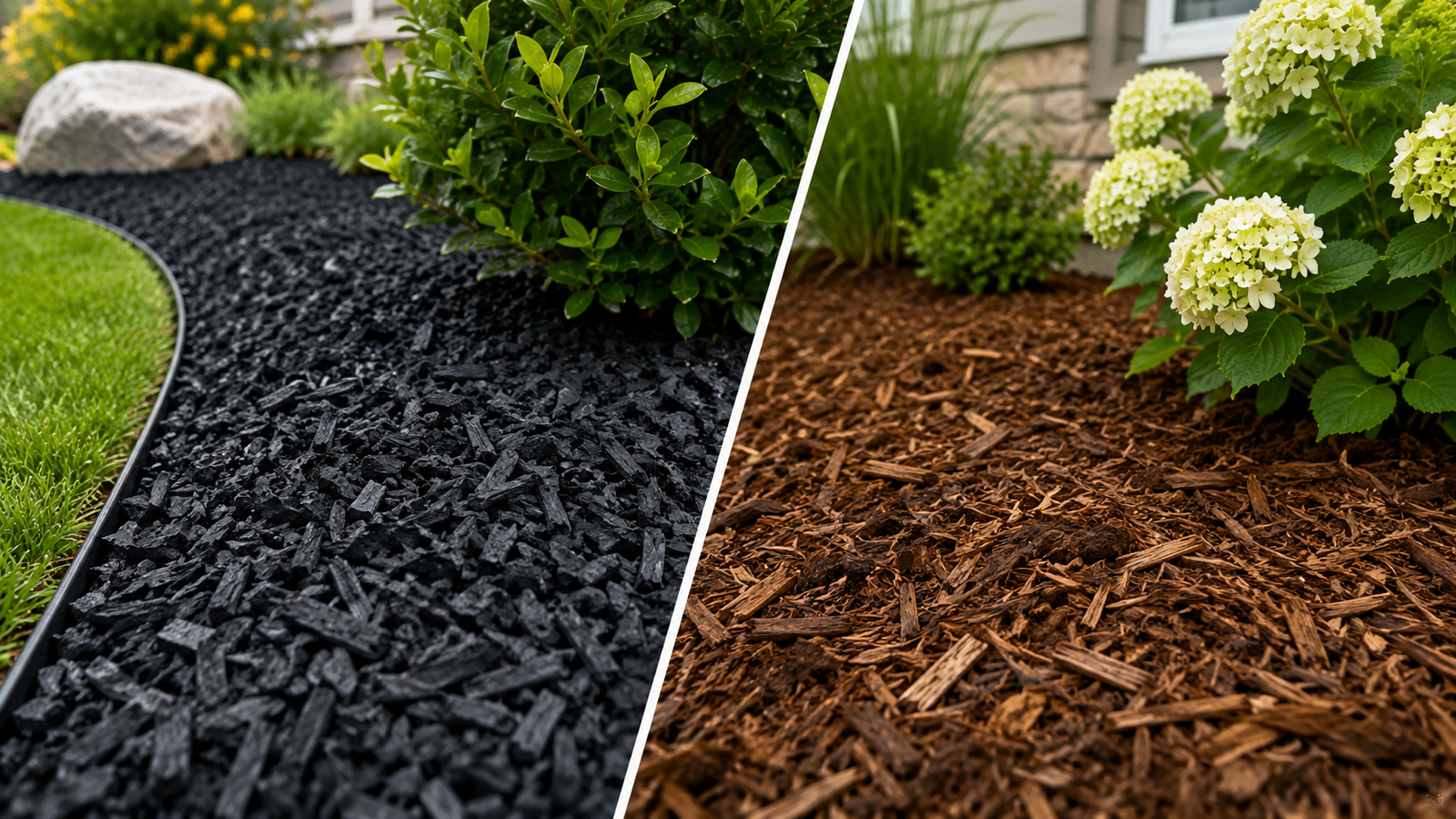
Rubber Mulch vs. Wood Mulch: Cost, Longevity & WNY Yards
Compare rubber mulch and wood mulch for Western New York landscapes. Explore differences in cost, durability, longevity, maintenance, moisture retention, weed control, drainage, safety, and long-term value to choose the right ground cover for your yard.
Continue Reading →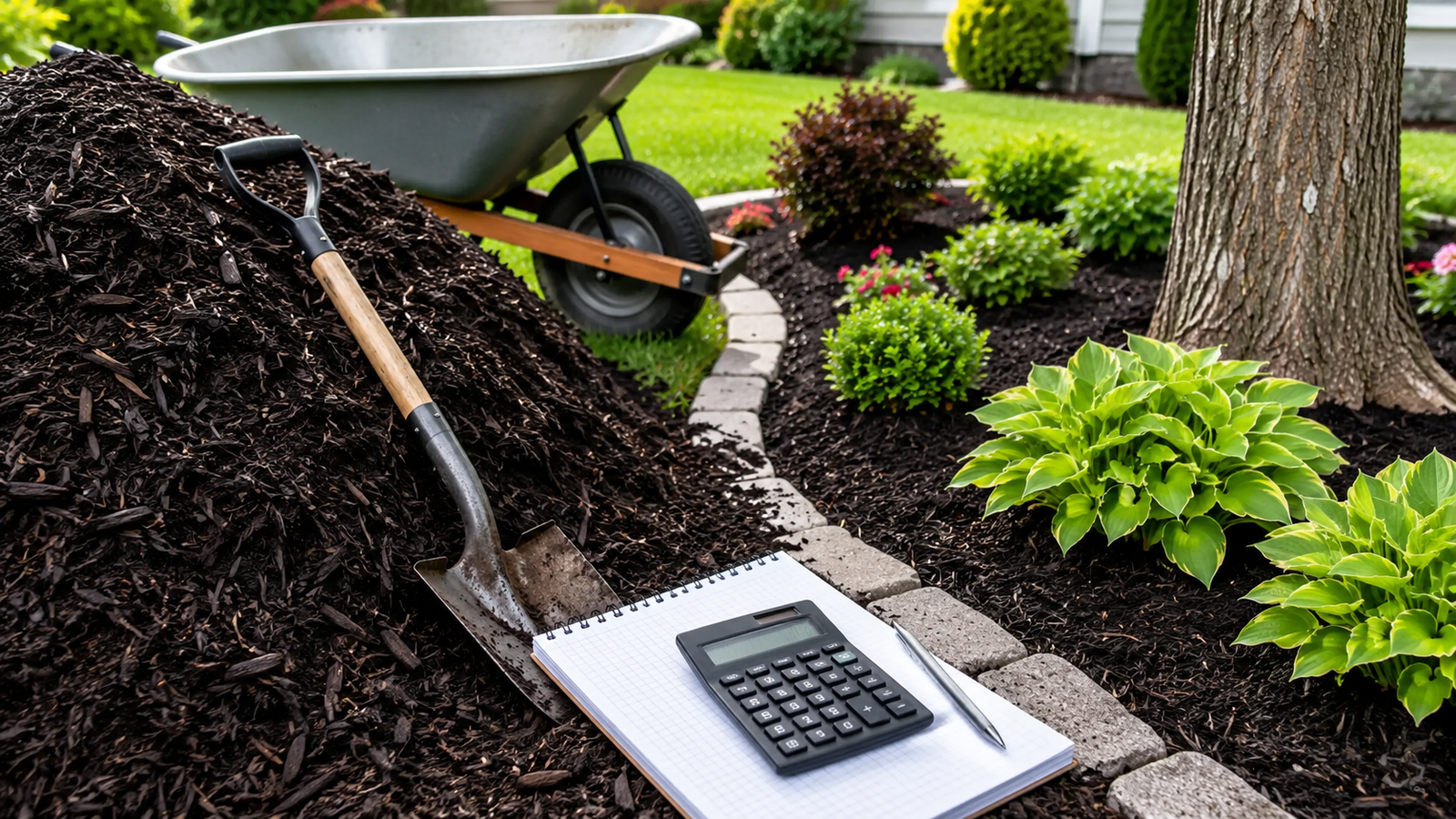
Bulk Mulch Calculator Guide for Buffalo Homeowners
Learn how to calculate the amount of bulk mulch needed for Buffalo landscaping projects. Discover how to measure bed length, width, and depth, estimate cubic-yard coverage, choose the right mulch depth, and avoid overordering or running short.
Continue Reading →I can’t tell you how many times we’ve had to come in and remove dead trees that were victims of this specific mistake. It is a heartbreaking waste of time and money that is entirely preventable with a little bit of knowledge.
If you see your neighbor building a volcano, do them a favor and tell them to spread it out. At KD Nursery, we train every member of our crew to avoid this at all costs.
Education saves our local canopy. Spread the word, not volcanoes.
Frequently Asked Questions
What is the best type of mulch for Western New York gardens?
For our region, shredded hardwood or cedar bark is usually the best choice. It stays put during heavy winds and breaks down slowly, adding organic matter to our dense clay soils without significantly altering the pH balance.
Can I put new mulch directly over the old layer?
Yes, provided the total depth doesn’t exceed three inches. If the old layer is matted or moldy, it’s better to rake it out or break it up first to ensure water and oxygen can still reach the soil beneath.
Does mulch attract termites to my house?
While mulch provides a moist environment that many insects like, it doesn’t “attract” termites from far away. To be safe, keep any wood-based mulch at least six inches away from your home’s foundation and siding to prevent easy access.
Should I use wood chips or stone for my landscaping?
Wood chips are better for plant health because they regulate temperature and add nutrients. Stone is a permanent aesthetic choice that doesn’t improve soil quality and can actually trap heat, which may stress some sensitive plant species during the summer.
How deep should my mulch layer be?
A depth of two to three inches is the industry standard for success. This is enough to suppress most weeds and retain moisture without suffocating the root systems of your trees or perennials or creating a habitat for damaging rodents.
When is the best time to mulch newly planted trees?
Newly planted trees should be mulched immediately after planting, regardless of the season. This helps stabilize the soil temperature and holds onto the vital moisture they need to establish their roots in their new home during the first year.
Is it okay to mulch in the middle of a Buffalo winter?
It is not recommended to mulch over snow or frozen ground. The material will act as an insulator, keeping the ground frozen longer into the spring, which can delay the growth of your plants and make the yard messy.