Best time to lay sod in Western New York depends less on your calendar and more on soil temperature, weather patterns, and what the root system needs to actually establish before it’s tested by heat or frost.
Figuring out the best time for your specific property starts with understanding those variables, not just picking a month.
We install sod on a lot of properties around Buffalo every year through our crew at KD Nursery, and the ones that thrive long-term almost always share one thing: they went down during the right window, not just whenever the homeowner happened to be ready.
This guide walks through when to lay sod in our region, why the season matters more than people expect, and what happens when timing gets pushed too early or too late.
Why Timing Matters More Than People Think
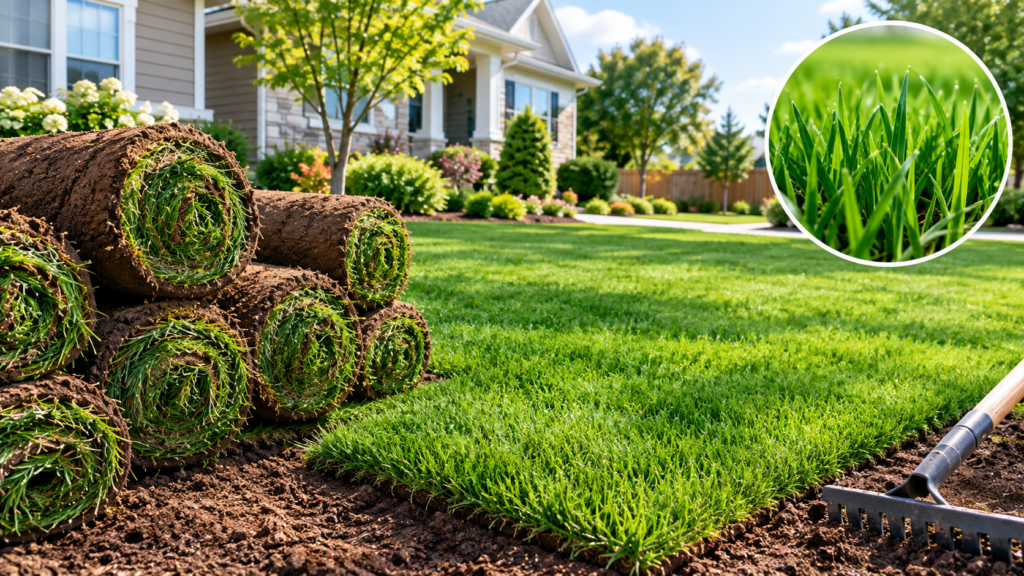
Sod isn’t like planting a shrub you can baby along with extra water for a season. It’s a living root system that’s been cut from a farm field, rolled up, and needs to reconnect with soil within about 24 to 48 hours of delivery. From that point, it’s racing against the clock to send roots down into your yard before the top growth outpaces the roots underneath.
If the timing’s off, the grass can look green for a few weeks and then fail once conditions turn against it. We’ve seen it happen on new construction sites where sod went in during a July heat wave because the builder wanted the yard finished before closing. It looked fine at first. By August, big sections were dead.
Spring vs. Fall Sod: The Two Real Windows
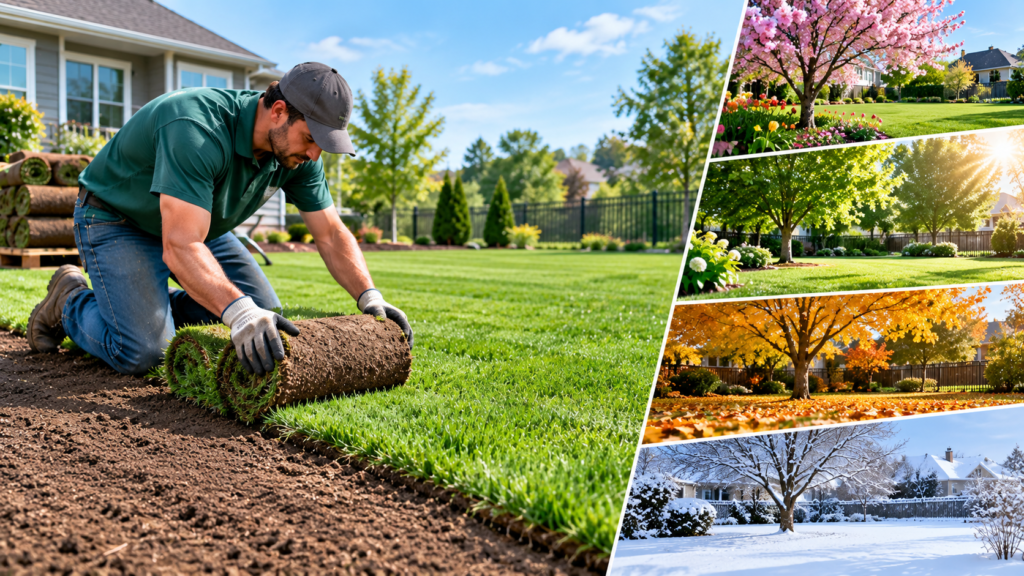
For our climate, there are two solid stretches for sod installation season: mid-spring and early-to-mid fall. Everything else is a compromise of some kind.
Spring Window
Late April through early June is usually workable here, once the ground has thawed and dried out enough to grade properly. The soil is naturally moist from snowmelt and spring rain, which helps new sod root without you having to run irrigation constantly. Cooler air temperatures also mean less stress on the grass while it’s trying to establish.
The catch with spring is that you’re on a clock before summer heat arrives. If you lay sod too late in spring, say mid-June, the root system may not be developed enough to handle July’s higher temperatures and lower rainfall. That’s the biggest miscalculation we see homeowners make with spring installs: starting the process too late in the window rather than too early.
Fall Window
If you ask which season we lean toward recommending, it’s early fall. September through mid-October tends to give sod the best combination of conditions: warm soil, cooling air, more consistent rainfall, and no risk of a heat spike right after installation.
Grass roots grow best when soil temperatures sit in a specific range, and fall soil, still holding onto summer warmth, often lands right in that zone.
Spring vs. fall sod is a fair comparison to make, and for our area, fall usually wins on root development alone. The grass has a long stretch of moderate weather to establish before winter dormancy, and it wakes up in spring with roots already in place rather than starting from scratch.
That said, spring works well too, especially for homeowners who want to enjoy a new lawn through the summer season and are willing to manage watering carefully during establishment.
Soil Temperature: The Detail Most Homeowners Skip
Calendar dates are a rough guide. Soil temperature is the actual variable that determines whether new sod will root well. Cool-season grasses common in New York lawns, things like Kentucky bluegrass, perennial ryegrass, and fine fescue blends, root most actively when soil temperatures sit somewhere between roughly 50 and 65 degrees Fahrenheit.
Lay sod when the soil’s too cold, and root growth slows to a crawl even if the grass blades stay green. Lay it during a soil temperature spike in mid-summer, and the sod’s energy goes toward surviving heat stress rather than building roots.
Either way, the establishment period stretches out longer than it should, and the lawn stays vulnerable to disease, drying out, or simply not knitting into the existing soil.
A basic soil thermometer, pushed a few inches into the ground, will tell you more than any generic planting calendar. If you don’t want to test it yourself, that’s a reasonable thing to ask about when you’re scheduling delivery with whoever’s supplying and installing the sod.
Summer Risks: Why We Don’t Recommend It
Laying sod in summer is possible. We’ve done rush jobs in July when a homeowner had no other choice: a sudden landscaping issue, a real estate closing, something time-sensitive. It can work, but it comes with real trade-offs that are worth understanding before you commit to it.
Summer heat pushes evapotranspiration rates up, meaning the grass loses moisture faster than it can replace it through a shallow, unestablished root system. That means daily watering, sometimes twice a day during a heat wave, for the first couple of weeks. Miss a day or two during a hot, dry stretch, and you can lose sections of sod that never get the chance to recover.
There’s also more competition from weeds and more stress on the grass from foot traffic, mowing too early, or simple heat exhaustion in the plant itself. If summer is truly your only option, plan on closer monitoring, more frequent watering, and some tolerance for a rougher-looking lawn during the first month compared to a spring or fall install.
Zone-6 Timing: What It Means for Buffalo-Area Lawns
Most of Western New York, including the greater Buffalo area, falls into USDA hardiness zone 6, with some pockets closer to the lake edging into zone 6b or 7a depending on microclimate. That zone designation is mostly built around winter minimum temperatures, but it also gives a useful frame for sod timing.
In zone 6, the growing season is long enough for a healthy spring or fall window, but short enough that pushing installation too close to either extreme, late fall or early spring, risks the sod not having enough active growing time before dormancy or before summer stress arrives.
Practically, that means we’re usually steering clients toward late September through the first couple of weeks of October for fall jobs, and late April into late May for spring jobs, adjusting a bit based on how the specific season is trending.
Lake-effect weather adds a wrinkle here too. Properties closer to Lake Erie or Lake Ontario can see later soil warming in spring and quicker cooling in fall compared to areas further inland, so the exact window can shift by a week or two depending on where you’re located within the region.
What Affects Cost and Timing Together
Sod pricing itself doesn’t change much by season, but labor scheduling does. Fall is a popular installation season because homeowners are wrapping up other landscaping projects and the weather cooperates, so booking further ahead helps if you’re aiming for that window.
Spring bookings fill up fast too, especially right after the ground thaws, when everyone wants their yard looking good for summer.
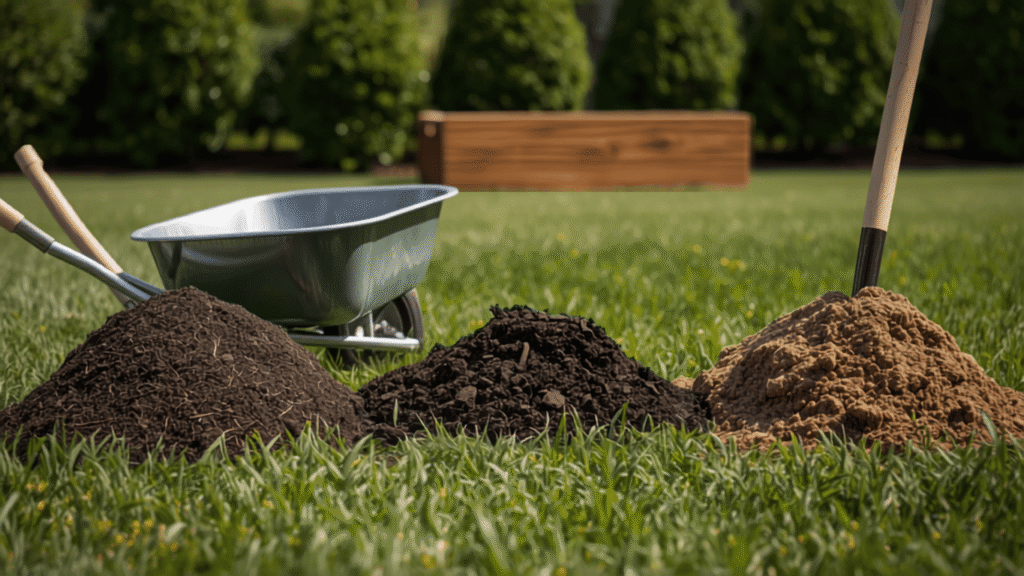
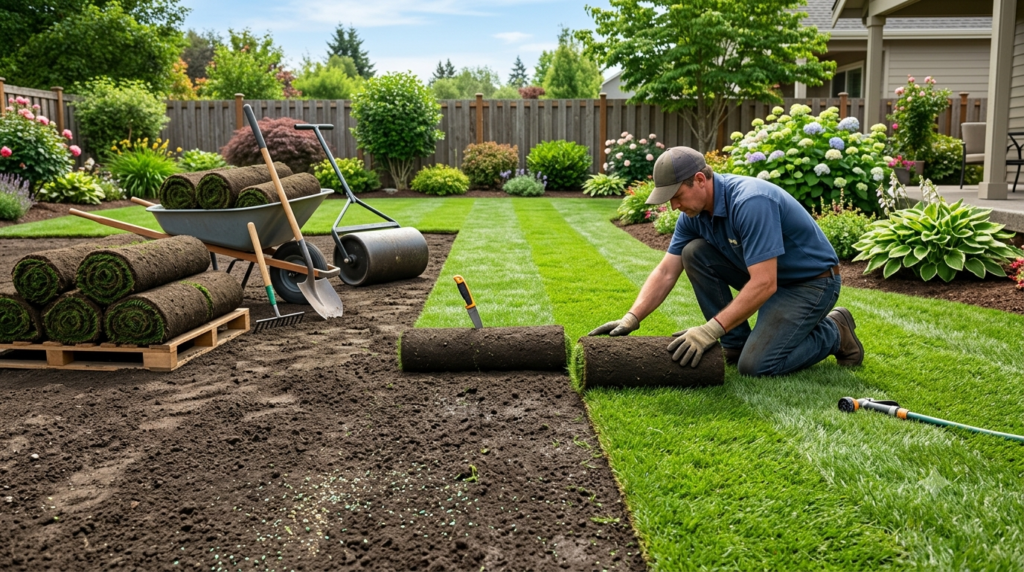
Site prep matters as much as timing. Grading, removing old turf, amending compacted soil, and making sure drainage is addressed before sod goes down all affect how well it establishes, regardless of what time of year you install.
Good sod laid on poorly prepped soil during the ideal window will still struggle. Mediocre prep is a bigger risk to a new lawn than being a week or two outside the perfect timing window.
Common Mistakes We See
A few patterns show up again and again on properties we get called to fix or troubleshoot:
● Watering too little right after installation, especially during the first two weeks when roots haven’t reached the soil below yet.
● Mowing too soon, before the sod has rooted enough to handle the mower’s weight and blade traffic without tearing.
● Laying sod directly over old, unamended soil without addressing drainage or compaction first.
● Choosing a rush summer install when a fall window was realistically available with a little planning.
● Assuming all grass varieties handle the same timing the same way, when some blends are more heat- or cold-tolerant than others.
None of these are complicated fixes. Most come down to slowing down enough to plan the install around the season rather than around convenience.
Our Take
At KD Nursery, we’d rather tell a homeowner to wait three weeks for a better window than rush a sod job that’s likely to need patchwork repair by August. That’s not always what people want to hear when they’re staring at a bare, muddy yard, but it’s the honest answer based on what actually holds up here.
If your timing is flexible, aim for early fall first, then late spring as a close second. If it’s not flexible, and summer is genuinely your only option, go in with a watering plan and realistic expectations rather than assuming it’ll behave the same as a fall install.
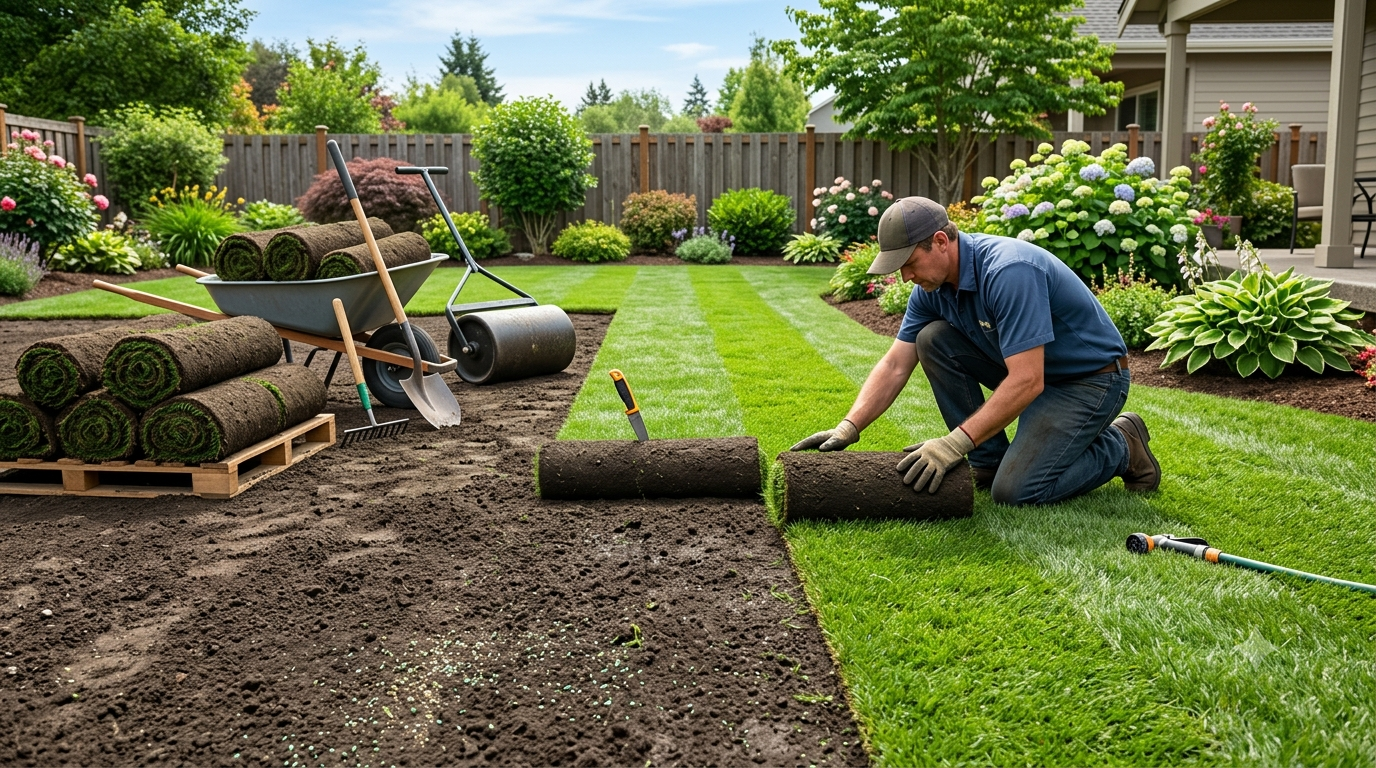
How to Lay Sod: Step-by-Step Guide for a Perfect New Lawn
Learn how to lay sod step by step, including soil preparation, measuring and ordering, proper sod placement, watering, first mowing, and ongoing lawn care for a healthy new lawn.
Continue Reading →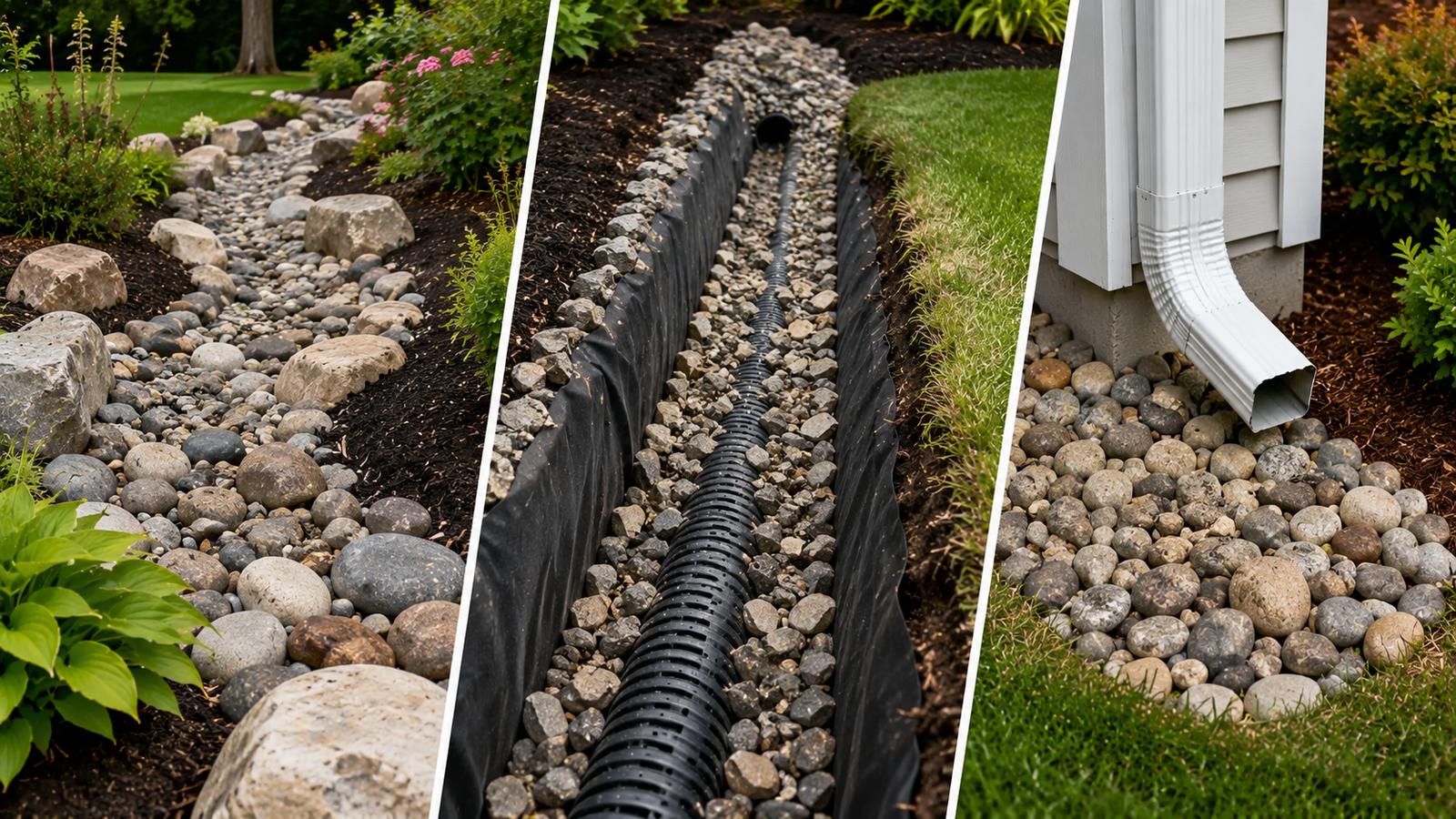
Using Landscape Stone for Drainage: Dry Creek Beds, French Drains & Downspouts
Learn how landscape stone helps manage drainage, control erosion, build dry creek beds, support French drains, handle downspout runoff, and protect yards from water-related damage.
Continue Reading →A Practical Conclusion
There’s no single perfect date that applies to every property. Soil conditions, sun exposure, drainage, grass variety, and even how close you are to the lake all shift the ideal window a bit. What stays consistent is the underlying principle: sod needs steady soil moisture, moderate temperatures, and enough time to root before it faces stress, whether that’s summer heat or winter cold.
We’ve walked plenty of Buffalo-area properties where the difference between a lawn that thrived and one that needed replacing a year later came down to timing more than anything else. If you’re planning a sod project and aren’t sure which window fits your site, it’s worth getting an honest read on your specific conditions before scheduling delivery.
That’s really the whole approach we take at KD Nursery when a homeowner calls asking where to start.
Frequently Asked Questions
What is the best time to lay sod in New York?
Early fall, roughly September through mid-October, tends to give the most reliable results in our region. Late spring works too. Both offer moderate temperatures and steady moisture that help roots establish before summer heat or winter cold sets in.
Can I lay sod in the summer if I need it done now?
Yes, but expect more work. Summer sod needs frequent watering, sometimes daily, and closer attention during the first few weeks. It’s doable for time-sensitive situations; just plan on a rougher establishment period than a fall or spring install.
How long does new sod take to root?
Roots typically start anchoring within two to three weeks under good conditions, but full establishment can take four to six weeks or longer. Cooler, moist conditions speed this along, while heat stress or inconsistent watering slows it down considerably.
Does soil temperature really matter more than the calendar date?
Yes. A calendar date is just a rough guideline. Soil temperature determines how actively roots grow. Two properties a few miles apart can warm or cool at different rates, so actual soil conditions matter more than a fixed date.
How soon can I mow after sod installation?
Wait until the sod resists a gentle tug, usually two to three weeks, showing roots have taken hold. Mowing too early can tear up unrooted turf. Keep the first cut light and avoid sharp turns that can shift the new sod.
Will fall-installed sod survive its first winter okay?
Generally yes, if it’s installed early enough to root before hard frost sets in. Sod put down too late in fall may not establish enough root depth, making it more vulnerable to winter heaving or drying out under harsh conditions.
Do I need to water new sod every day?
During the first one to two weeks, yes, typically once or twice daily depending on weather. After roots start establishing, you can gradually reduce frequency while increasing the amount, encouraging deeper root growth instead of shallow surface roots.