Standing in a stone yard staring at a pile of gravel, most homeowners freeze up wandering “How much gravel do I need?”
Nobody wants to order too little and end up making a second trip, and nobody wants six extra yards of stone sitting in the driveway for a month because the math was off.
After years of loading trucks and fielding this exact question at the counter here at KD Nursery, we’ve settled on a system that works every time, whether the job is a small flower bed border or a full driveway rebuild. Measure right, pick the correct depth, and the rest of the math takes care of itself.
This guide walks through how much gravel you need for your project step by step, covering coverage per ton, depth by use, and how tons and yards actually differ. Whether you’re finishing a walkway in Clarence, NY or spreading a base layer for a patio somewhere else in WNY, the same process applies.
How to Measure Your Space First
Before touching a gravel calculator, measure the actual space.
Grab a tape measure and a notepad, and walk the area yourself rather than eyeballing it from the porch. For square or rectangular spaces, measure length and width in feet and multiply them together.
A walkway that’s 20 feet long and 8 feet wide comes out to 160 square feet. That number is your starting point, and every other calculation builds off it.
Curved beds and odd shapes take a little more work. Break the space into smaller rectangles and triangles, figure the area of each piece separately, then add them together. It’s not exact science, but it gets close enough. When in doubt, round your total square footage up rather than down.
Stone left over can go toward a smaller bed elsewhere in the yard. Stone you’re short on means stopping the job halfway through to place another order, and that second delivery almost always costs more in time than the extra stone would have cost upfront.
Take a photo of your measurements once you’ve got them, or jot them right on your phone. It sounds unnecessary until you’re on the phone with a supplier and can’t remember if the walkway was 18 feet or 20.
A minute of note-taking now saves a second phone call later, and it means whoever answers the phone can run your numbers on the spot instead of asking you to call back.
Depth by Use
Depth changes everything about the math, and it’s the step people skip most often.
A decorative border around flower beds only needs about 2 inches of stone coverage since nothing’s walking on it. A walkway that gets regular foot traffic wants closer to 3 inches, sometimes 4 if it sits over landscape fabric and needs extra stability.
Driveways and any area that’ll take vehicle weight need a full 4 to 6 inches, usually spread in two layers, with a coarser base rock underneath and finer decorative stone on top.
Get the depth wrong and everything downstream goes wrong with it. Too shallow, and weeds work their way through, stone shifts underfoot, and low spots start pooling water after every rain.
Too deep, and you’re paying for material that never does any extra work. Match the depth to what the space actually does. Light coverage for looks, deeper coverage for anything that gets walked or driven on.
Coverage Per Ton and Per Yard
This is where most folks get tripped up at the quarry: volume and weight are two totally different animals.
A cubic yard measures pure space, but a ton is what actually pegs the scale on your truck.
As a quick rule of thumb, one yard covers roughly 160 square feet at two inches deep, 108 at three inches, 80 at four inches, and about 54 if you’re laying a heavy six-inch base.
To figure your yardage on site, just multiply your total square footage by your depth in feet and divide by 27.
Once you have that yardage, don’t try to guess the tonnage yourself; dense crushed limestone weighs a lot more than loose pea gravel or river rock. Every material has its own bulk density, which means one ton of heavy stone won’t cover the same ground as a ton of lighter rock.
When you’re ready to order, give the supply yard your square footage, your depth, and the exact stone you want. They’ll run the conversion using the actual weight of that specific rock so you don’t end up short on the job or paying for extra freight.
Tons vs Yards, and Why It Matters
People ask often enough why suppliers quote by weight instead of volume.
Weight holds steady in a way volume doesn’t, since stone settles and compacts differently than mulch or topsoil does once it’s loaded and moved.
A cubic yard of pea gravel weighs somewhere around 1.3 to 1.5 tons, while a cubic yard of crushed limestone runs noticeably heavier because of how densely it packs.
Don’t assume every stone type converts the same way from yards to tons. River rock, limestone, and decorative gravel each carry different weight per yard, and a calculator built for one type can throw your numbers off for another.
Ask your supplier directly what the specific stone you’ve picked weighs before finalizing an order, especially on larger driveway or patio jobs where a small error in the math adds up fast.
On a job under a couple hundred square feet, a slight miscalculation barely matters. Scale that same error up to a driveway or a long stretch of border, and it turns into a real gap between what got ordered and what the job actually needed.
Delivery
Once the tonnage is figured out, ordering gets simple. Most yards deliver by truck, and drivers can usually place the stone close to where you’ll actually use it, which saves hours of wheelbarrow work later. If you’re searching for stone delivery near me, call ahead with your square footage and depth already worked out.
A good yard will double-check your math before the truck even leaves the lot, and flag anything that looks off. Our delivery crew at KD Nursery handles this every day, and they’d rather catch a measuring mistake on the phone than after a truck’s already on your street.
For homeowners across Buffalo, NY and the surrounding area, timing the delivery matters too. Spring and early summer book up fast once everyone starts landscaping projects at the same time, so calling a week or two ahead beats waiting until the truck calendar is full.
Also worth mentioning to your supplier: narrow driveways, tight gates, or anything that might keep a truck from getting close, since that changes how the stone gets placed.
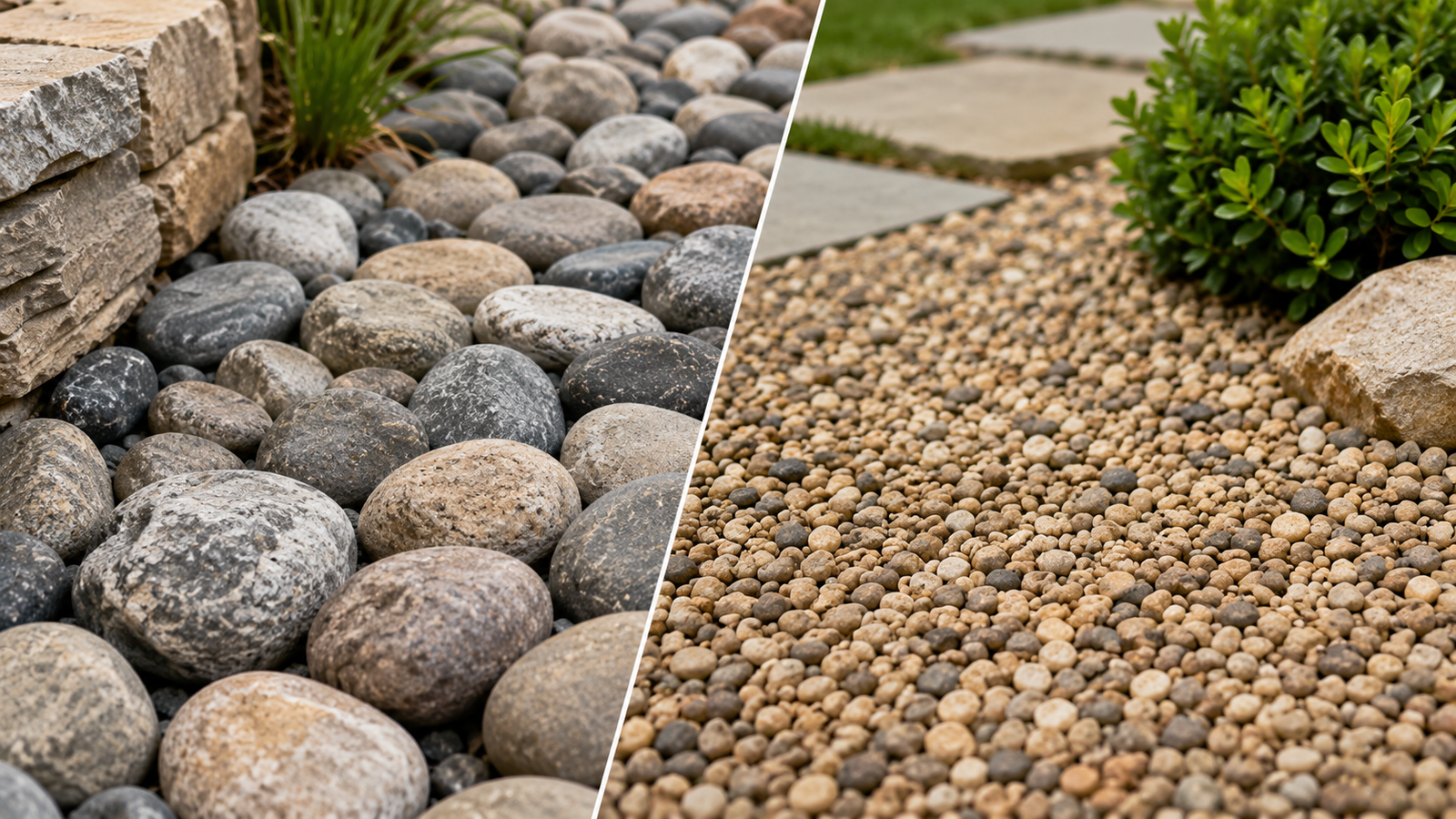
River Rock vs. Pea Gravel: Which Is Best for Your Yard?
Compare river rock and pea gravel for garden beds, pathways, borders, drainage areas, and other landscaping projects. Explore differences in size, texture, appearance, drainage, maintenance, stability, and ideal uses to help you choose the right decorative stone for your yard.
Continue Reading →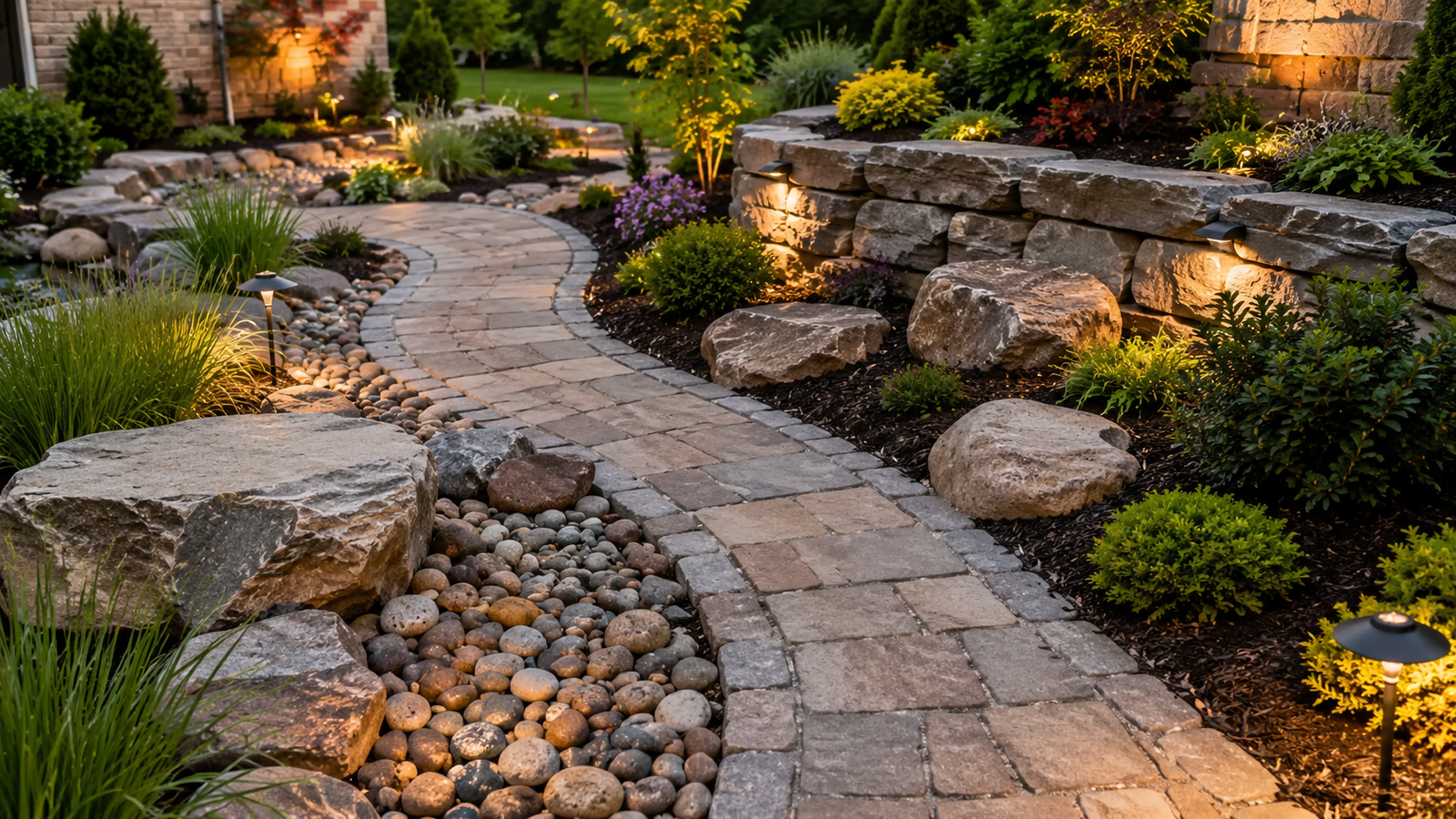
Best Landscape Stones in NY for Beautiful Outdoor Spaces
Explore popular landscape stone options for creating attractive and functional outdoor spaces in New York. Compare decorative stone types, sizes, colors, textures, drainage benefits, maintenance needs, and practical applications for pathways, garden beds, borders, and other landscaping projects.
Continue Reading →Getting stone coverage right isn’t complicated once the space is measured correctly and the depth matches the job. Most mistakes on stone projects come from skipping the math, not from bad luck or bad stone.
At KD Nursery, we walk through these numbers with customers at the counter every week, and we’re glad to run the math with you before anything gets ordered. If the numbers still feel off once you’re standing in the yard, ask. That’s what we’re there for.
Frequently Asked Questions
How much gravel do I need for a 100 square foot area?
At 3 inches deep, plan on roughly 1 cubic yard, or about 1.2 to 1.5 tons depending on the stone type. Multiply square footage by depth in feet, then divide by 27 for yards. Always round up slightly, since leftover math rarely comes out clean on a real job site.
What’s the difference between a ton and a yard of gravel?
Yardage measures pure space, but tonnage pegs the scale. Heavy limestone weighs far more per yard than loose river rock. Calculate your total volume first, then have your supplier convert it to weight for the specific stone you’re ordering.
How deep should landscape stone be for a walkway?
Three inches works for most foot-traffic walkways, four if there’s landscape fabric or heavier use underneath. Thinner than that, and stone shifts around while weeds find their way through faster. This depth balances stability with cost, so you’re not paying for material that never does any real work.
Can I use the same gravel calculator for different stone types?
The square footage and depth math stays the same, but weight per yard shifts depending on stone type. River rock, limestone, and pea gravel all weigh differently, so tonnage estimates change even when the area covered is identical. Always confirm weight per yard with your supplier before finalizing an order.
Do I need a base layer under landscape stone?
For anything with foot or vehicle traffic, yes. A compacted base layer of crushed stone underneath prevents shifting, improves drainage, and extends how long the top layer of decorative stone stays even. Skipping the base usually means redoing the project again within a couple of seasons.
How do I find landscape stone near me for a project this size?
Look for a local yard that sells by the ton and can walk you through coverage math over the phone before you commit. A supplier familiar with WNY soil and drainage conditions will also flag depth adjustments most online calculators miss, especially on clay-heavy lots.
How far in advance should I schedule stone delivery?
Spring and early summer fill up delivery calendars fast, so call a week or two ahead when possible. Confirm truck access to your property beforehand too, since narrow driveways or tight gates sometimes mean stone gets dropped further away and moved in by wheelbarrow.
Still wondering, “How much gravel do I need?” Don’t guess the yardage and end up short on your job. Call the experts at KD Nursery today, and we’ll calculate your exact tonnage for fast bulk delivery!