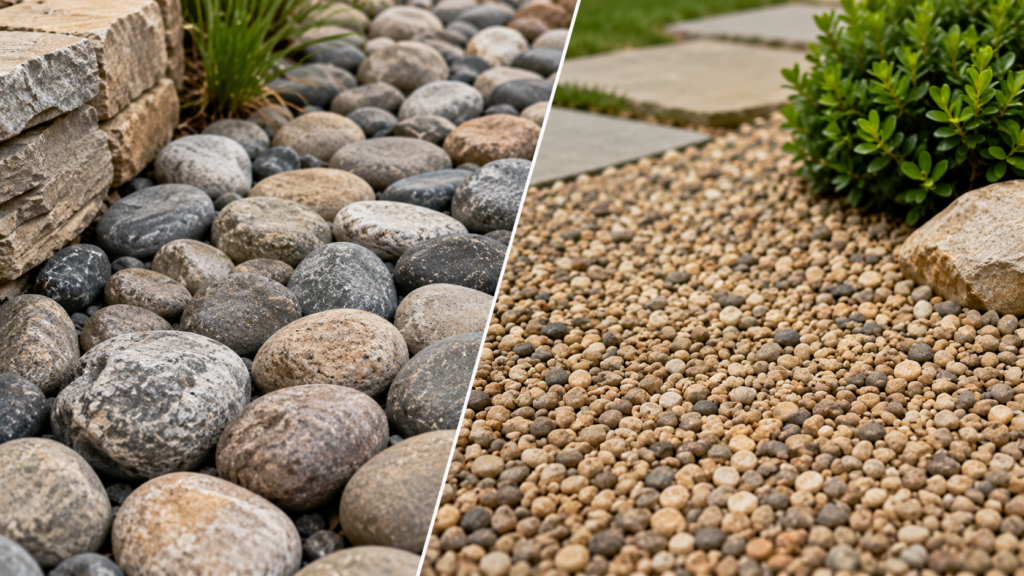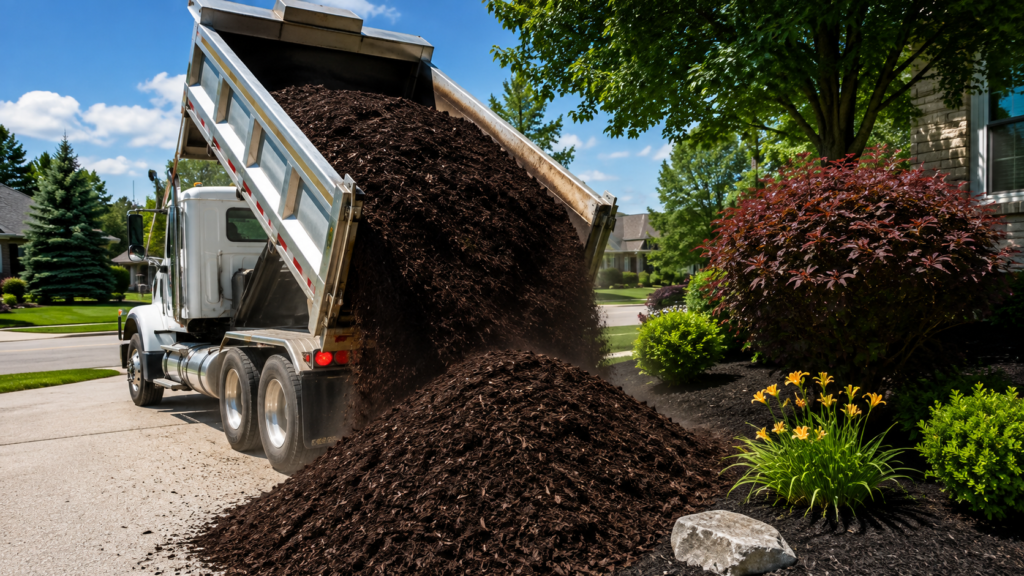
If you have ever stood in a garden center near the outer ring of Buffalo or stared at a massive pile of dirt delivered to your driveway, you know the feeling. Soil is just dirt until you actually need to grow something in it.
Then, suddenly, it feels like a high-stakes chemistry exam where every bag has a different name, a different texture, and a different promise.
Topsoil vs compost vs garden soil are not interchangeable. Using topsoil when you meant to use compost will leave your vegetables starving in heavy clay. Spreading pure compost when you just needed to fill a deep hole is a quick way to burn out money and potentially smother sensitive plant roots.
Here in Western New York, where our native soil can range from sticky, heavy clay near Cheektowaga to compacted, rock-hard earth down in South Buffalo, getting this right matters.
Your yard deals with freeze-thaw cycles, harsh snowpack, and a short, intense growing season. The dirt under your boots sets the stage for everything you plant. Let’s break down exactly what topsoil, compost, and garden soil actually are, how they differ, and when to use each one so you can make smart decisions for your property.
Clear Definitions: What Is Actually in That Dirt?
Before spending a dime on a bag or bulk delivery, you need to understand what you are holding in your hands. On paper, it all looks like brown dirt. Under the surface, they serve entirely different purposes.
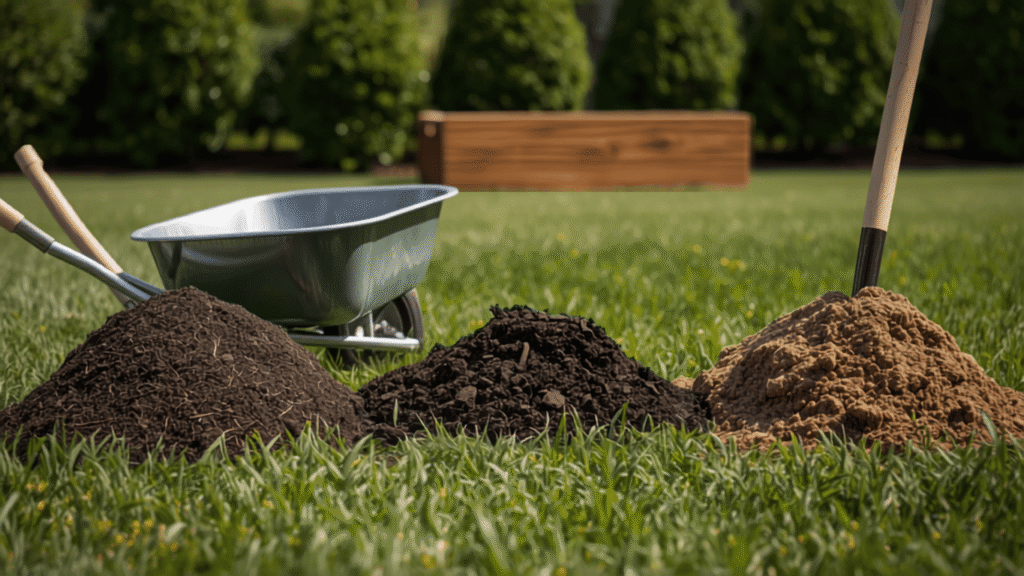
Topsoil is exactly what it sounds like: the uppermost layer of the earth’s natural soil, typically the top two to eight inches. It is the raw material of landscape construction. Naturally occurring topsoil consists of mineral particles, sand, silt, and clay, mixed with a small percentage of decomposed organic material.
When you buy topsoil in bulk, it is usually scraped from commercial land development sites, screened to remove large rocks, sticks, and debris, and stockpiled for sale. Good topsoil has weight, body, and structure. It does not provide high levels of plant nutrition on its own, but it provides the essential physical volume needed to build grade, fill low spots, or anchor turfgrass roots.
Compost is pure, fully decomposed organic material. It is made from micro-organisms breaking down plant waste, leaves, food scraps, manure, and landscape trimmings over time under controlled, high-heat conditions. Unlike topsoil, compost contains very little mineral dirt. It is dark, crumbly, rich, and smells like a forest floor after a fresh spring rain.
Think of compost as a soil conditioner and natural fertilizer rather than a structural filling agent. It is packed with beneficial microbial life that breathes energy back into dead or compacted ground.
When homeowners ask about the difference between topsoil and compost, the simplest answer comes down to structure versus nourishment. Topsoil builds the physical foundation; compost feeds the living ecosystem within that foundation.
Garden soil is actually a pre-mixed product designed specifically for in-ground planting beds. It is not something you scoop straight out of a native field. Manufacturers create garden soil by blending natural topsoil with organic amendments, such as compost, shredded bark, peat moss, or perlite, to achieve a balanced texture.
The goal of garden soil is to offer the best of both worlds: enough heavy body from the topsoil to retain moisture and hold root systems firmly, combined with enough loose compost to allow air circulation and root expansion. If topsoil is raw flour and compost is yeast, garden soil is the pre-mixed dough ready for planting.
Nutrient Content and Biological Activity
Plants do not feed directly on dirt; they feed on nutrients dissolved in soil water, brought to their roots by living microorganisms. Understanding the nutrient profile of these materials prevents costly garden mistakes.
Topsoil is biologically slow. Because it is mostly mineral sand, silt, and clay, its nutrient levels are low and highly variable. It contains low trace amounts of nitrogen, phosphorus, and potassium. The microbial activity in topsoil remains dormant or minimal, especially if stockpiled in large commercial mounds where oxygen cannot reach the center.
Water retention in topsoil ranges from moderate to heavy, depending on the clay content. If you plant demanding heavy feeders, like tomatoes, hydrangeas, or flowering perennials, in straight, unamended topsoil, they will likely turn pale yellow, stunt, and struggle to establish strong roots.
Compost serves as a power plant for soil microbiology. It contains a full spectrum of macronutrients alongside vital micronutrients like calcium, magnesium, and sulfur. Compost provides slow-release organic nutrients that will not burn plant roots when mixed properly into planting sites.
It is packed with beneficial bacteria, mycorrhizal fungi, and protozoa that process minerals and make them accessible to plant roots. Furthermore, compost possesses an extremely high Cation Exchange Capacity (CEC), acting like a biological sponge that holds onto plant food and prevents lawn fertilizers from leaching away into local waterways.
Garden soil offers a practical middle ground for property owners. It is formulated so that home gardeners can dig a trench, pour in the material, and plant immediately without worrying about nutrient burn or root suffocation.
It contains enough organic matter to feed young plants during their critical initial establishment window, while retaining sufficient density to prevent fast washouts during heavy rainstorms.
Real-World Use Cases: What Should You Use and When?
Knowing what these materials are is only half the battle. The real work happens when you take a shovel and go to work on your yard. Here is how to handle everyday landscaping scenarios across Buffalo properties.
When you need to fix settling along a foundation, smooth out ruts from tree removals, or raise a low section of turf, use screened topsoil. Compost breaks down over time. If you fill a six-inch-deep hole with pure compost, it will look great for a month, but as microbes consume the organic matter, the area will shrink, sink, and leave a deep spot again next season. Topsoil stays in place because its mineral structure does not decompose.
For fixing small lawn depressions, a 50/50 blend of topsoil and fine compost gives grass seed the structural support to anchor while offering quick nutrients for germination.
If your shovel bounces off hard clay or turns up gray, sticky clods that hold water like a bucket, you need to know when to use compost. Heavy clay soil already has plenty of mineral particles, so adding topsoil just adds more density. Tilling or spading two to three inches of rich compost into six inches of clay creates small pathways for air and water, breaking sticky clay apart into soft, workable tilth.
Garden Soil vs Topsoil: When to Use Each in Your Yard
For installing new raised garden boxes or expanding flower borders, reach for garden soil or mix your own custom blend. Pure compost is too light and can hold excessive moisture in closed boxes, while pure topsoil gets heavy, compacted, and drains poorly inside a contained bed frame. Garden soil provides the physical anchor roots require alongside the open texture needed for healthy drainage.
Top-dressing is the secret to maintaining dense, deep-green lawns without dumping endless synthetic fertilizers on your grass. Spreading a quarter-inch layer of finely screened compost across your lawn in early spring or autumn feeds the soil food web. It works down to the root zone, loosens soil compaction, and improves drought resistance during hot July spells.
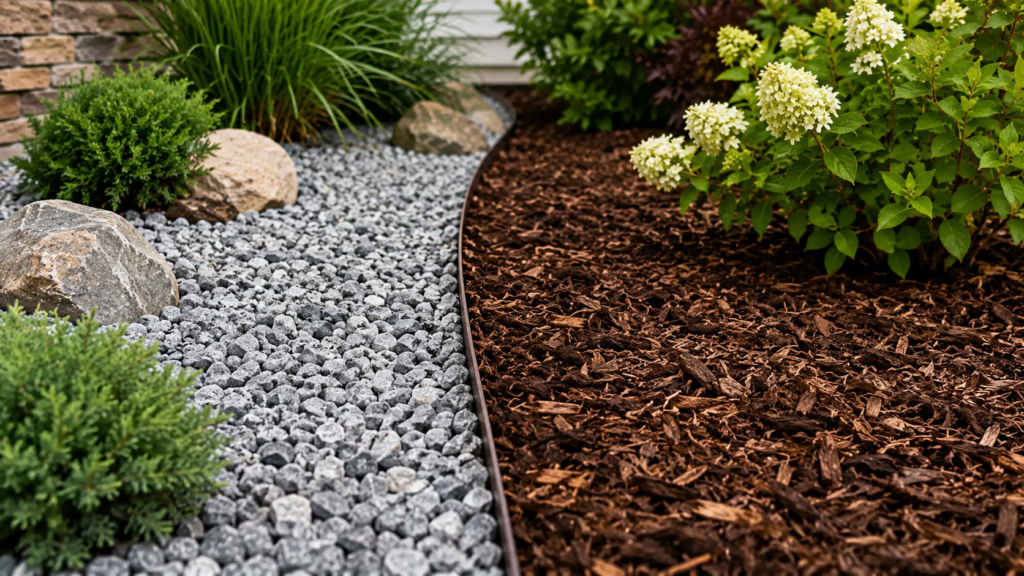
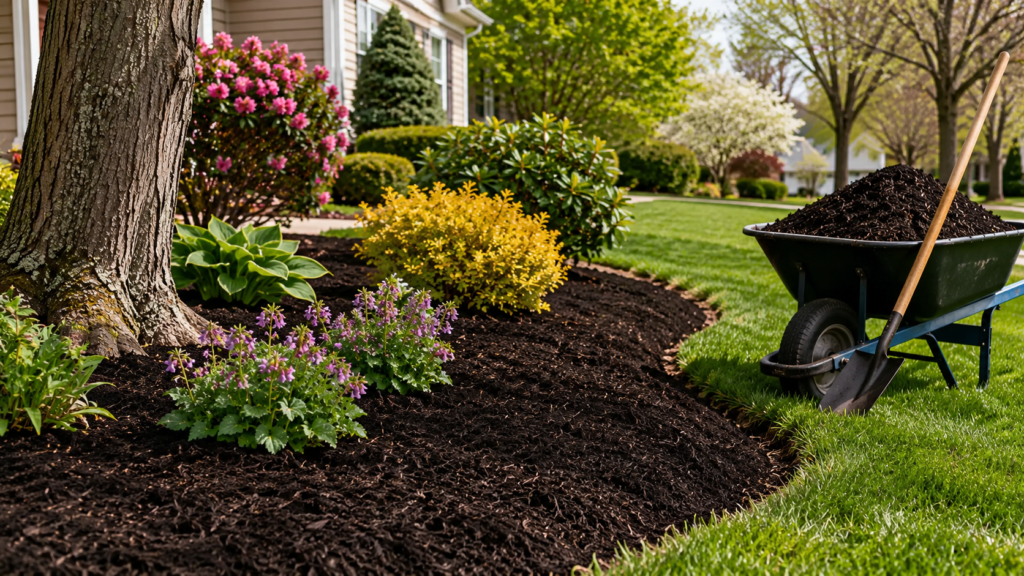
If you are refreshing landscape beds around shrubs, combining your soil prep work with high-quality bark mulch helps hold soil moisture, regulate soil temperature, and keep seasonal weed growth under control. You can explore standard options like Mulch & Wood Chips to shield exposed root zones after amending bed bases.
Soil Mixing Ratios for Homeowners
You do not need an advanced degree in agriscience to mix soil correctly at home. Following simple, field-tested ratios ensures healthy growth without wasting material.
If you are turning an existing patch of turf into a perennial flower bed, use the standard garden bed mix ratio of 70 percent native soil or screened topsoil combined with 30 percent quality compost. To apply this correctly, spread two inches of compost over the surface and till or fork it thoroughly into the top six inches of native ground.
For elevated boxes, cedar beds, or metal planter frames, prepare the raised bed master blend consisting of 50 percent screened topsoil, 30 percent organic compost, and 20 percent aeration amendment such as peat moss, coconut coir, or fine bark mulch debris. This specific combination prevents settling while retaining essential moisture during dry summer stretches.
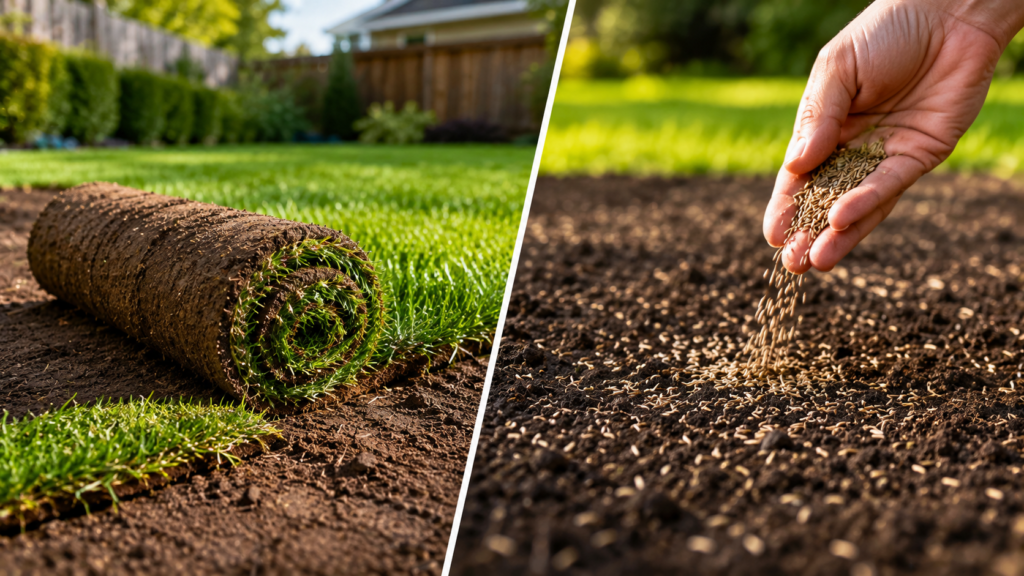
When patching dead lawn spots or overseeding thin grass, rely on a 50/50 lawn repair ratio made of half topsoil and half finely screened compost. Simply rake a half-inch layer of this mixture over bare spots, broadcast your grass seed, lightly tamp it down, and water consistently.
Buying in Bulk vs. Bagged: Calculating What You Need
One of the biggest mistakes homeowners make is buying dozen after dozen of heavy plastic bags from big-box stores when a single bulk delivery would save time, labor, and money.
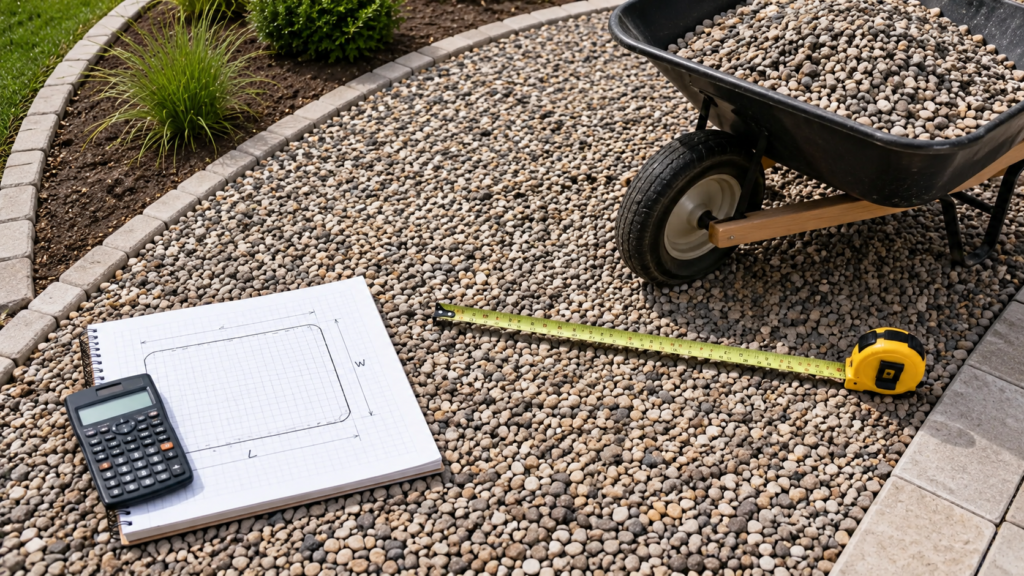
Bulk materials like topsoil, compost, and garden soil are measured and sold by the cubic yard. One cubic yard covers a 10-foot by 10-foot area (100 square feet) at three inches deep. To calculate your exact project needs, multiply the length in feet by the width in feet by the depth in inches, then divide the total by 324.
For example, if you are building a flower bed that is 20 feet long, 6 feet wide, and needs 4 inches of new material, multiplying 20 by 6 by 4 gives 480, which divided by 324 equals roughly 1.48 cubic yards. You would order 1.5 cubic yards of material.
Deciding between bagged and bulk comes down to total volume and access. You should buy bagged material if you need less than half a cubic yard, which equals roughly 13 to 15 standard 40-pound bags, or if you lack driveway space to unload a bulk delivery truck. On the other hand, you should buy bulk if your project calls for more than one cubic yard.
Bulk delivery is cleaner for large sites, eliminates dozens of single-use plastic bags, and provides far more consistent material quality across large land areas. At KD Nursery, we work directly with property owners across the region to help calculate precise material quantities, ensuring you get the exact blend delivered straight to your site without paying for wasteful overage.
Localized Considerations for Buffalo Properties
Landscaping in Western New York brings unique challenges that standard national gardening guides often ignore.
Much of Erie and Niagara counties rests on dense clay subsoils. Clay holds nutrients well, but it suffers from terrible drainage and low oxygen content when compacted.
Never dump heavy topsoil over tight clay without mixing in compost first. Topsoil placed over hard clay creates an isolated layer that traps water, creating a muddy underground pond that rots plant roots. Always blend your amendments into the existing native earth to bridge the two layers together smoothly.
Our planting season is brief, making timing critical for both spring prep and fall recovery. In the spring, focus on garden soil additions and raised bed prep as soon as the ground thaws and dries enough to work without clumping, taking care to avoid tilling soaking wet clay in early April, as this destroys soil structure.
Fall is the absolute best time for topsoil and compost applications on lawns. Core aerate your turf in September, top-dress with a fine compost-topsoil mix, and overseed. The autumn rains and cooler temperatures allow roots to establish deep into the soil profile before winter frost sets in.
Work performed by experienced local crews, including the team at KD Nursery, shows that late-season soil building yields stronger root systems when spring arrives.
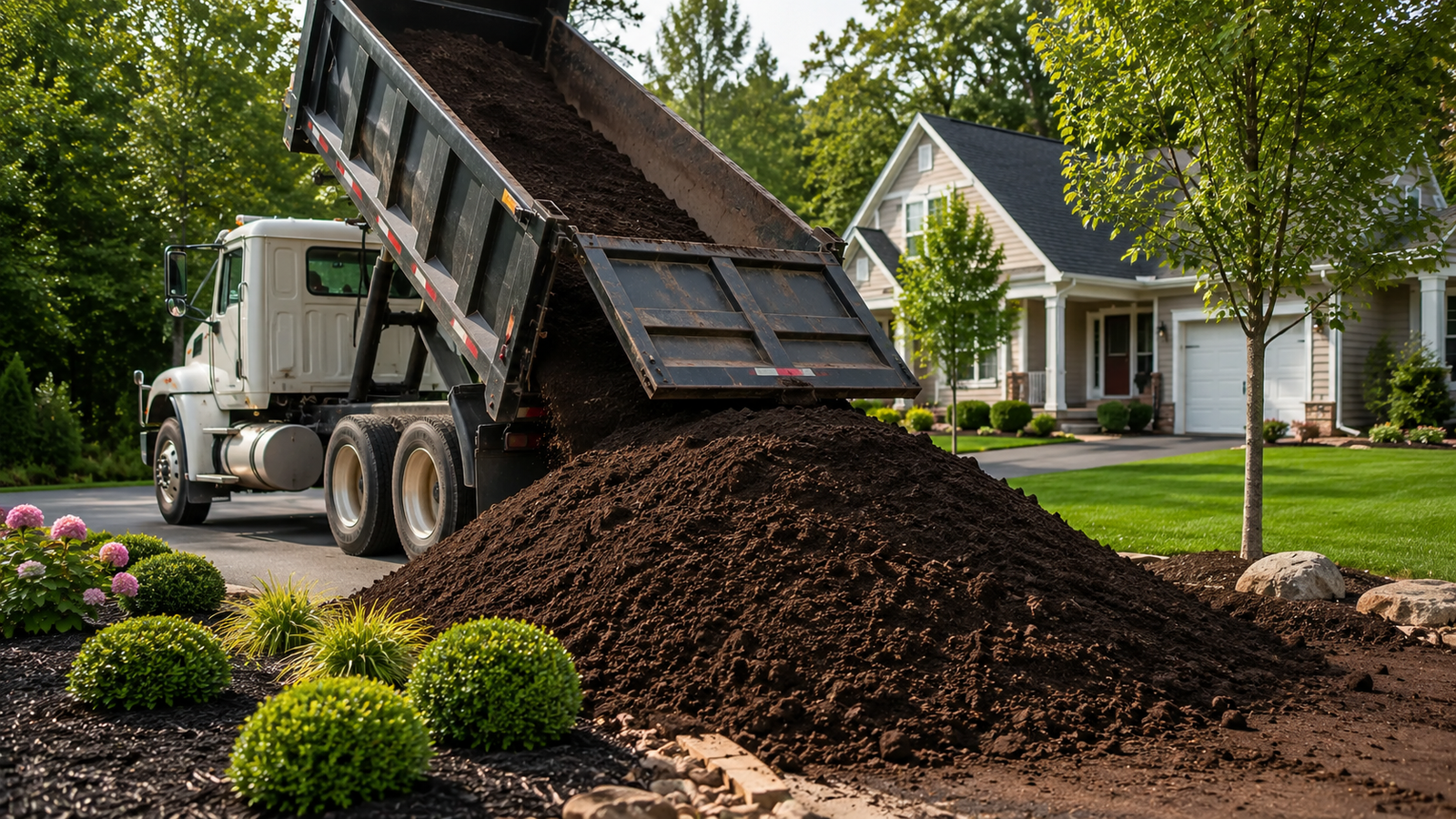
Topsoil Delivery in Clarence, NY: Cost, Quality & How Much You Need
Discover topsoil delivery in Clarence, NY with pricing, quality comparisons, coverage calculations, and practical advice for landscaping and lawn projects.
Continue Reading →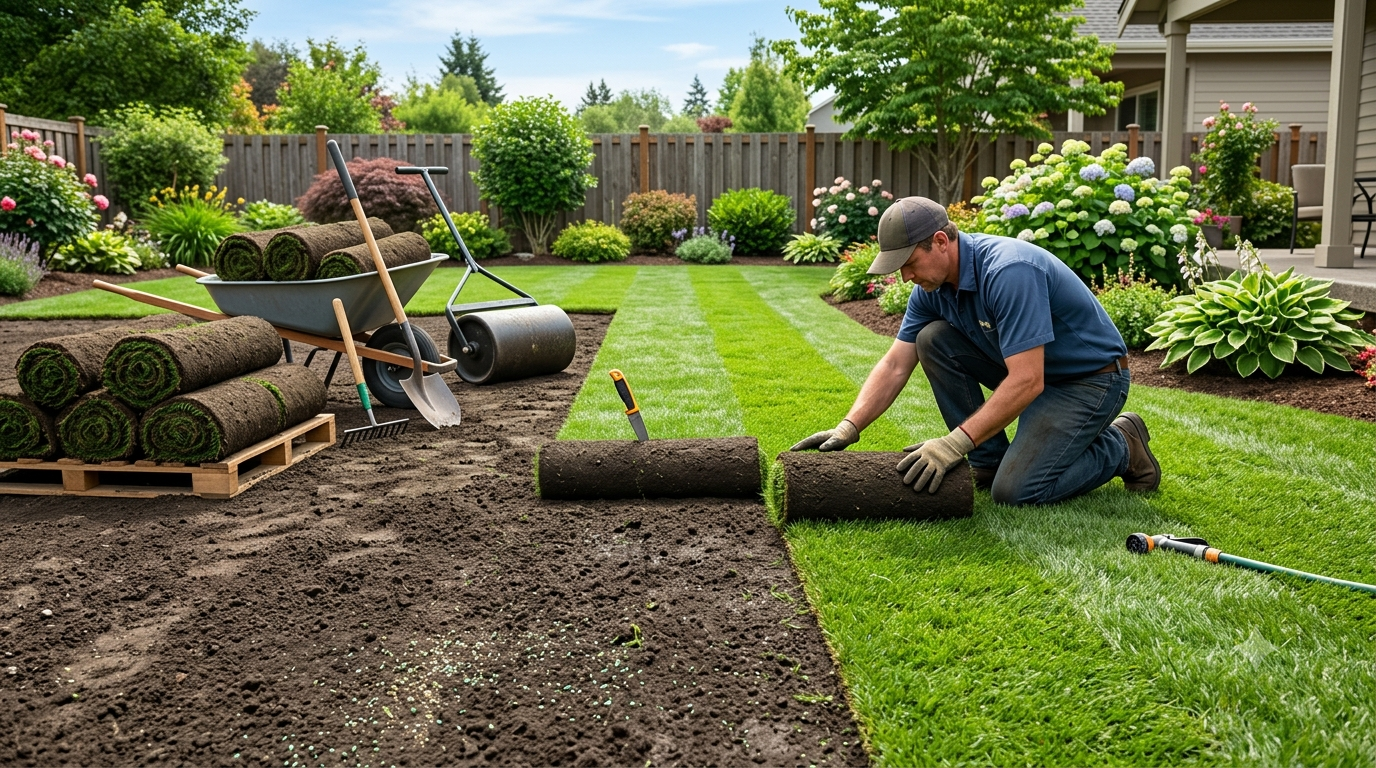
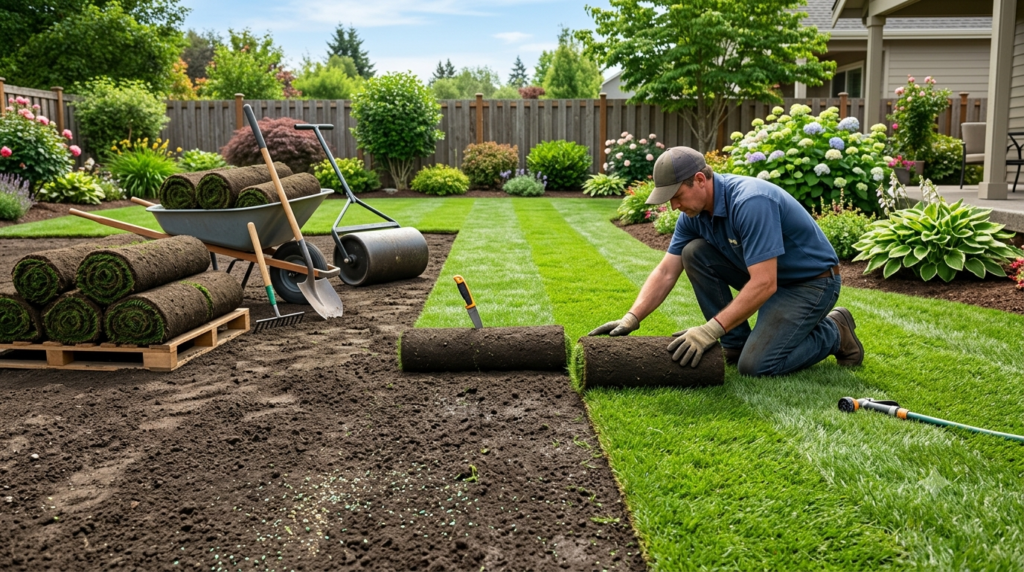
How to Lay Sod: Step-by-Step Guide for a Perfect New Lawn
Learn how to lay sod step by step, from preparing the soil to watering and maintenance. Follow these practical tips for a lush, healthy new lawn.
Continue Reading →Frequently Asked Questions
Can I use pure compost instead of topsoil for my lawn?
No, pure compost should not replace topsoil for structural filling. Compost decomposes over time, causing the ground to settle unevenly. Topsoil provides permanent mineral density, while compost should be added only as a thin top dressing to supply essential nutrients.
What is the primary difference between topsoil and compost?
Topsoil is the natural, mineral-heavy upper layer of earth used for volume, structure, and grading. Compost is pure, decomposed organic material rich in beneficial microbial life and nutrients, used primarily to amend and enrich existing garden soil.
How often should I add compost to my garden beds?
Apply a one- to two-inch layer of organic compost to garden beds once or twice per year. Early spring, before planting, and late fall, after bed clean-up, are ideal times to replenish nutrients and improve overall soil structure.
Is garden soil safe to use in containers and pots?
No, garden soil is too heavy and dense for potted plants or container boxes. It compacts inside pots, cutting off root oxygen and suffocating plants. Use lightweight potting mix designed for containers to ensure proper drainage and root growth.
How deep should I lay topsoil when starting a new lawn?
Spread a bare minimum of three to four inches of quality screened topsoil when establishing new lawn turf. This gives grass roots adequate depth to establish deep anchor systems that withstand summer heat waves and cold winter freezes.
Will adding compost help fix poor drainage in clay soil?
Yes, incorporating rich compost into heavy clay soil creates larger soil pores and improves overall structure. Over time, organic matter breaks up tight clay particles, allowing excess water to drain away while retaining essential moisture for roots.
Can I mix topsoil and compost together for my garden?
Yes, blending screened topsoil and organic compost creates an exceptional growing medium for beds and lawn repairs. A 50/50 mix combines physical structural volume with high nutrient content, making it ideal for overall plant growth.