A Western New York yard in February can look pretty bare. Snow covers the beds, the maples stand empty, and everything fades to gray and white. Then you notice the one corner that still looks alive, with deep green leaves poking through the drifts. That is the job of an evergreen shrub. If you are trying to choose the best evergreen shrubs zone 6 gardeners can count on, this guide is for you.
We will cover our top picks, how to use them along your foundation, how to care for them through our long winters, and what each one offers across the seasons. We have planted, pruned, and sometimes lost shrubs in this region, so we will tell you what works and what does not. Take your time with it. A shrub is a long-term decision, and a little planning now saves a lot of replanting later.
What Zone 6 Really Means for Your Yard
Plant hardiness zones are based on the average coldest winter temperature in an area. Zone 6 generally means winter lows can reach somewhere between 0 and minus 10 degrees Fahrenheit.
Much of Western New York sits in zone 6, though some inland and higher spots run colder and some lakeshore areas run a bit warmer. The USDA updated its map in 2023, so it is worth looking up your ZIP code rather than going by what a neighbor told you years ago.
The zone number is only part of the story. Our region also deals with heavy lake-effect snow, strong winter wind, and clay soil that holds water. A shrub can be wind-dyed to zone 5 on the tag and still struggle if it sits in a wet spot or takes a daily blast of wind off the lake.
When we pick evergreen shrubs for New York properties, we look at the zone first and then at wind, drainage, and sun. Those three things decide more outcomes than most people expect.
Top Pick: Pieris (Andromeda)
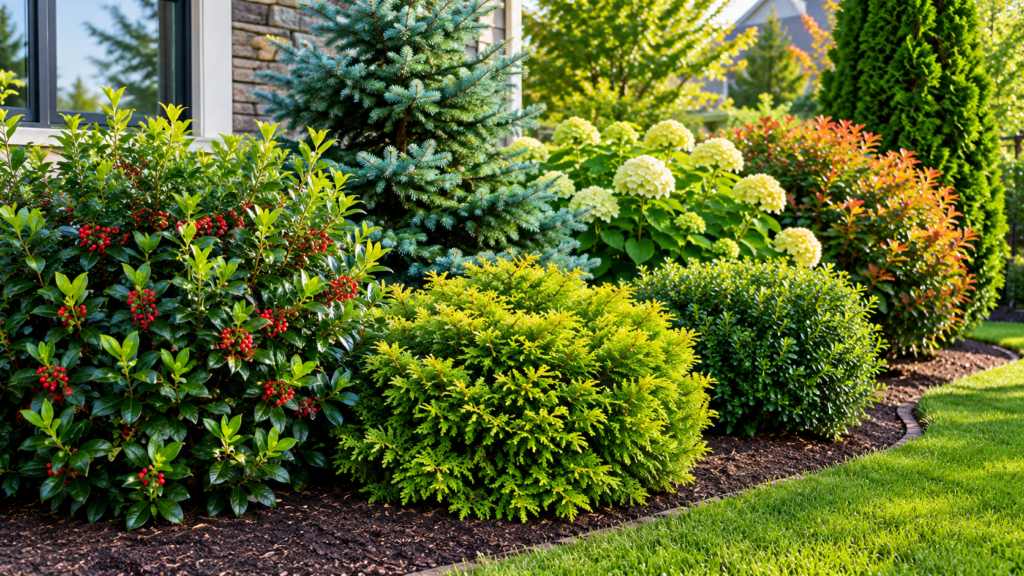
Pieris, usually Japanese pieris, is one of the most useful year round shrubs you can plant here. It holds glossy leaves year-round through the winter, and in early spring it drops clusters of small, bell-shaped flowers, usually white or pink. Many varieties also put out bright new growth in red, bronze, or pink that looks almost like a second round of flowers.
Pieris is generally hardy in zones 5 through 8, which covers us, but it likes a sheltered spot. It does best in part shade with acidic, well-drained soil, and it dislikes harsh winter wind. A planting on the east side of a house, tucked out of the prevailing wind, tends to do well. In full hot sun and dry soil, it can get stressed and attract lace bugs, a small insect that leaves the leaves looking speckled.
Two more things worth knowing. Pieris is poisonous if eaten, so think about that if you have pets or small children who chew on plants. On the plus side, deer tend to leave it alone, which matters in a lot of our neighborhoods. Compact varieties stay around three to six feet, while larger ones can reach eight or more, so check the mature size on the tag.
Top Pick: Boxwood
Boxwood is the classic evergreen hedge plant, and it earns its reputation. The leaves are small, dense, and neat, and the shrub takes shearing very well. If you want a clean line along a walkway or a formal border, boxwood is hard to beat.
Not every boxwood handles our winters the same way. Varieties such as Green Mountain and Green Velvet are commonly chosen for cold regions, and Korean boxwood types are among the hardiest. The most common winter problem is bronzing, where leaves turn a coppery color from sun and wind exposure. It often looks worse than it is, and many plants green back up in spring, but a protected location helps.
Be honest with yourself about two risks. Boxwood blight is a fungal disease that has been found in New York, and it can cause leaf spots and sudden leaf drop. Buy plants from a source you trust, avoid crowding them, and keep the foliage as dry as you can. Boxwood leafminer is another pest to watch for.
Neither problem means you should skip boxwood, but you should know what you are signing up for. Deer usually avoid it, which is a nice bonus.
Top Pick: Holly
Holly is a broad family, and the right choice depends on what you want. Inkberry holly, a native shrub, has small, smooth leaves that look a lot like boxwood and handles wet soil better than many evergreens. It is generally hardy in zone 5 or 6 and up, and compact varieties stay tidy. Japanese holly is another boxwood look-alike, and some narrow forms are used as upright accents.
Blue holly types, such as the hybrids sold as Blue Prince and Blue Princess, have glossy dark leaves and bright red berries. Here is the thing about berries: holly plants are either male or female, and the females need a male nearby to produce fruit. If you want berries for the birds and the winter color, plant at least one of each, or confirm a neighbor has a male close by.
Hollies like acidic, well-drained soil and some protection from wind. The spiny types can make pruning a chore, so wear gloves. Winterberry is often mentioned alongside them, but it loses its leaves in fall, so it will not give you evergreen color. It is still a great plant for berries, just a different job.
Other Zone 6 Shrubs Worth a Look
A few more evergreens deserve space on your list. Rhododendron and mountain laurel give you large spring flowers and leathery green leaves, though both want acidic soil and a bit of shelter from wind. Junipers handle sun, poor soil, and road salt better than most, which is useful near a driveway or street. Arborvitae makes a fast, tall screen, though deer will often eat it in winter if they are hungry enough.
Yew is another familiar one. It handles shade and shearing well, but it is toxic if eaten and deer love it, so it is a risky choice in areas with heavy deer pressure. Dwarf conifers like compact spruces and pines add texture and a bluer or golden tone against all that green.
When you are building the list of the best evergreen shrubs zone 6 yards can handle, aim for variety. Mixing broadleaf shrubs like pieris and holly with needled plants like juniper gives you different shapes and shades, and it also spreads your risk. If one species gets hit by a pest, the whole planting does not go down with it. You can browse more local options in our plants and shrubs section.
Foundation Planting That Actually Works
Foundation shrubs sit right up against your house, and that spot comes with its own rules. The biggest mistake we see is planting too close. A cute little shrub in a one-gallon pot becomes a five-foot-wide plant, and soon it is scraping the siding and blocking a window. As a rough guide, place a shrub at least half its mature width away from the wall, plus a little extra, so air can move around it.
Think about snow and roof runoff next. Snow sliding off a roof can crush or bend shrubs planted directly underneath. Either leave a gap, choose tough, low plants there, or move taller shrubs out from the drip line. Also watch where downspouts empty, since a constant flow of water can drown roots or wash away soil.
For layout, a common approach is to put taller shrubs at corners and by entries, medium ones under windows, and low ones in front. Odd-numbered groups usually look more natural than rows of identical plants.
Foundation shrubs should also look good at the front door in January, which is where evergreens shine. Before you dig near the house, call 811, the national call-before-you-dig number, so buried utility lines get marked for free.
Getting the Soil and Planting Right
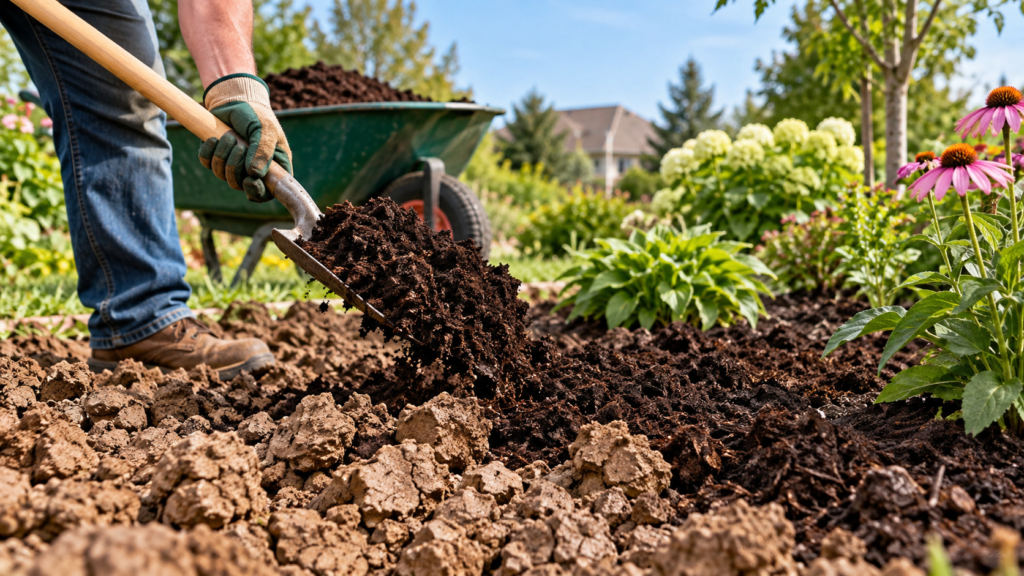
Most of the plants above prefer well-drained soil, and much of our native ground is heavy clay. Clay holds water, and wet roots in winter are a bigger killer than cold. Test your soil before you plant. Cornell Cooperative Extension offices in this region can point you to testing options, and a basic test will tell you your pH and what the soil needs.
When you dig, make the hole about twice as wide as the root ball but no deeper. Set the plant so the top of the root ball sits level with or slightly above the surrounding soil, which helps in clay. Backfill with the soil you dug out rather than a pocket of rich potting mix, because roots in a pocket of fluffy soil may refuse to grow out into the harder clay around them.
Spring and early fall are the best planting times here. Fall planting works well as long as it is done early enough for roots to settle in before the ground freezes, usually by early October for most plants. Add two to three inches of mulch, and keep it a few inches away from the stems so the bark does not rot.
Care Through the Seasons
Watering matters most in the first two years. New shrubs need steady moisture while their roots spread, usually a deep soak once or twice a week in dry weather rather than a light sprinkle every day. In late fall, water well before the ground freezes. Evergreens keep losing moisture through their leaves all winter, so going into the cold with dry roots can lead to brown, burned-looking foliage by March.
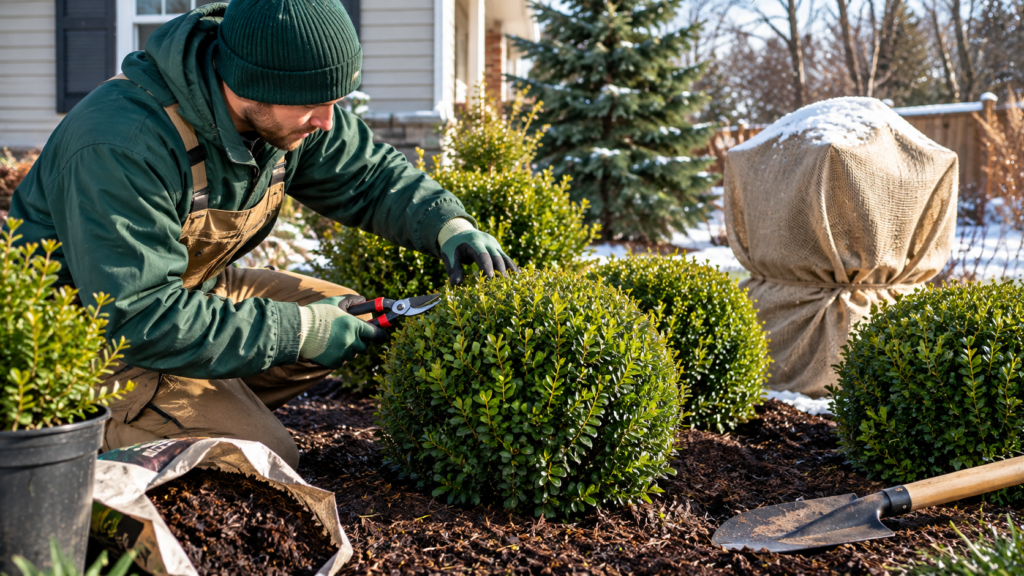
Winter protection helps where wind is a problem. A burlap screen on the windward side keeps the worst of it off tender shrubs. Wrap loosely, and leave the top open. Upright shrubs can bend or split under heavy snow, so loosely tying them with soft twine or fabric can save them. Do not beat snow off a frozen shrub with a stick, since frozen branches snap easily. Brush it off gently, or let it melt.
For pruning, timing depends on the plant. Shear boxwood in late spring after new growth appears. Prune spring-flowering shrubs like pieris and rhododendron right after they bloom, since they set next year’s buds soon after. Feed lightly in spring with a fertilizer made for acid-loving plants if your soil needs it. Skip heavy feeding in late summer, which pushes soft growth that winter may burn.
Seasonal Interest, Month by Month
Evergreen does not have to mean boring. In late winter and early spring, pieris flowers open and the new leaves show red or bronze. As spring warms, rhododendron and mountain laurel take over with big flower clusters, and boxwood and holly push out fresh light-green growth that stands out against the older leaves.
Summer is the quiet season for evergreens, but they provide a green backdrop that makes perennials and annuals pop. Inkberry and holly flowers are small, but bees visit them, and that adds life to the garden.
Fall brings holly berries, and some junipers and dwarf conifers take on deeper tones as the weather cools. Winter is when it all comes together. Those year round shrubs now hold the shape of the garden; year-round, bronze tints, and snow-dusted foliage give you something to look at when everything else has gone quiet. Planning for each season, rather than only for spring, is how you end up with a yard that looks good all twelve months.
Choosing Healthy Plants and a Local Source
Where you buy matters. Look for a nursery that grows or sources plants suited to our climate and can tell you the mature size, light needs, and hardiness of each one. Check the plant itself. The leaves should be a good color, the branches should be firm, and the roots should not be circling tightly around the pot. Avoid anything with spots on the leaves or signs of insects.
Ask questions. How long has the plant been in this region? Is it a variety known for cold hardiness? What problems does it get here? A good local grower will answer plainly, including telling you when a plant is a bad fit for your spot. At KD Nursery, we would rather steer you to the right shrub than sell you the wrong one, because we see the results in this climate every year.
It also helps to bring photos of your planting area, along with notes on sun, wind, and drainage. Those details tell us far more than a zone number can. And if you are planning a larger planting, think about doing it in stages. Putting in your core evergreens first, and filling in with perennials and smaller shrubs later, spreads the cost and lets you see how the space develops.
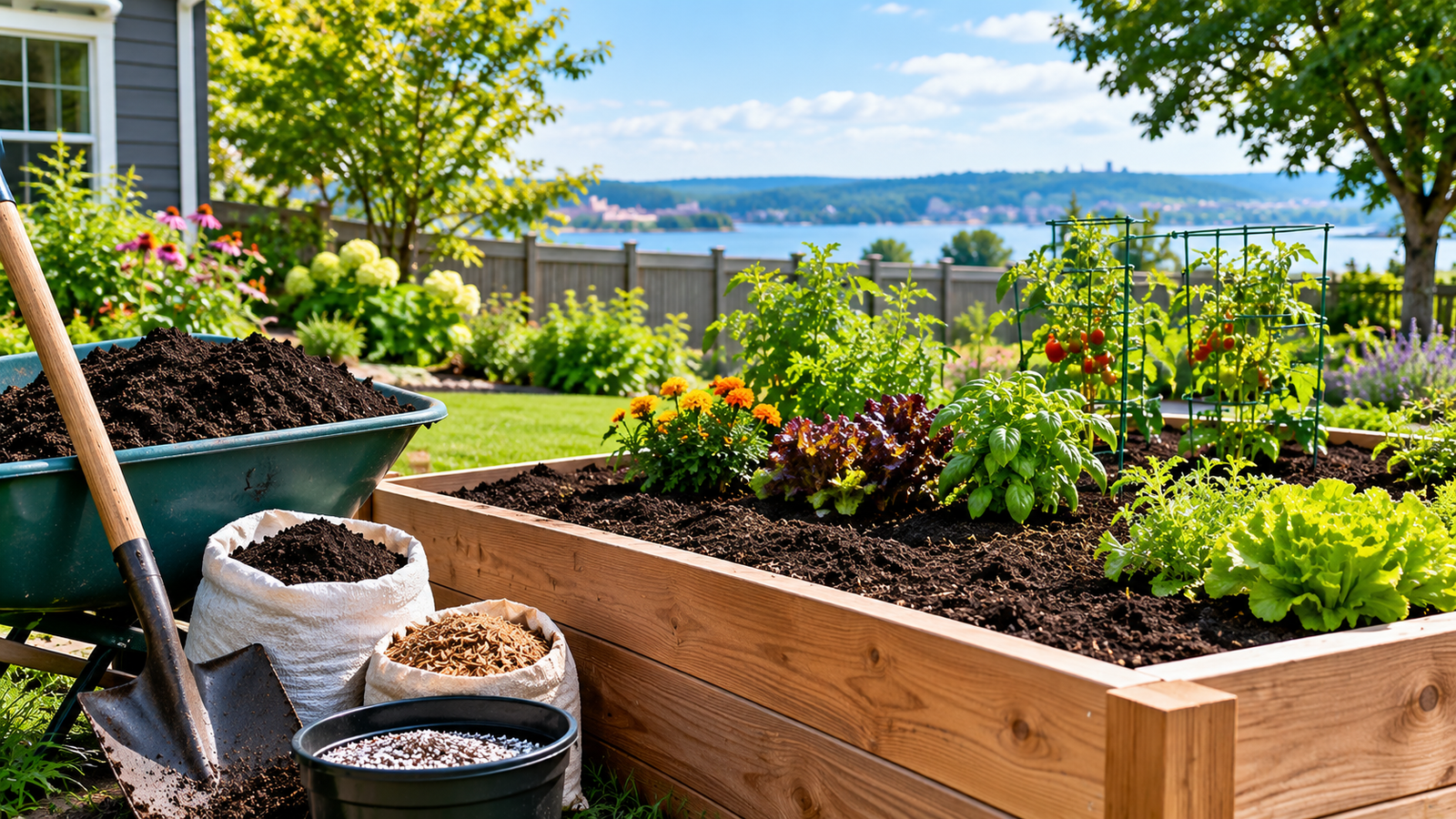
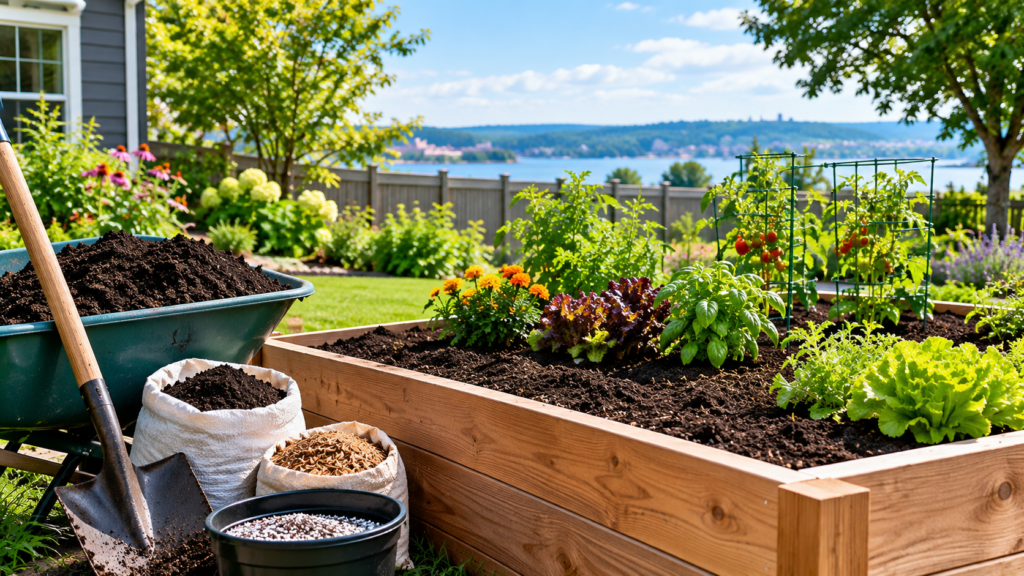
Choosing the Right Soil for Raised Garden Beds in Western New York
Healthy raised garden beds start with a growing medium that supports strong roots, balanced moisture, good drainage, and steady nutrient availability. Learn how topsoil, compost, and quality garden soil work together to create suitable conditions for vegetables, herbs, and flowers. Explore important factors such as soil texture, organic matter, bed depth, and drainage when preparing a new garden. In Buffalo and throughout Western New York, choosing the right soil blend can help manage seasonal rainfall and changing temperatures while supporting healthy plant development. Discover practical soil preparation tips to help you build a productive garden and maintain your planting beds throughout the growing season.
Continue Reading →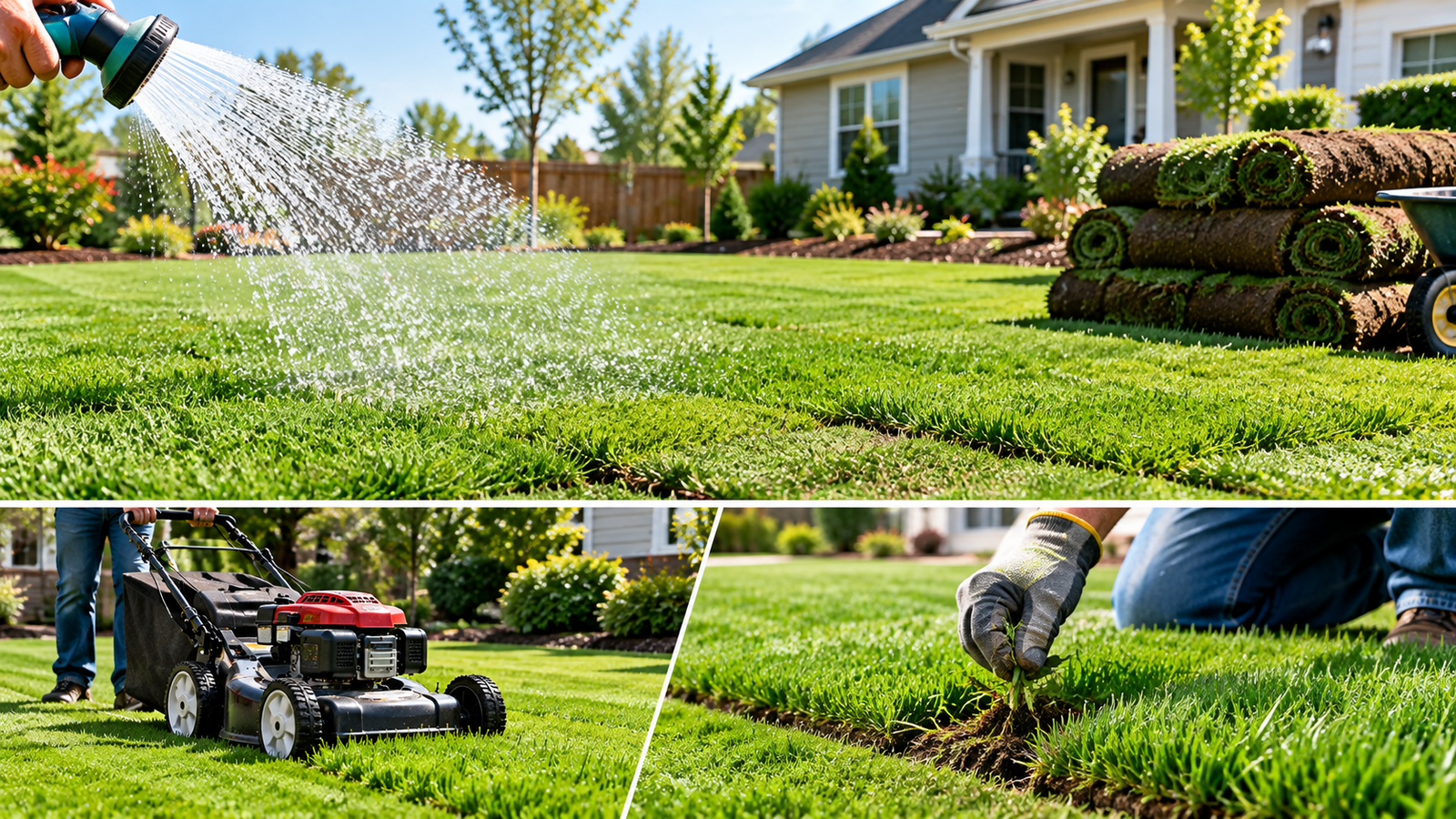
New Sod Care: Watering, Mowing, and First-Month Tips
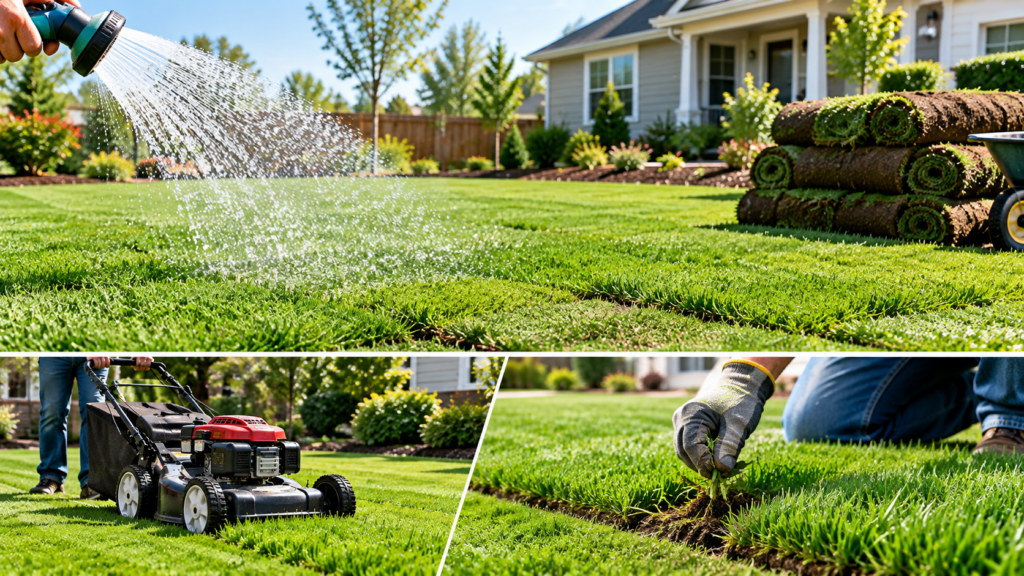
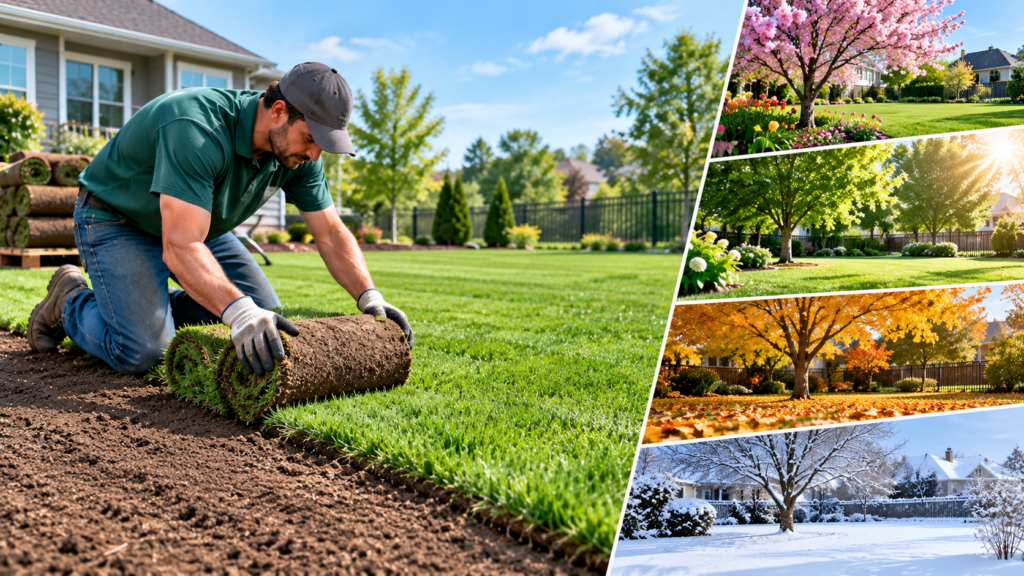
Newly installed sod needs consistent care during its first month to develop strong roots and establish a healthy lawn. Learn how often to water fresh sod, how to check soil moisture, and when the grass is ready for its first mowing. Discover why heavy foot traffic should be limited during establishment and how proper watering helps prevent dry patches and root stress. Western New York weather can bring changing temperatures and rainfall, so adjusting your lawn care routine to local conditions is important. Follow practical tips for monitoring root growth, mowing at the appropriate height, and helping your new lawn become a lush, resilient outdoor space.
Continue Reading →Final Thoughts
The best evergreen shrubs for your yard are the ones that fit your light, soil, wind, and the look you want. Pieris, boxwood, and holly are strong starting points for most Western New York properties, with juniper, rhododendron, and other options filling in specific needs. Give them a good planting spot, water them well going into winter, and be patient while they settle in. If you would like help matching shrubs to your site, KD Nursery is glad to talk it through.
Frequently Asked Questions
What are the best evergreen shrubs for zone 6?
Pieris, boxwood, and holly are reliable choices for zone 6. Inkberry holly, juniper, rhododendron, and mountain laurel also do well. The best pick depends on your sun, wind, soil drainage, and how large you want the shrub to grow.
Which evergreen shrubs do deer avoid?
Deer usually leave pieris and boxwood alone, and many hollies too. Yew and arborvitae are favorites for deer, especially in winter. No plant is fully deer-proof, so hungry deer may nibble almost anything when food runs short.
When is the best time to plant evergreen shrubs in New York?
Spring and early fall work best. Fall planting should happen early enough, usually by early October, for roots to settle before the ground freezes. Avoid planting in the heat of midsummer, since new shrubs dry out quickly then.
How far from my house should I plant foundation shrubs?
A good rule is about half the shrub’s mature width from the wall, plus a few extra inches. That leaves room for air flow and growth. Also keep shrubs out from airflow-exposed edges where sliding snow can damage them.
Why are my evergreen shrubs turning brown in winter?
Winter browning usually comes from wind, sun, and dry roots. Evergreens lose moisture through their leaves all winter. Water deeply before the ground freezes, add mulch, and use burlap on the windward side. Many plants recover in spring.
Do holly shrubs need a male and female plant?
Yes, for berries. Female hollies produce fruit only when a male plant is nearby for pollination. Plant at least one of each, or check that a male holly grows close by. The leaves stay evergreen either way
Can I grow boxwood in Western New York?
Yes, many boxwood varieties grow well here, especially cold-hardy types like Green Mountain and Korean boxwoods. Expect some winter bronzing in exposed spots. Watch for boxwood blight and leafminer, and buy plants from a source you trust.