Boxwoods are one of the most consistently purchased shrubs at nurseries across Western New York, and they’re also one of the most consistently mismanaged once they get home.
The combination of the wrong variety for the site, planting at the wrong depth, and inadequate winter protection creates the pattern most homeowners recognize by spring: bronzed, burned foliage, dead interior branches, and a shrub that looks worse every year rather than better.
Boxwood care in Zone 6a Western New York is manageable once you understand what these shrubs actually need, and what they can’t tolerate. This covers planting, pruning, winter burn prevention, boxwood blight, and which varieties hold up best through Erie County winters without requiring constant intervention.
Quick Answer
Boxwoods need well-drained soil, partial to full sun, and protection from desiccating winter wind to perform well in Western New York. Plant at the correct depth, crown at or slightly above grade, never buried. Prune in late spring after new growth hardens. Apply anti-desiccant spray in late fall and burlap windbreaks on exposed sites to prevent winter burn. Choose cold-hardy varieties like Green Mountain or Green Velvet for Zone 6a rather than English boxwood, which is marginally hardy in this climate.
Planting Boxwoods in Western New York
Site selection is the decision that determines most of what follows. Boxwoods perform best in a location that gets morning sun and afternoon shade or filtered light. Direct western exposure that combines full afternoon sun with winter wind is one of the most reliable ways to produce annual winter burn on boxwoods in the Buffalo area. Eastern and northern exposures with some wind protection from structures or evergreen plantings create better conditions for consistent performance.
Soil drainage is non-negotiable. Boxwoods are genuinely intolerant of wet feet. The clay-heavy soil common across Erie County holds water longer than boxwoods can handle in extended wet periods, and roots sitting in saturated soil develop root rot that shows up as decline months after the soil has dried out.
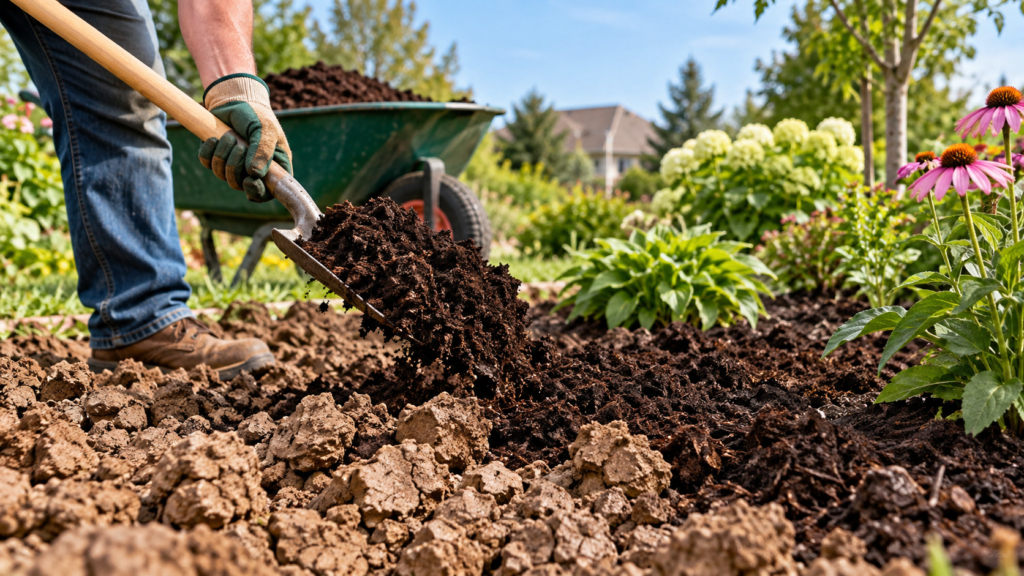
Raised planting, setting the root ball so the crown sits at or slightly above the surrounding grade, improves drainage at the planting site and is the correct approach for most Western New York boxwood installations. If the soil drains poorly, amending with compost and coarse sand before planting and raising the planting area are both steps worth taking before putting the plant in the ground.
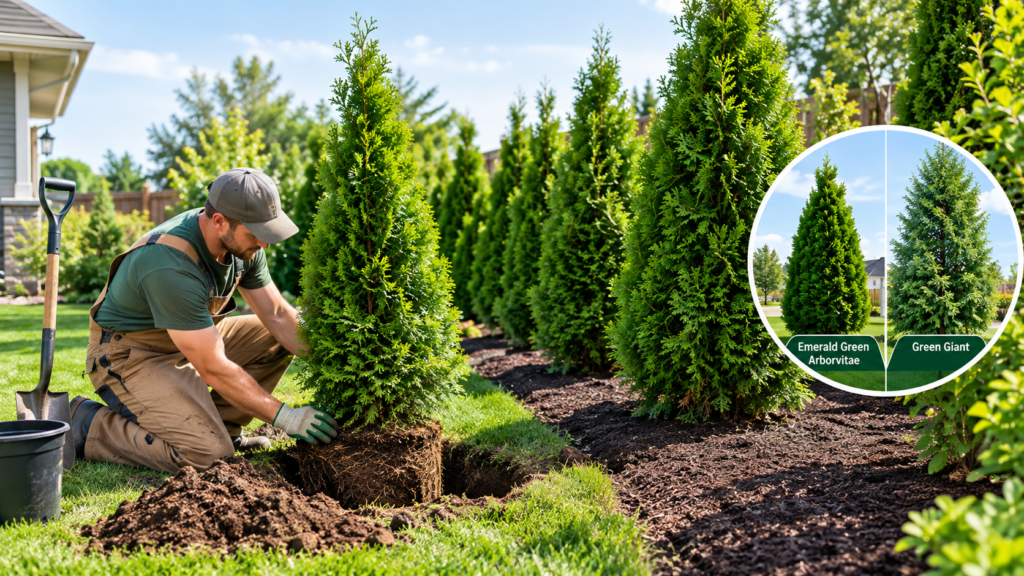
Planting depth is where many boxwoods fail before they even have a chance to establish. The crown, the point where the trunk meets the root system, needs to sit at grade or slightly above it. Planted too deep, the bark at the base of the plant stays wet, and the stem can develop crown rot.
The instinct to plant deeper for stability works against boxwoods, and it’s one of the most common errors that shows up as unexplained decline in the second or third year after planting.
Timing matters for establishment. Spring planting, after the last frost risk in Erie County, typically mid-May, gives boxwoods the full growing season to establish before winter.
Fall planting in September works as well, and some growers prefer it because cooler temperatures reduce transplant stress and reliable fall rainfall in Western New York supports root development without requiring supplemental irrigation. Avoid midsummer planting when heat stress combines with transplant shock to make establishment difficult.
Water thoroughly at planting and for the first full growing season, particularly through dry spells. Established boxwoods are reasonably drought-tolerant, but first-year plants need consistent moisture to develop the root system that supports winter hardiness in subsequent years.
Pruning and Shaping Boxwoods
Boxwood pruning timing is straightforward: late spring, after the new growth flush has hardened off. In Western New York, this means late May to mid-June, once the bright green new growth has darkened to match the color of the older foliage. Pruning before the new growth has hardened removes the most actively growing tissue and can stress the shrub.
Fall pruning is what to avoid. Cutting boxwoods in late summer or fall stimulates new growth that doesn’t have time to harden before cold weather arrives, which is then vulnerable to winter kill. The pruned cuts themselves can also be desiccation entry points through winter. In Western New York, late fall boxwood pruning consistently produces worse winter performance than spring pruning of the same shrubs.
Light annual shearing maintains shape without creating the dense outer shell that cuts off light and air circulation to the interior. A thick outer layer of foliage that’s been sheared repeatedly into a tight surface eventually creates an interior that loses vigor; the inner branches don’t receive enough light to stay productive, and the outer layer becomes a surface that sheds water rather than allowing it into the root zone.
For formal boxwood hedges and topiary, more frequent light pruning during the growing season, shearing in late spring and again in midsummer if needed, maintains the form without removing so much growth at once that the plant is stressed. The key is cutting lightly and frequently rather than heavily and infrequently.
Hand pruning with bypass pruners is preferable to power shearing for individual specimens where you want to remove specific interior dead wood or crossing branches without triggering a shearing response across the entire plant. An annual light hand-pruning pass to remove visible dead wood from the interior improves air circulation and reduces the conditions that support boxwood blight.
Winter Burn: What It Is and How to Prevent It
Winter burn is the most common boxwood problem in Western New York, and understanding what causes it makes prevention straightforward.
Winter burn is desiccation damage. Boxwood foliage continues to lose moisture through transpiration throughout the winter: even when the plant appears dormant, the leaves are still releasing water. When the ground is frozen, the roots can’t replace that moisture, and when winter wind accelerates the moisture loss from the foliage, the tissue desiccates and turns bronze or brown.
The damage is most severe on the windward side of the plant and on foliage that’s most exposed: the top and the south- and west-facing sides that receive the most winter sun and wind exposure.
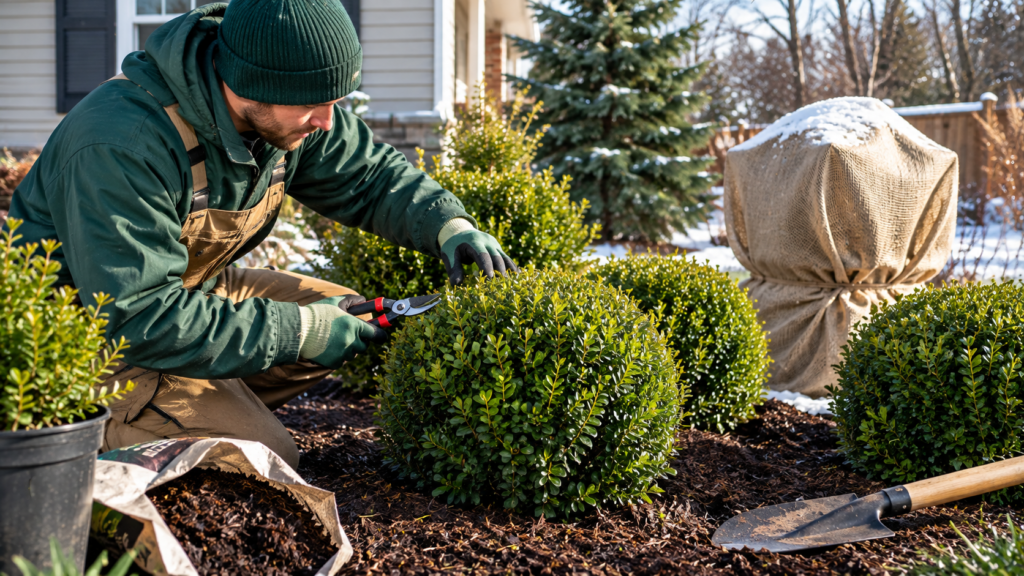
Boxwood winter protection starts with site selection but extends into fall preparation. Anti-desiccant sprays, products like Wilt-Pruf or similar formulations, applied in late November coat the foliage with a thin film that reduces moisture loss through winter.
Two applications are typically recommended: one in late November and a second in late January or early February when the first application has worn off. Apply when temperatures are above 40 degrees Fahrenheit and the foliage is dry; applying in freezing temperatures or to wet foliage reduces effectiveness.
Burlap windbreaks on the most exposed sides of boxwoods, typically the north and west sides where winter wind comes from most consistently in Western New York, reduce the desiccation that drives winter burn. The burlap creates a physical barrier that slows air movement across the foliage, which is the mechanism that causes the most severe burn. The burlap doesn’t need to cover the entire plant; protecting the windward side is what matters. Install the burlap on stakes that hold it away from the foliage rather than wrapping it directly against the plant, which can trap moisture.
Mulching around the base of boxwoods in fall, two to three inches of shredded bark kept away from the trunk, reduces the depth to which the ground freezes, which extends the period when roots can absorb moisture and supply it to the foliage. This doesn’t eliminate winter burn in severe exposure situations, but it reduces the severity and duration of the soil freeze that cuts off moisture supply to the roots.
Boxwood Blight: Identification and Management
Boxwood blight is a fungal disease caused by Calonectria pseudonaviculata that has been confirmed in New York State and is a genuine concern for plantings across the region. It spreads through infected plant material, contaminated tools, and contact between plants, and it progresses rapidly enough to defoliate established plantings within weeks of infection in favorable conditions.
The symptoms are distinctive when you know what to look for. Circular tan spots with a darker border appear on leaves, followed by rapid defoliation of the affected branches. Dark streaking may appear on the stems. Unlike winter burn, which progresses from the outside in and is associated with cold exposure, blight defoliation can occur in any season and progresses from the base or interior outward.
Management starts with prevention. Avoid overhead irrigation that keeps foliage wet; drip irrigation or soaker hoses at the root zone keep foliage dry and remove one of the conditions the fungus needs to spread. Remove and dispose of infected material in sealed bags rather than composting it; the fungus can persist in plant debris for years. Disinfect pruning tools between plants with a diluted bleach solution or an alcohol-based disinfectant when working in or near affected plantings.
Fungicide applications can slow the spread of established infections and protect healthy foliage as a preventive measure in high-risk situations. Products containing chlorothalonil or thiophanate-methyl have been used in blight management programs. Fungicide applications don’t cure infected tissue; they protect healthy tissue and slow spread.
Best Boxwood Varieties for Western New York
Variety selection is the most impactful decision for long-term boxwood performance in Zone 6a, and it’s where substituting a cold-hardy selection for a marginally hardy one produces the biggest improvement in winter performance.
Green Mountain boxwood is one of the most reliable performers in Western New York conditions. It’s cold hardy to Zone 4, which gives it significant margin beyond what Zone 6a requires, and it holds its dark green color through winter better than English boxwood in exposed positions. The upright, pyramidal form makes it useful for both formal and informal applications without requiring aggressive shearing to maintain its shape.
Green Velvet is another strong performer for the region, a compact, mounded variety with excellent cold hardiness and good resistance to winter desiccation. It maintains its rounded form with minimal pruning and holds green color better than many other selections through Western New York winters.
Wintergreen is lower-growing and spreads horizontally, making it useful as a ground-level edging or massing plant. It’s cold hardy and maintains relatively good foliage color through winter. The growth habit is distinctly different from the upright and mounded varieties, so it fits different design applications.
English boxwood (Buxus sempervirens) is the classic boxwood used in traditional formal gardens, but it’s marginally hardy in Zone 6a and consistently shows more winter burn and cold damage than the Korean hybrid varieties in Erie County conditions. If a specific design requires English boxwood, siting it in a protected location with reliable winter protection is necessary for acceptable performance.
KD Nursery carries cold-hardy boxwood selections appropriate for Western New York growing conditions, including Green Mountain, Green Velvet, and other Zone 6a-tested varieties. Staff can advise on variety selection based on your specific site conditions, sun exposure, and intended use.
Topsoil vs. Compost vs. Garden Soil: When to Use Each
Understand the differences between topsoil, compost, and garden soil when planning landscaping and gardening projects in Western New York. Learn about soil structure, organic matter, nutrient content, drainage, and the best uses for lawn preparation, raised garden beds, planting, and improving existing soil.
Continue Reading →
New Sod Care Guide: Watering, Mowing & First-Month Tips
Learn how to care for newly installed sod during its first month in Western New York. Discover practical watering guidelines, signs that grass roots are establishing, when to reduce irrigation, the right time for the first mowing, and ways to avoid disturbing new turf while helping your lawn develop strong roots.
Continue Reading →How to care for boxwood through the growing season is less intensive than most homeowners expect once the plant is established in the right site.
Fertilization supports healthy growth and helps the plant build the reserves it draws on through winter stress. A balanced slow-release fertilizer applied in early spring, before new growth begins, is the standard approach. Avoid late-season fertilization; nitrogen applied after midsummer stimulates new growth that doesn’t harden adequately before cold weather. In Erie County, the cutoff for fertilization is typically early August.
Watering during dry spells through the first two to three growing seasons supports root establishment. Established boxwoods in well-drained soil handle typical Western New York summer rainfall adequately without supplemental irrigation except during extended dry periods.
KD Nursery provides boxwood selection, planting guidance, and seasonal care advice for Western New York homeowners. Bringing a site description, sun exposure, drainage conditions, and wind exposure to the conversation produces more useful recommendations than selecting a boxwood based on appearance alone.
Frequently Asked Questions
Why are my boxwoods turning brown in winter?
Winter burn from desiccation is the most common cause in Western New York. Foliage loses moisture through winter wind and sun exposure while frozen ground prevents roots from replacing it. Apply anti-desiccant spray in late November and again in January, and install burlap windbreaks on the most exposed sides of the plant before the ground freezes.
When should I prune boxwoods in Western New York?
Late spring, late May to mid-June, after the new growth flush has hardened off. Avoid fall pruning, which stimulates new growth that doesn’t harden before cold arrives and creates entry points for winter desiccation. Light annual shearing in late spring maintains shape without creating the dense outer layer that blocks air and light.
What’s the most cold-hardy boxwood for Zone 6a?
Green Mountain and Green Velvet are among the most reliable performers in Western New York conditions. Both are hardy well beyond Zone 6a requirements and hold better foliage color through winter than English boxwood. Korean boxwood hybrids generally outperform English boxwood in Erie County’s climate on cold hardiness and winter desiccation resistance.
How do I know if my boxwood has blight or winter burn?
Winter burn typically shows bronze or tan discoloration on the windward side of the plant, most severe on exposed foliage, after winter. Boxwood blight shows circular tan spots with darker borders on leaves, followed by rapid defoliation that can occur in any season and progresses from the interior or base outward. A local nursery or extension service can confirm the diagnosis.
Can boxwoods recover from winter burn?
Yes, in most cases. Wait until late spring to assess the damage; what looks dead in March often recovers by May. Once new growth shows where the plant is still viable, prune out genuinely dead wood back to living tissue. Plants with significant defoliation from blight are more difficult to recover and may need replacement depending on the extent of infection.
How deep should I plant a boxwood?
Plant with the crown: where the trunk meets the root system, at or slightly above the surrounding grade. Never plant below grade. Too-deep planting keeps the base of the trunk wet and creates conditions for crown rot that shows up as unexplained decline in the second or third year. Raised planting is particularly important in Erie County’s clay-heavy soil.
How often should I water newly planted boxwoods?
Water thoroughly at planting and maintain consistent moisture through the first full growing season. In normal Western New York summer conditions, deep watering once or twice per week during dry spells is appropriate for the first season. Once established, typically after two to three full growing seasons, boxwoods in well-drained soil handle typical rainfall without regular supplemental irrigation.