Most Buffalo yards need a screen.
Maybe it’s a neighbor’s driveway, a busy road, or a fence line that never felt private. Emerald green arborvitae is one of the first plants people ask about, and for good reason. It stays narrow, holds its color through winter, and fits the tight side yards common around here. Getting emerald green arborvitae spacing right is what separates a full, healthy hedge from a row of thin, patchy trees.
We put this guide together at KD Nursery after years of answering the same questions at the counter and in customers’ yards. It covers spacing, planting, watering, winter care, and how this tree compares to Green Giant.
What You’re Actually Buying
Emerald green arborvitae is sold as Thuja occidentalis ‘Smaragd’. It’s a narrow evergreen that usually reaches about 10 to 15 feet tall and 3 to 4 feet wide. Growth is moderate, often around a foot a year once the tree is settled in.
Emerald stays a fairly bright green through the cold months, and it’s hardy well below our typical winter lows. Much of Western New York sits in Zone 6, so it’s a safe fit. You’ll also see it called thuja, so if you search “thuja care,” you’re looking at the same plant family.
Emerald Green Arborvitae Spacing for Privacy
Spacing is the question we hear most. The right answer depends on how fast you want privacy and how much you want to spend.
For a solid arborvitae privacy hedge, most people plant Emerald Green about 3 feet apart, measured from the center of one trunk to the center of the next. Since each tree grows 3 to 4 feet wide, they grow together into a continuous screen within a few years. This is the spacing we suggest for most homeowners.
You can go tighter, around 2 to 2.5 feet, for a faster screen. The trade-off is crowding. Trees packed that close compete for water and light, and airflow drops. We wouldn’t go tighter than that. Going wider, up to 4 feet, leaves gaps for a few years but gives each tree more room and air.
Distance from structures matters too. Keep the center of the trunk at least 3 feet from a house wall and about 2 feet from a fence, so you can reach the back side and so snow sliding off a roof doesn’t land on the tree. Think about the property line as well. Plant far enough in that the mature width stays on your side.
Check your town’s rules and any HOA guidelines about hedge placement and height.
To estimate how many you need, divide your hedge length by your spacing. A 60-foot run at 3 feet apart takes about 20 to 21 trees. If you have a wide area, a staggered double row can work, but for most yards a single row is plenty.
Picking the Right Spot
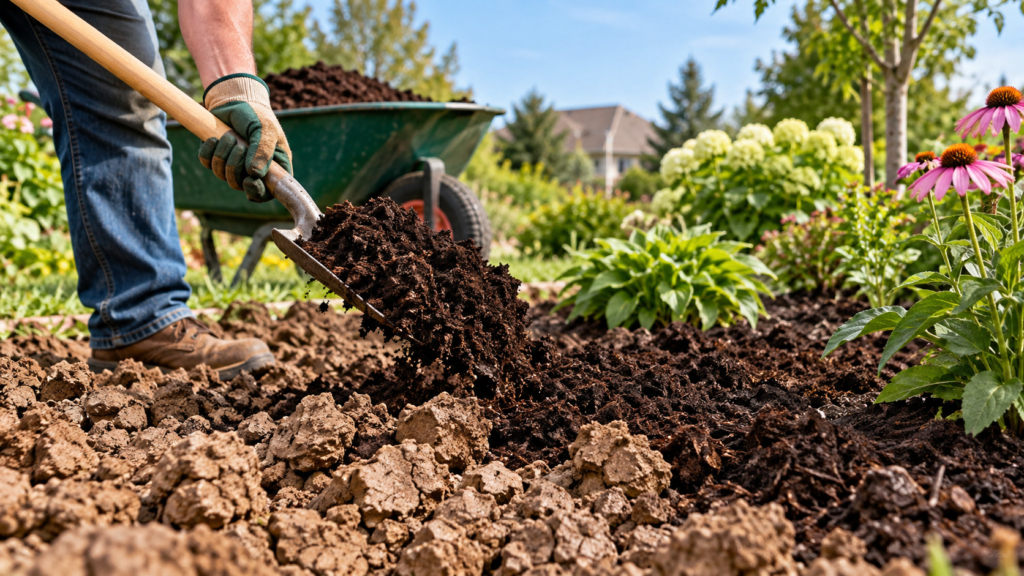
Emerald Green does best in full sun, meaning at least six hours a day. It tolerates some shade but gets thinner and more open. Drainage is the bigger concern. Arborvitae likes steady moisture but doesn’t like sitting in standing water, and heavy clay, which is common in Erie County, can hold water around the roots.
Skip low spots where water collects after rain or snowmelt. Stay away from places where road salt sprays or where plowed snow gets piled, since salt can burn the foliage. Before you dig, call 811 so buried utilities get marked. It’s free, and it’s required in New York.
Planting Steps
The best times to plant here are spring, once the ground thaws, and early fall, giving roots time to settle before freeze-up. Summer planting works with extra watering. Late fall is risky because roots don’t have time to establish.
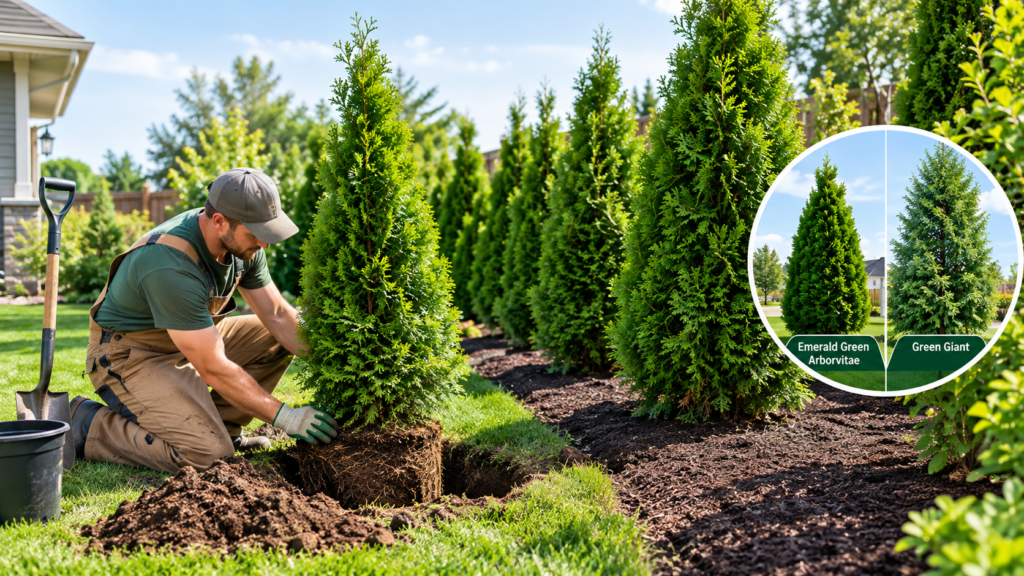
Dig the hole two to three times as wide as the root ball, but no deeper than the root ball is tall. In clay, planting too deep is a common mistake, and it can suffocate roots. The point where the trunk flares out should sit at or just above the surrounding soil. If you’re unsure, set it slightly high.
Remove wire, twine, and any plastic. If the tree is in burlap, pull it back from the top of the ball and cut away what you can. Loosen circling roots on container trees. Backfill with the soil you dug out, since heavy amendments in the hole can make water pool. Firm the soil gently, and water slowly and deeply.
Finish with two to three inches of mulch, keeping it a few inches back from the trunk. Piled mulch against the bark holds moisture and invites rot. When customers bring trees home from KD Nursery, this is the step we remind them about most, because mulch volcanoes are easy to make and hard to notice.
Watering and Feeding
New trees need consistent water. For the first year, plan on a deep soak once or twice a week during dry stretches, roughly an inch of water each time. Check the soil a few inches down. If it’s damp, wait. If it’s dry, water. A slow hose at the base beats a quick spray.
Keep watering into the fall, even after the leaves drop from other trees, until the ground freezes. This step is one of the most important for winter survival, and people often skip it. Established trees need less, but still appreciate a deep drink during dry summers.
For feeding, a slow-release fertilizer made for evergreens, applied in spring, is plenty. Follow the label rate. Skip fertilizer in late summer, because it can push soft new growth that won’t harden off before winter.
A soil test, available through Cornell Cooperative Extension, tells you what your yard actually needs.
Emerald Green vs. Green Giant
People often ask about Emerald Green arborvitae vs. Green Giant, and they’re really different plants for different jobs.
Green Giant is a hybrid arborvitae that grows much bigger and faster. Under good conditions, it can add two feet or more a year and eventually reach 30 feet or taller, with a spread of 10 feet or more. Emerald Green tops out around 15 feet and stays about 3 to 4 feet wide.
That size difference drives spacing. Green Giant generally needs 5 to 8 feet between trees, so it takes far fewer plants to cover the same distance. But it needs far more room, and a small city lot can be overwhelmed within a decade.
Choose Emerald Green for narrow spaces, tighter budgets per tree, and a neat, formal look. Choose Green Giant if you have a large property, need a tall screen, and can give it room. Neither is deer-proof. Deer browse both, but Emerald tends to be a bigger target, so fencing or repellents may be needed if deer visit your yard.
Preventing Winter Burn
Winter burn shows up as brown or bronze patches, usually on the side facing wind or sun. It happens because the foliage keeps losing moisture on cold, windy days while the roots are locked in frozen soil and can’t replace it.
You can lower the risk in a few ways. Water deeply in fall until the ground freezes. Keep mulch in place to protect roots. Plant away from spots where wind funnels through, and avoid salt spray.
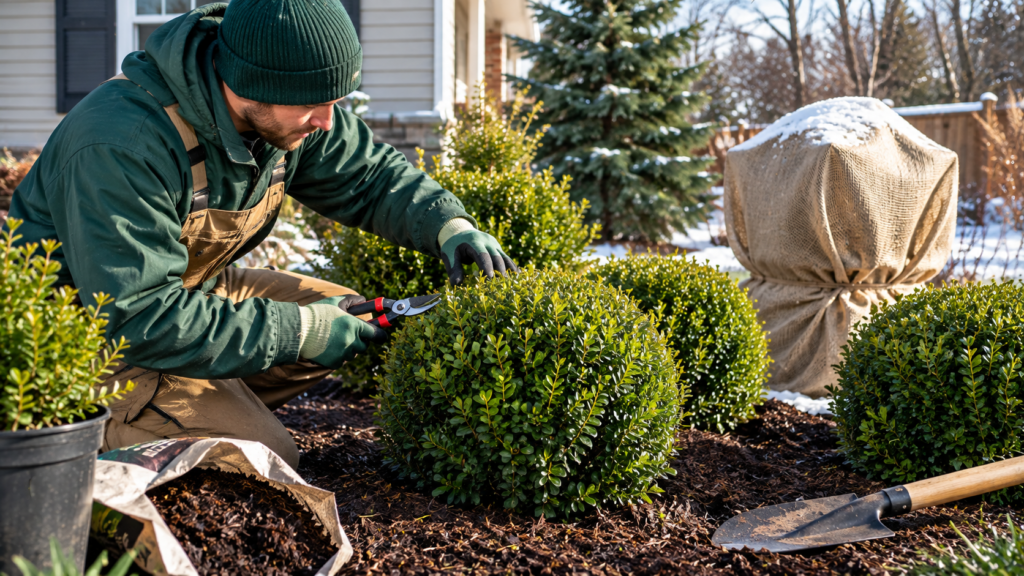
For young trees, a burlap screen set on the windward side, not wrapped tightly around the tree, can help during the first couple of winters. Anti-desiccant sprays get mixed results, so we don’t rely on them.
Snow and ice matter too. Heavy, wet lake-effect snow can bend and splay the branches. Gently brush snow off with an upward sweep of a broom, and never beat frozen branches. On older trees, a loose soft strap can help hold branches in place. Don’t use wire or tight rope.
Some browning is cosmetic and grows out. Wait until late spring to see what’s really dead before you cut anything.
Pruning and Common Pests
Arborvitae needs little pruning. Lightly trim the tips in early summer to shape the hedge. Don’t cut back into bare, brown interior wood, because arborvitae generally doesn’t sprout new growth from old wood.
Watch for bagworms, spider mites, and leaf miners. Bagworms look like small hanging cones on the branches and are easiest to handle by hand-picking in winter or spring. Spider mites are more common in hot, dry weather. If you see thinning foliage that isn’t from winter damage, take a sample to your local extension office for a proper ID.
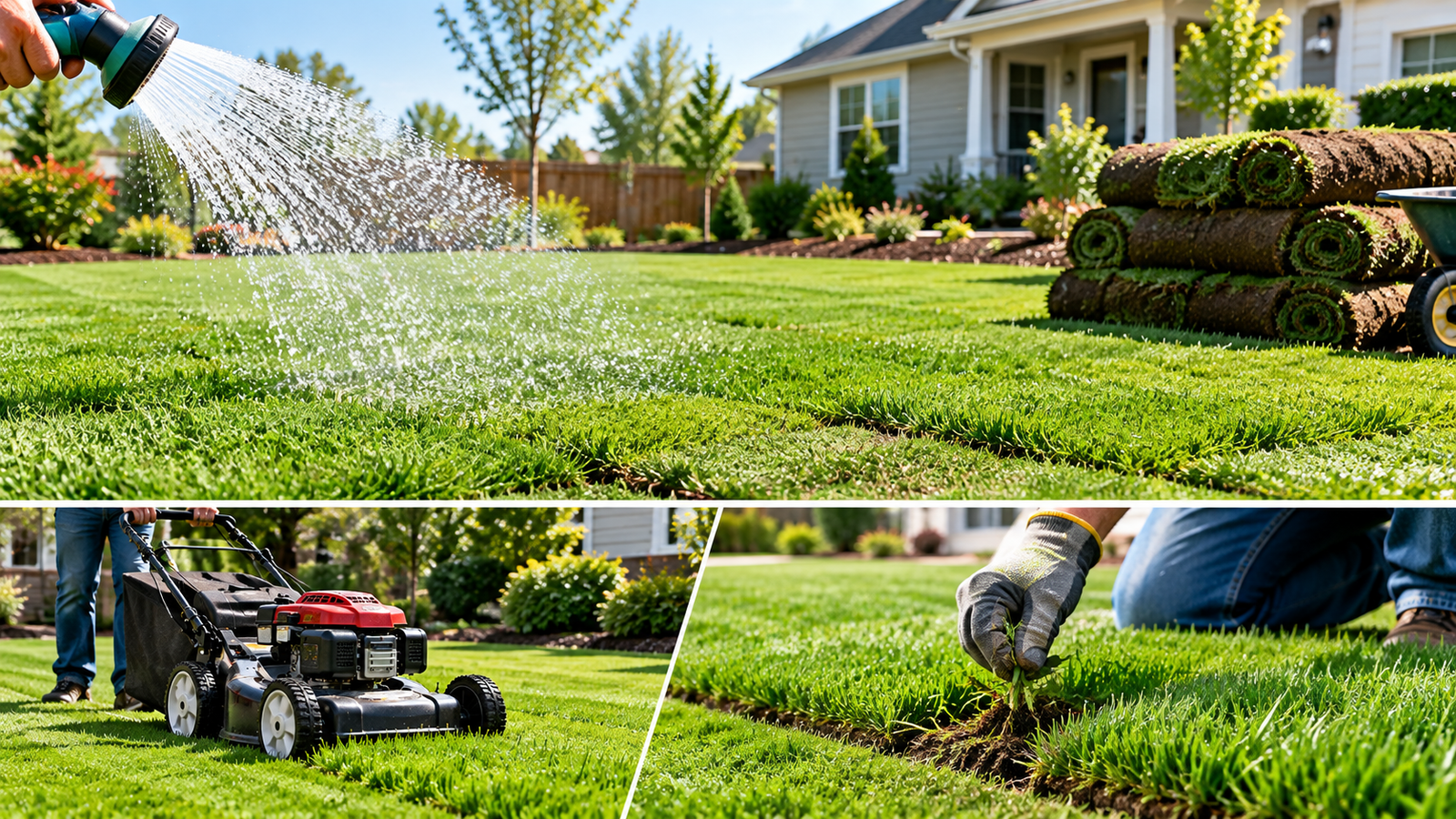
New Sod Care Guide: Watering, Mowing & First-Month Tips
Learn how to care for freshly installed sod during its first month. Discover practical guidance on watering schedules, mowing timing, root development, soil moisture, lawn establishment, and common mistakes to avoid while new grass becomes established.
Continue Reading →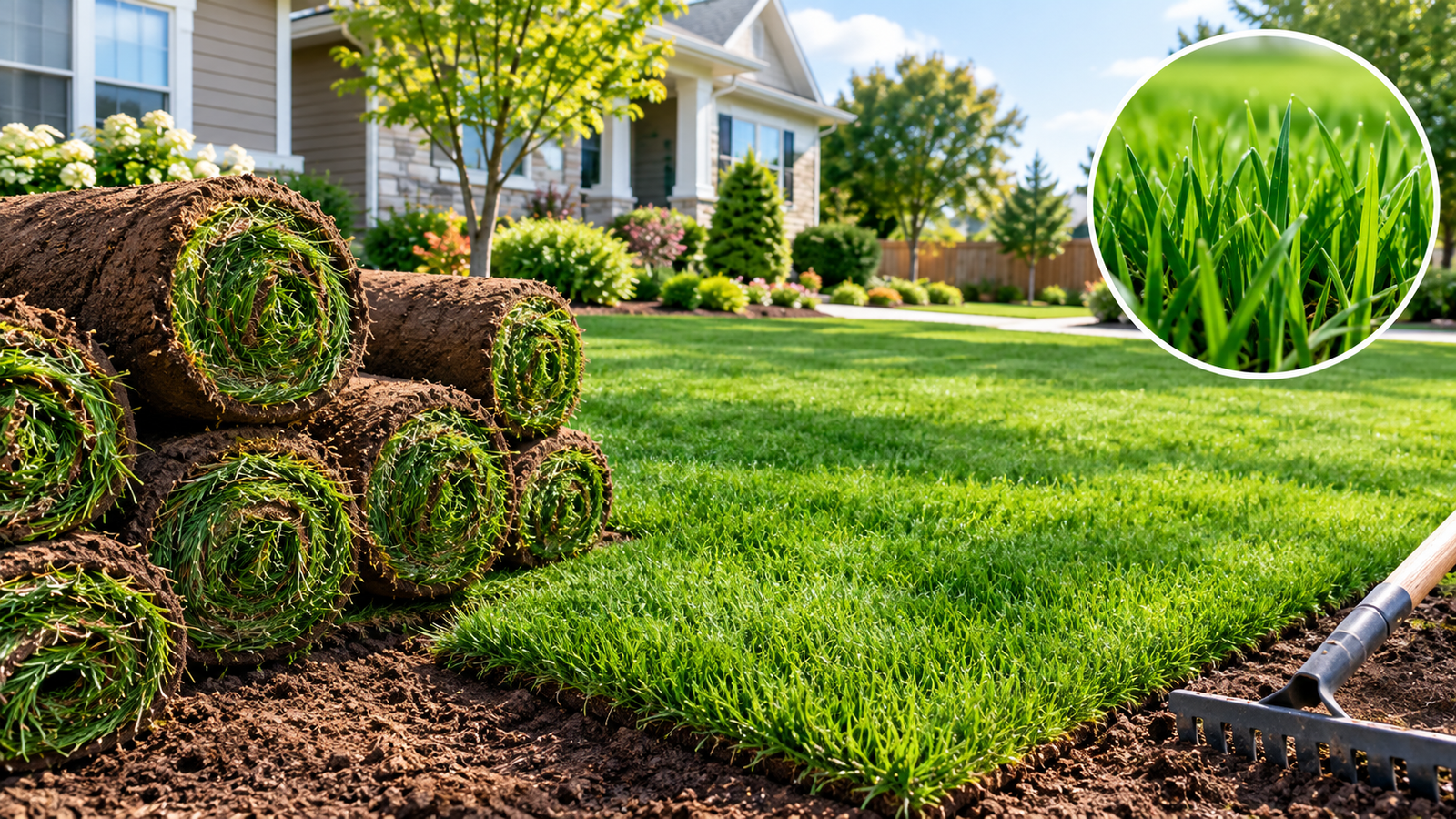
Kentucky Bluegrass Sod: Benefits, Care & WNY Lawn Guide
Explore the benefits of Kentucky bluegrass sod for Western New York lawns, including its appearance, cold tolerance, recovery, density, watering needs, mowing requirements, seasonal care, and factors to consider when establishing a durable lawn in the WNY climate.
Continue Reading →A Simple Yearly Routine
In spring, check for winter damage, add mulch, and fertilize.
In summer, water during dry periods and lightly shape if needed. In fall, water deeply until the ground freezes and clear debris from the base. In winter, brush off heavy snow and keep plows and shovels from throwing salt at the trees.
Small, regular steps beat rescue jobs. If you’re planning a hedge and want a second opinion on spacing or plant choice, the team at KD Nursery is happy to talk through your site.
Frequently Asked Questions
What is the best emerald green arborvitae spacing for privacy?
About 3 feet apart, center to center, works for most yards. It creates a full screen in a few years without heavy crowding. Go 4 feet for more airflow, or 2 to 2.5 feet if you need faster coverage.
How fast does Emerald Green arborvitae grow?
Usually about a foot a year once established, sometimes a bit more with good sun, water, and soil. Slow first-year growth is normal because the tree is focused on rooting. Expect a full screen in several seasons.
Is Emerald Green or Green Giant better for privacy?
It depends on space. Emerald suits narrow yards and reaches about 15 feet. Green Giant grows much taller and wider, needs more room, and covers distance with fewer trees. Pick based on lot size and how tall a screen you want.
How often should I water new arborvitae?
Soak deeply once or twice a week during the first year, adjusting for rain. Check the soil a few inches down first. Keep watering into fall until the ground freezes, since dry roots are a leading cause of winter burn.
Why is my arborvitae turning brown in winter?
Most often it’s winter burn from wind, sun, and frozen soil that stops roots from replacing lost moisture. Salt spray, deer, and dry fall conditions can also cause it. Wait until late spring to see what recovers before pruning.
Can I plant arborvitae close to a fence or house?
Yes, but leave room. Keep trunks about 2 feet from a fence and at least 3 feet from a house so you can reach the back side and avoid roof snow slides. Also check local rules about property lines.
When is the best time to plant arborvitae in Buffalo?
Spring, after the ground thaws, and early fall are ideal. Both give roots time to settle before extreme heat or freezing. Summer planting can work with regular watering. Late fall planting is riskier because roots may not establish.