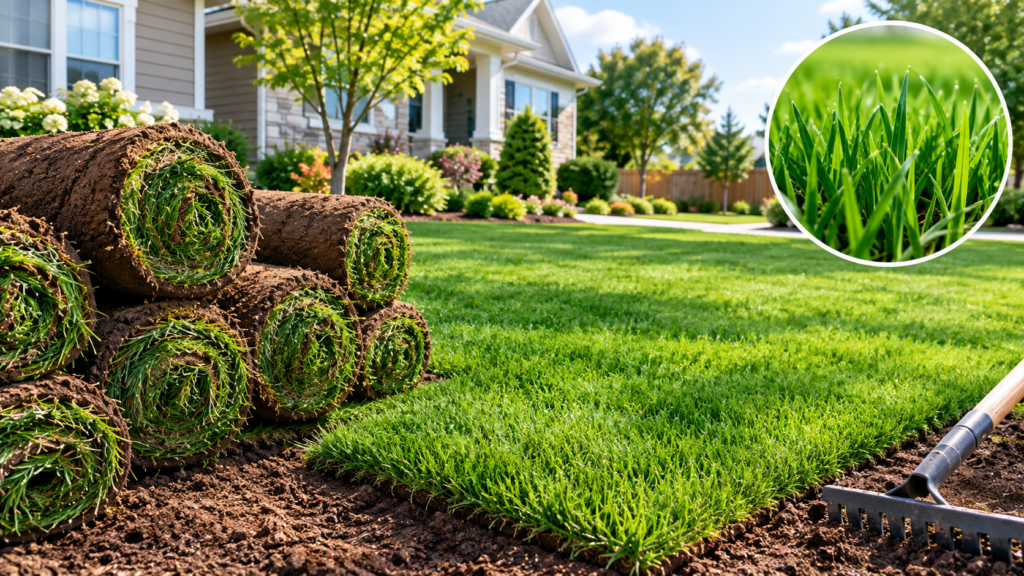
Fresh sod looks great the day it goes down. That green, uniform lawn feels like an instant transformation. But those first few weeks are the most fragile stretch of a lawn’s entire life, and how you handle new sod care during that window determines whether it thrives for years or struggles from the start.
Buffalo’s mix of clay-heavy soil, humid summers, and unpredictable rain makes this stretch even trickier.
This guide walks through exactly what new sod needs, week by week, so the investment actually takes root instead of turning brown and patchy by July.
Why the First Month Matters So Much
Sod arrives as a living root system that’s been cut away from its original growing bed. Until those roots reestablish themselves into the soil underneath, the grass is essentially running on reserves. It looks alive, but it’s vulnerable in a way established turf simply isn’t.
Get new sod care right during this period, and the roots knit into the ground below, creating a lawn that can handle normal wear, dry spells, and foot traffic. Get it wrong, and even good sod can die back in patches or never fully root, leaving weak spots that turn into weed problems down the line.
The Watering Schedule That Actually Works
Watering new sod is where most homeowners either overdo it or underdo it, and both mistakes cause real damage.
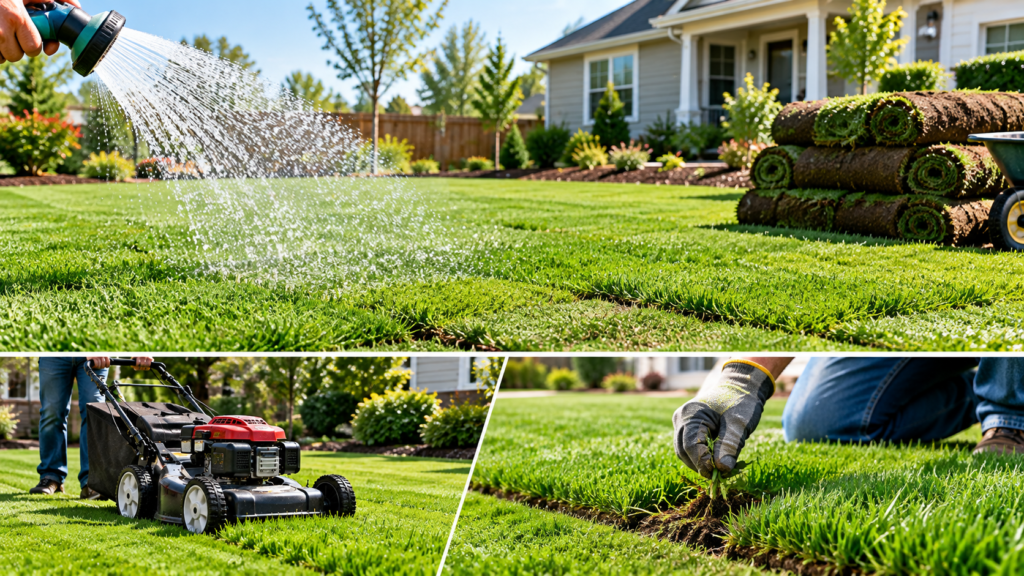
For the first ten to fourteen days, new sod needs frequent, light watering, enough to keep the top layer of soil consistently moist without pooling water or creating soggy conditions. That usually means watering once or twice daily, early morning and possibly again in the early evening, especially during hot stretches.
After that initial period, the goal shifts. A proper new sod watering schedule tapers off gradually, moving to once daily, then every other day, as the roots start pushing down into the soil beneath. By week three or four, most lawns can handle watering every two to three days, assuming decent rainfall isn’t doing the job already.
One trick that works well here: lift a corner of the sod gently around day ten to fourteen. If small white roots are visibly gripping into the soil below, that’s a good sign rooting is underway, and the watering schedule can start easing back.
Buffalo’s humidity actually helps some here, slowing evaporation compared to drier climates. But it also means overwatering risk is real, since soggy conditions combined with humidity can invite fungal issues. Check soil moisture with a finger test rather than watering on autopilot.
When to Mow New Sod for the First Time
Patience matters here more than people expect.
The first mow shouldn’t happen until the sod has rooted enough to resist pulling up when tugged gently. That’s usually somewhere around two to three weeks after installation, though it depends on weather, grass type, and how well the watering schedule has been followed.
A simple test: try to lift a corner of the sod by hand. If it resists and feels anchored, it’s likely ready. If it lifts easily, give it more time.
When that first mow does happen, keep the blade height high, taller than normal maintenance mowing, and make sure the mower blade is sharp. A dull blade tears grass rather than cutting it cleanly, which stresses young turf that’s already working hard to establish itself. Avoid mowing when the lawn is wet, since wet grass clumps, tears more easily, and can compact the still-soft ground underneath.
Skip the first mow if the lawn still feels soft or spongy underfoot. Waiting an extra few days costs nothing. Mowing too early can undo weeks of careful new sod care in a single pass.
Fertilizing New Sod the Right Way
Sod typically comes pre-treated with a starter fertilizer from the farm, so jumping in with additional fertilizer too soon can actually do more harm than good. Most new lawns don’t need supplemental fertilizer until four to six weeks after installation, once the root system has had real time to establish.
When that window arrives, a starter fertilizer formulated for new lawns, typically higher in phosphorus to support root development, works better than a general all-purpose blend. Applying too much nitrogen too early can push top growth faster than the roots can support, leaving a lawn that looks lush but roots shallow.
A soil test isn’t a bad idea either, especially in areas with Buffalo’s typical clay-heavy soil composition. Knowing what’s already in the ground helps avoid guessing at fertilizer needs and prevents overapplying nutrients the soil doesn’t need.
Managing Foot Traffic on New Sod
New sod feels sturdy underfoot almost immediately, which tricks a lot of homeowners into treating it like an established lawn right away. It isn’t one yet.
For at least the first two to three weeks, foot traffic should be kept to a minimum. That means no regular mowing crew walking patterns, no kids’ games, and definitely no heavy equipment or furniture sitting on the surface. Pets present their own challenge here too, since dogs running the same path repeatedly can compact soil and tear roots before they’ve had a chance to grip.
If some traffic is unavoidable, try to vary the path rather than letting one route become a worn track. Once the lift test shows solid rooting, normal traffic can gradually resume, though it’s still worth easing in rather than hosting a backyard gathering the first weekend the lawn looks ready.
Troubleshooting Common New Sod Problems
Even with good care, new sod care doesn’t always go perfectly. Here’s what tends to come up and what it usually means.
Yellowing patches often point to inconsistent watering, either too much or too little in that specific area. Check for low spots holding water or high spots drying out faster than the rest of the lawn.
Visible seams between sod pieces are normal early on but should fade as grass fills in and roots knit together. Seams that stay visible after several weeks may mean those areas aren’t getting even watering coverage.
Spongy or squishy footing usually signals overwatering or poor drainage underneath. Cutting back watering frequency and checking for drainage issues in that section typically resolves it.
Slow rooting can come from several sources: poor soil contact during installation, watering that’s too shallow to reach the root zone, or unusually hot, dry stretches drying out the surface faster than expected. The lift test at the two-week mark is the best way to catch this early.
Fungal patches, sometimes showing as discolored rings or a grayish film, tend to show up in overly wet conditions combined with warm temperatures. Adjusting watering and improving airflow around the area, trimming back overgrown shrubs or reducing shade if possible, usually helps.
Catching these issues early makes a real difference. A problem noticed at week two is usually a quick fix. The same problem ignored until week six can mean re-sodding a section entirely.
Buffalo-Specific Considerations
Local conditions shape a lot of this. Clay-heavy soil common throughout much of the Buffalo area drains more slowly than sandy or loamy soil, which means watering schedules sometimes need adjusting to avoid waterlogging. Humid summer stretches raise fungal risk, particularly if watering happens in the evening and leaves grass damp overnight.
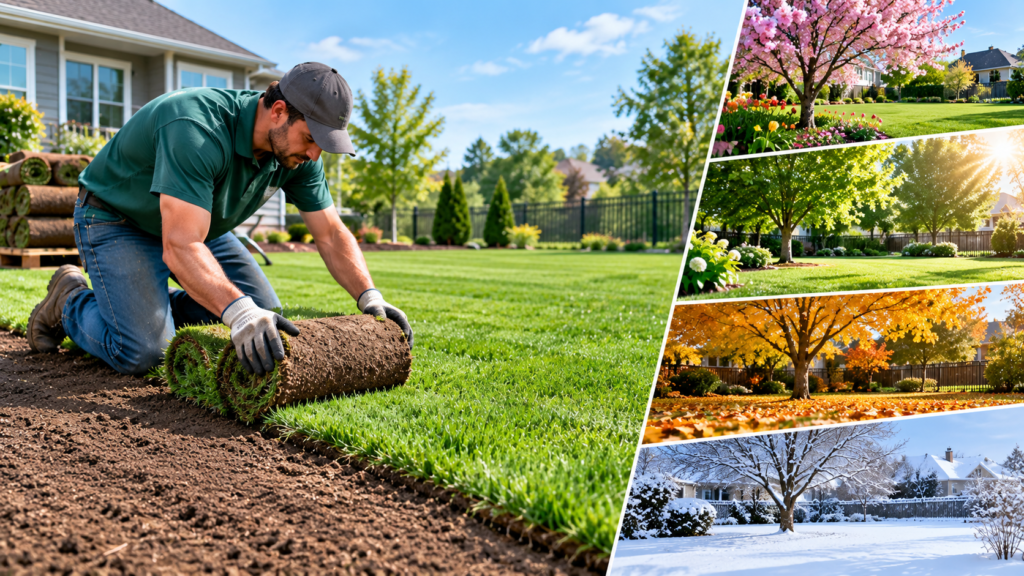
Spring and early fall tend to be the best windows for sod installation in this region, since temperatures are milder and rainfall is typically more consistent than the height of summer. Sod installed during a July heat wave needs considerably more attentive watering than sod installed in cooler April or September conditions.
At KD Nursery, we see a lot of new sod care questions come up around these seasonal shifts, especially from homeowners who installed sod expecting the same watering routine to work year-round. It doesn’t. Adjusting for the season is part of getting this right.
Topsoil vs. Compost vs. Garden Soil: When to Use Each
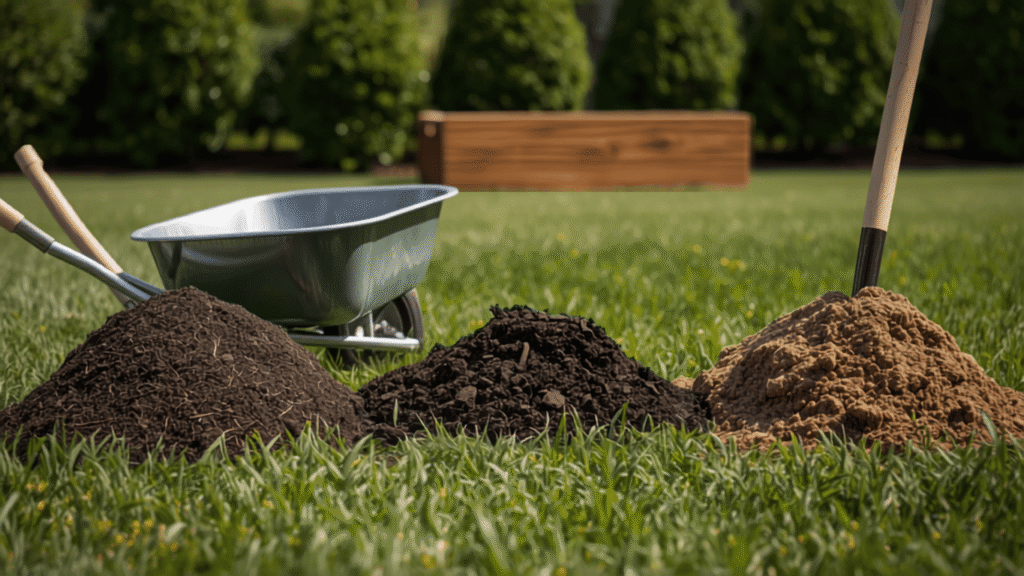
Understand the differences between topsoil, compost, and garden soil and learn when each material is appropriate. Explore soil composition, nutrient content, drainage, moisture retention, planting applications, lawn projects, raised beds, and landscape improvements.
Continue Reading →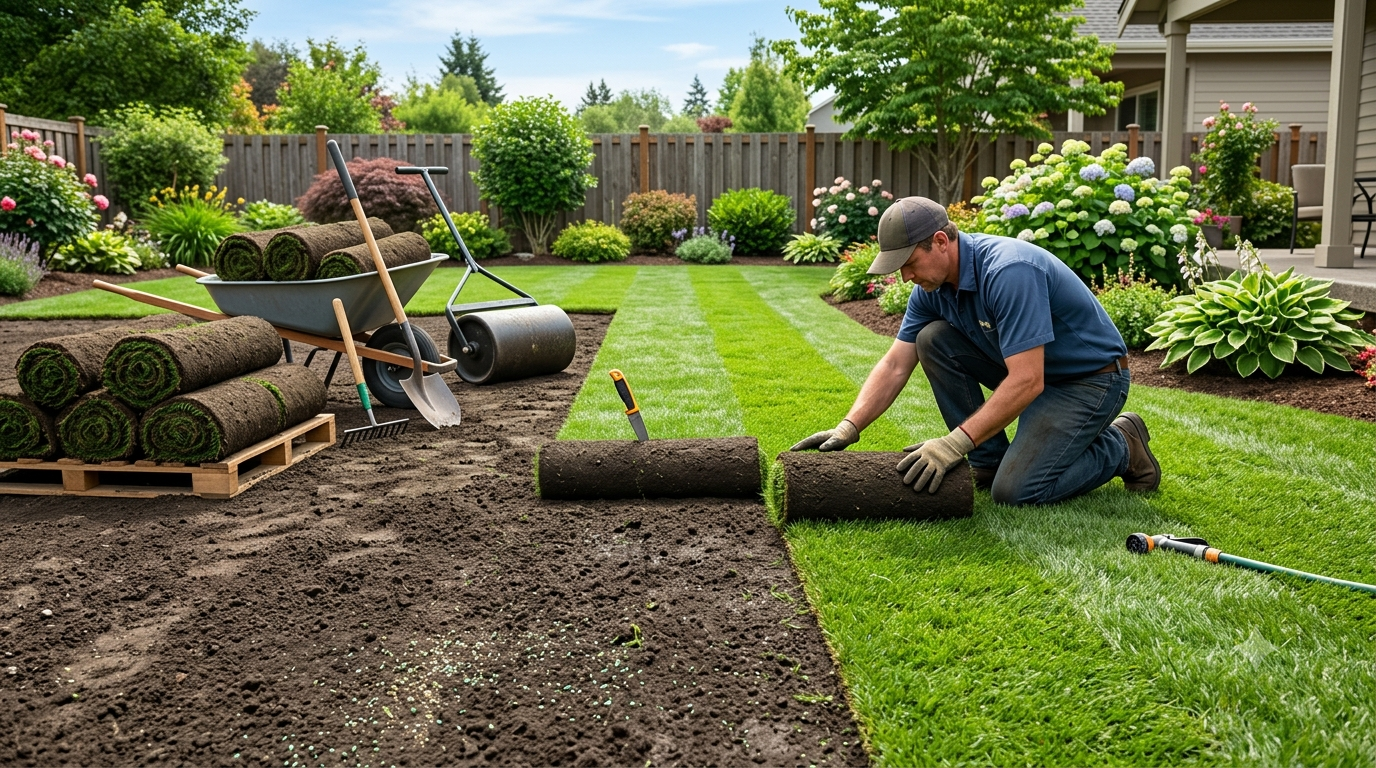
How to Lay Sod: Step-by-Step Guide for a New Lawn
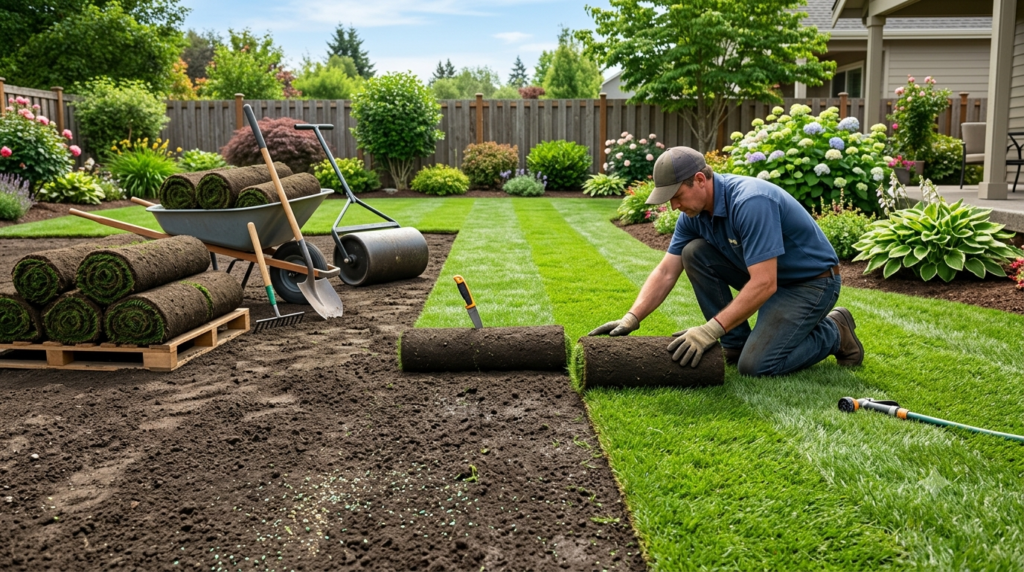
Learn how to install sod successfully, from preparing and leveling the soil to measuring the lawn area, ordering the right amount, placing sod tightly, watering properly, completing the first mowing, and caring for new grass as it becomes established.
Continue Reading →Setting a New Lawn Up for the Long Run
The first month of new sod care is really about patience and consistency more than anything complicated. Water enough but not too much. Wait for real rooting before that first mow. Hold off on fertilizer until the roots are established. Keep foot traffic light until the lawn can handle it.
Skipping steps or rushing the process rarely saves real time. It usually just means dealing with patchy spots, weak rooting, or fungal issues later, problems that take far more effort to fix than they would have taken to prevent.
A new lawn cared for properly during that first critical stretch tends to reward the effort for years afterward.
KD Nursery has worked with plenty of Buffalo homeowners through this exact process, and the pattern holds pretty consistently: the lawns that get steady, informed care in month one are the ones still looking strong well into their second and third summers.
Frequently Asked Questions
How long does new sod take to root?
Most sod develops enough root anchoring to resist gentle lifting within two to three weeks, though full establishment can take six to eight weeks. Soil type, weather, and watering consistency all affect the exact timeline for any given lawn.
Can I walk on new sod at all during the first few weeks?
Light, occasional foot traffic is generally fine, but repeated walking on the same path or heavy use should wait until the lawn shows solid rooting. Varying paths and minimizing unnecessary traffic helps protect the developing root system.
What happens if I overwater new sod?
Overwatering can lead to shallow root growth, fungal issues, and a spongy, waterlogged feel underfoot. It’s one of the most common mistakes in new sod watering schedules, since more water doesn’t always mean better results for young roots.
Is it normal for new sod to look slightly yellow at first?
Some mild yellowing during the adjustment period can be normal, especially right after installation. Persistent or spreading yellow patches usually point to a watering inconsistency and are worth addressing before they get worse.
Do I need special fertilizer for new sod?
Most sod comes pre-treated with starter fertilizer, so additional fertilizing usually isn’t needed for four to six weeks. When it’s time, a starter blend formulated for new lawns supports root development better than general all-purpose fertilizer.
How soon can I mow new sod after installation?
Most new sod is ready for its first mow around two to three weeks after installation, once it resists gentle lifting by hand. Mowing too early, especially on soft or still-rooting ground, can undo progress and stress the grass.
Why does my new sod have visible seams between pieces?
Visible seams are normal in the early weeks as pieces settle and begin knitting together. They should fade with consistent watering and rooting over time. Seams that remain obvious after several weeks may indicate uneven watering coverage.