Every spring, the same question comes across our counter.
A homeowner pulls up with a trailer, a tape measure, and no real idea what they’re about to spend the next hour figuring out. They ask how much mulch do I need for a bed that “isn’t that big,” and twenty minutes later we’re both standing over a notepad doing math neither of us learned in school.
It happens so often that our crew at KD Nursery finally sat down and wrote out the exact process we walk customers through, so you can run the numbers before you ever load the truck. Buffalo yards throw some curveballs too.
Between clay-heavy soil in older neighborhoods and the freeze-thaw cycles that heave beds every March, the depth and volume that work in a milder climate don’t always hold up here.
What follows is the same math our crew uses on job sites, not a generic formula pulled off a gardening site somewhere in Ohio.
Why the Math Trips People Up
Most people start with square footage and stop there. That’s the mistake. A mulch calculator needs three numbers, not one: length, width, and depth, and depth is the one everyone forgets to measure at all.
A ten-by-twenty bed sounds simple until you realize the difference between two inches and four inches of coverage is basically double the material. We’ve had customers order enough bags to cover a football field and still come up short, because they eyeballed the depth instead of measuring it. Get the depth wrong, and every other number in the equation is wrong too.
It also doesn’t help that a lot of online mulch calculators assume a flat, rectangular bed with no obstacles. Real yards aren’t built that way. Slopes eat extra material because gravity pulls mulch toward the low end within a season, tree roots push up through the surface and create gaps, and downspouts wash out whole sections after one good storm.
Anyone asking how much mulch do I need for a sloped bed should plan on adding roughly 10 percent more than a flat calculation gives you, just to cover what settles or washes out early. That small buffer is the difference between a bed that looks finished in June and one that’s showing bare patches by July.
Cubic-Yard Coverage Chart
Here’s the chart we hand out at the yard, and it’s worth taping to your garage wall if you mulch every year.
One cubic yard of bulk mulch covers roughly these areas at different depths:
2 inches deep: about 160 square feet
3 inches deep: about 110 square feet
4 inches deep: about 80 square feet
So if you’re wondering how many cubic yards of mulch a 300-square-foot bed needs at a 3-inch depth, you’re looking at just under three yards. Round up, not down. Mulch settles within the first few weeks, especially after a hard rain, and nobody wants to make a second trip for half a yard.
We tell people the same thing every spring: order a little heavy, because running short mid-project costs you more time than the extra bag ever will.
How to Measure Your Beds
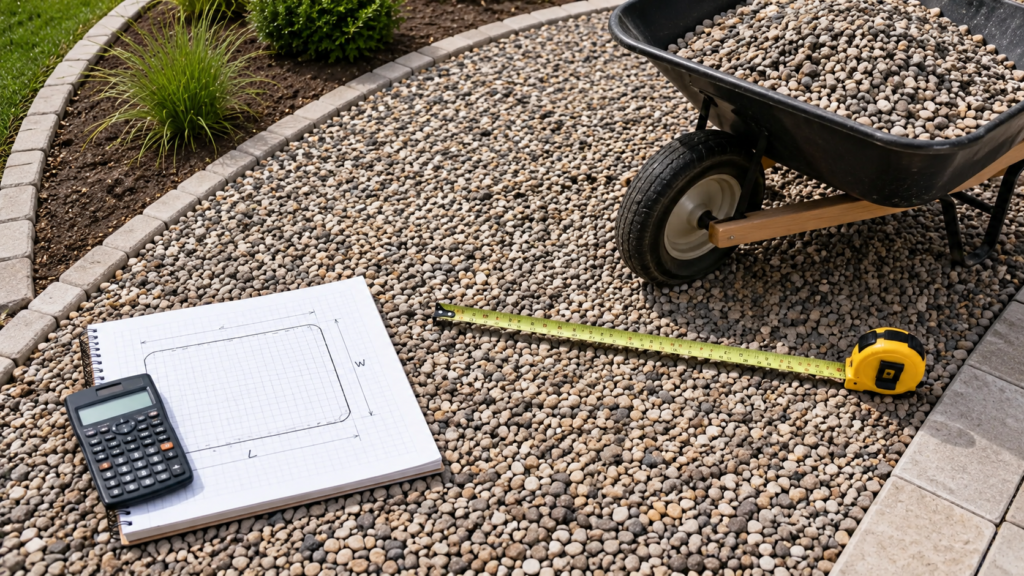
Grab a tape measure, not a guess, and walk the perimeter of every bed you’re planning to cover. For rectangular beds, multiply length by width to get square footage. For curved or irregular beds, which is most of what we see around Buffalo’s older lots, break the space into rough rectangles and triangles, measure each one, then add them together.
Don’t skip the awkward corners around trees and downspouts either, since those spots eat mulch fast and get forgotten in the final total.
If your property has multiple beds, measure and total them separately before combining. A front bed along the foundation, a ring around a maple tree, and a border along the driveway all add up differently once depth comes into play.
We’ve watched people combine square footage first and lose track of which bed actually needed the deeper layer. Keep a running list on your phone as you go. It saves you from re-measuring everything twice.
Recommended Depth for Buffalo Beds
Two to three inches is the sweet spot for most established beds, and here’s the reasoning behind it.
Go thinner than two inches, and you’re not getting the weed suppression or moisture retention that mulch is supposed to provide in the first place. Push past four inches, though, and you start suffocating roots, especially on younger shrubs and perennials that haven’t built up a deep root system yet.
Our soil here holds moisture longer than sandier regions, so piling mulch too thick traps water against stems and invites rot before you even notice a problem.
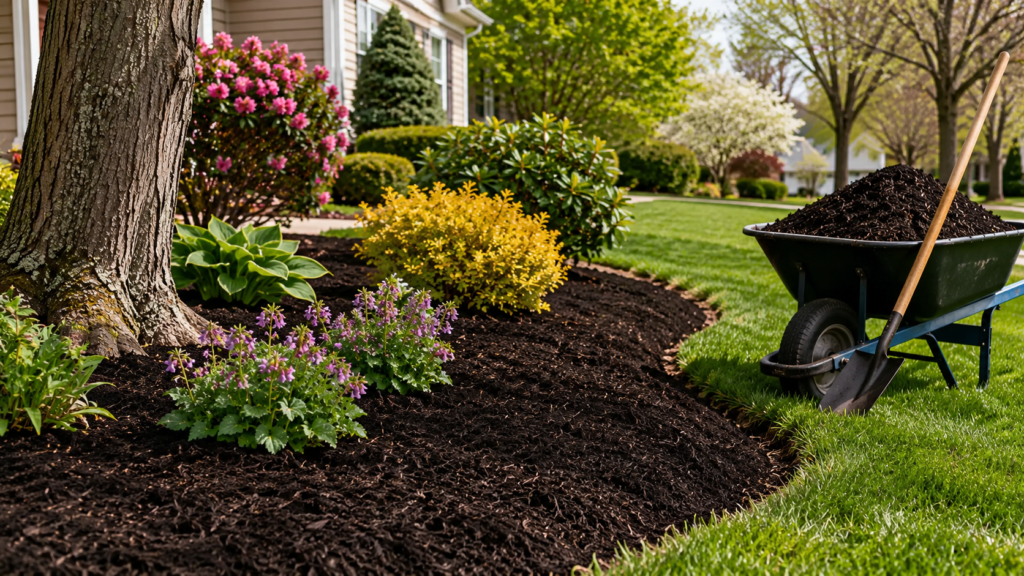
New beds and areas with heavy weed pressure can run toward the three-inch end of that range. Beds around mature trees and shrubs do better staying closer to two inches, and you want a few inches of clear space right at the trunk, not mulch piled against the bark. That volcano-style mound looks tidy for about a week and then causes bark decay underneath where nobody can see it happening.
Winter matters here too, more than most people expect.
A thinner layer going into November leaves roots exposed to the hard freeze-thaw swings we get through February, when the ground can crack and heave overnight. A layer closer to three inches insulates the root zone enough to smooth out those temperature swings, which matters most for anything planted in the last year or two.
Established, older plantings tolerate the swings better, but new transplants don’t have the root depth yet to shrug off a sudden freeze.
Bags vs. Bulk: What Actually Makes Sense
For small beds, bags are fine, and there’s no reason to overthink it.
A standard bag covers about two cubic feet, so it takes roughly 13-14 bags to equal one cubic yard. For anything under 100 square feet, bags are usually cheaper once you factor in delivery, and they’re easier to carry into tight backyard spaces where a truck can’t get close.
Once you cross into the 200-300 square foot range, bulk starts winning on price and on your back. Buying mulch coverage per bag, one pallet at a time adds up fast, both in cost and in the number of trips from driveway to garden bed. Bulk delivery drops everything in one pile, and while that means more wheelbarrow trips, it’s still less total labor than hauling and cutting open forty individual bags.
We tell most customers with a full property’s worth of beds to skip the bags entirely and order bulk mulch Clarence, NY, yards can deliver same week during peak season.
Ordering and Delivery
Order a week or two ahead if you can, especially in April and May when every landscaper in Western New York is placing the same request.
Bulk mulch gets tight during that stretch, and yards that usually deliver in two days can stretch to five once the rush hits. Confirm your total cubic yards before the truck shows up, not after, anddouble-check that your driveway or drop spot can actually handle the pile without blocking access to your garage.
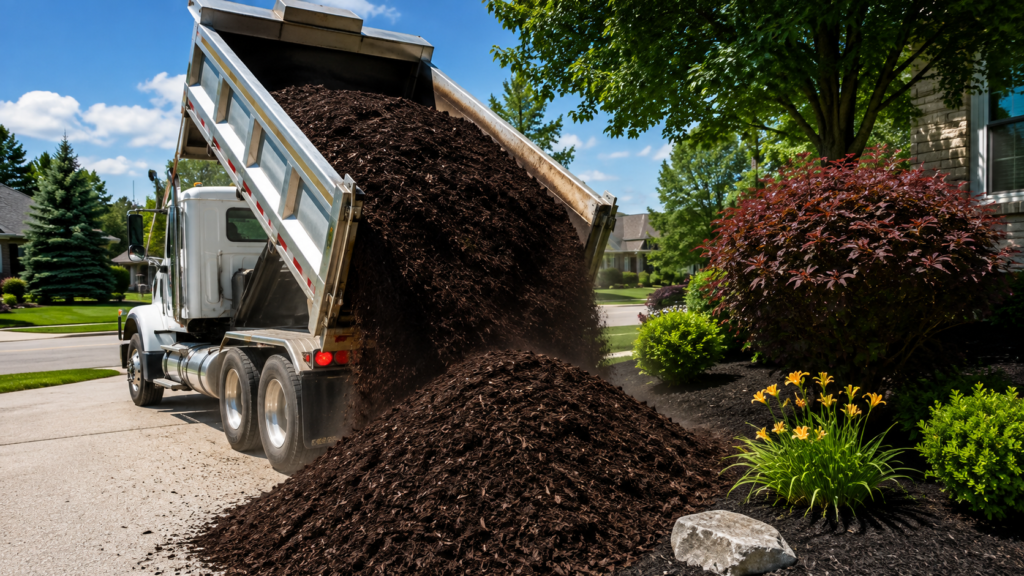
Delivery trucks generally drop mulch in one location, so think through where that pile lands before the driver arrives. A spot too close to the garage door means backing a car around a mound for a week. A spot too far from the beds means every wheelbarrow trip gets longer, and by the third day of spreading, those extra fifty feet start to feel like a mile.
We’ve seen homeowners ask us how much mulch they need before they’ve even figured out where the truck can safely tip the load, and that order of operations tends to cause more headaches than the math itself.
At KD Nursery, we walk every customer through their measurements before we load a single scoop, because a wasted trip costs everyone time.
If your numbers feel off or you’re not sure whether to round up or down, bring your measurements in, and we’ll run them with you. It takes five minutes and saves you from guessing on something you’re only going to redo once a year anyway.
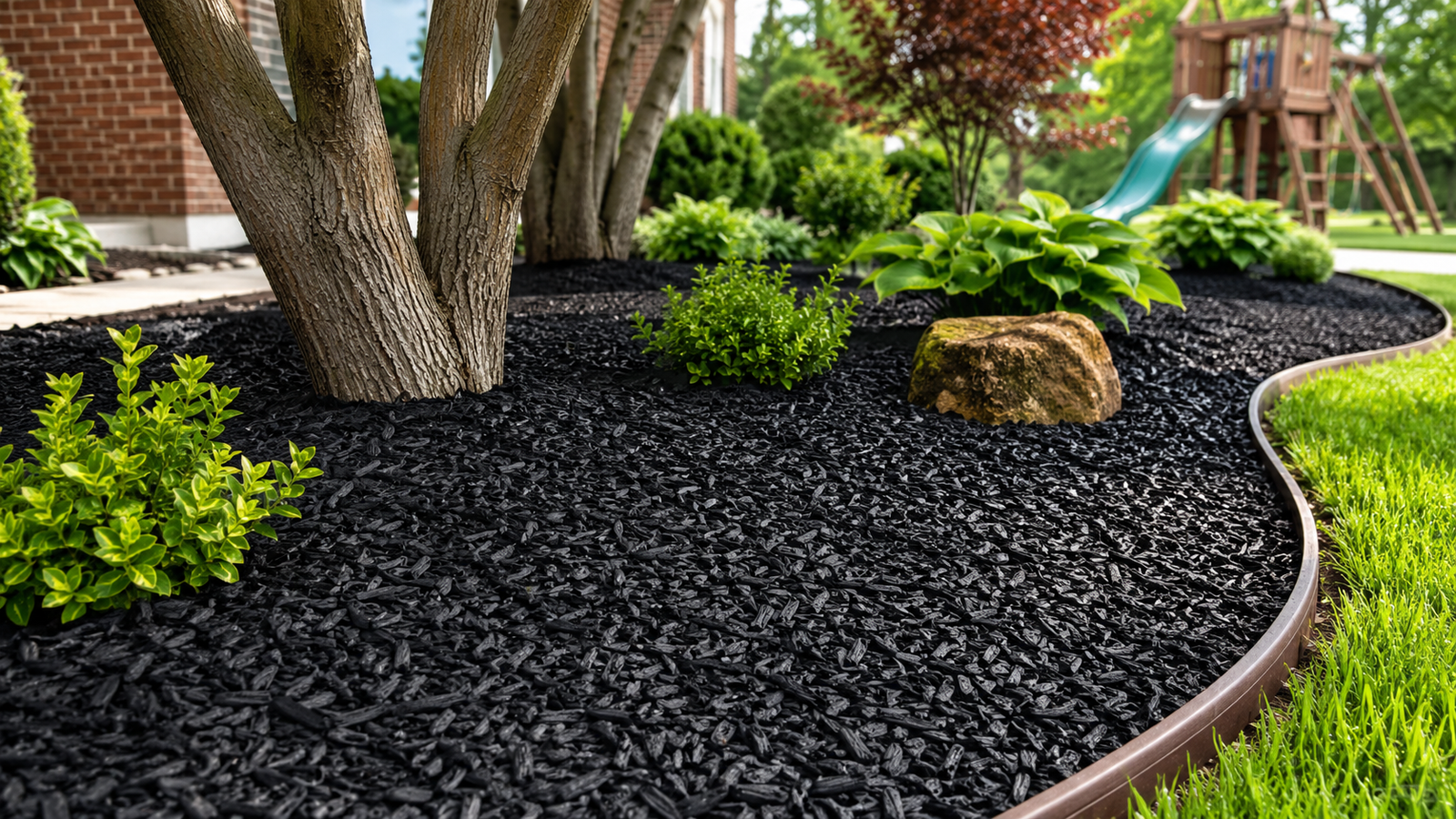
Rubber Mulch Near Me: Benefits, Costs & Buying Guide
Learn why rubber mulch is a long-lasting landscaping solution for playgrounds, flower beds, walkways, and commercial properties. Explore its durability, safety, drainage, color retention, maintenance requirements, installation tips, pricing, and how to choose the right rubber mulch supplier in Western New York.
Continue Reading →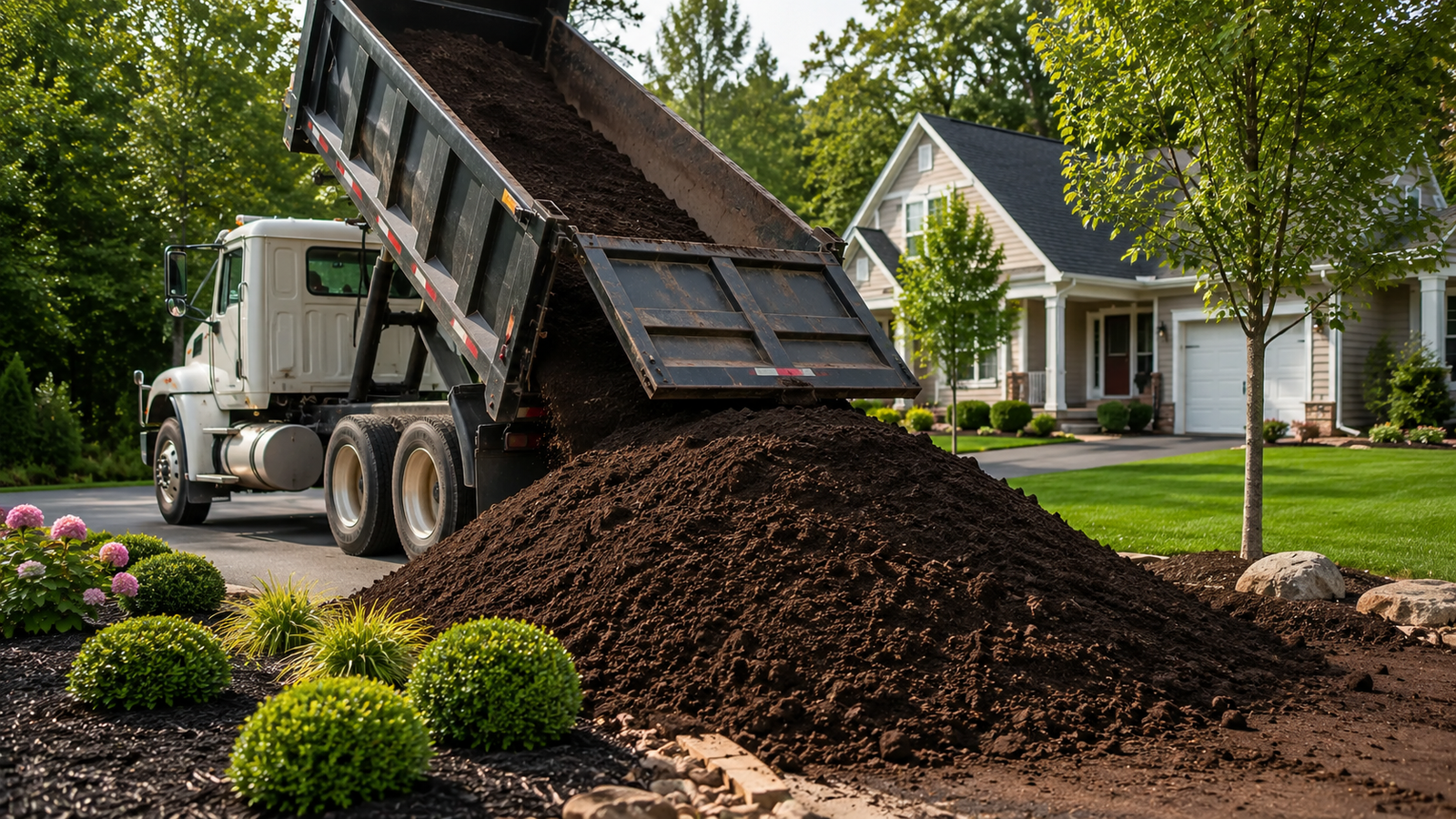
Topsoil Delivery in Clarence, NY: Quality & Pricing
Discover premium screened topsoil for lawns, gardens, grading, and landscaping projects in Clarence, NY. Learn about topsoil quality, delivery options, pricing, coverage estimates, soil preparation tips, and choosing the right materials for healthy plant growth and successful outdoor projects.
Continue Reading →A Few Final Thoughts
Getting your mulch depth and volume right isn’t complicated once you’ve measured correctly, but it’s easy to get wrong the first few times.
Take the extra ten minutes with the tape measure, round your order up slightly, and keep depth between two and three inches for most beds. That’s really the whole formula. We’ve seen the same mistakes repeat every spring, and almost all of them trace back to skipping the measuring step and eyeballing it instead.
If you’re still unsure after running your own numbers, that’s what we’re here for. KD Nursery keeps bulk mulch stocked through the busy season, and our crew would rather answer a five-minute question now than watch you come back short in July. Bring your measurements, or your best guess at them, and we’ll help you land on the right number before you load anything.
FAQs
How much mulch do I need for a 100-square-foot bed?
At a standard 2-3 inch depth, a 100-square-foot bed needs roughly half a cubic yard to just under one cubic yard. Measure the actual depth you want first, since the difference between 2 and 3 inches changes the total more than people expect.
Is it cheaper to buy mulch in bags or in bulk?
Bulk usually wins once you pass 100-150 square feet, since bags cost more per cubic yard once you add up multiple trips or pallets. Small beds under that size often come out cheaper with bags, especially if delivery isn’t needed.
How often should I replace mulch in my beds?
Most beds benefit from a fresh top layer once a year, typically in spring. You don’t need to remove old mulch first in most cases; just add enough new material to bring the total depth back to two or three inches.
Can I put too much mulch down at once?
Yes, and it’s a common mistake. Anything past four inches can trap moisture against stems and roots, encouraging rot instead of preventing it. Thick mulch also blocks oxygen from reaching the soil, which stresses plants more than it helps them.
Does mulch depth matter differently for trees versus shrubs?
Somewhat. Trees do better with a wider, flatter ring of mulch kept a few inches back from the trunk, while shrub beds can carry a more even two- to three-inch layer throughout. Piling mulch against any trunk or stem invites decay.
How do I know if my bed’s soil needs anything besides mulch?
If water pools instead of draining after rain, or plants look stressed despite a full growing season, it’s worth checking the soil underneath before adding another mulch layer. Compacted or poorly draining soil won’t improve just because there’s mulch on top.
What’s the best time of year to order bulk mulch in Buffalo?
Late March through May is peak demand, so ordering early in that window avoids the delivery delays that hit in mid-spring. Fall is a quieter, often faster option if you’re just refreshing depth before winter.