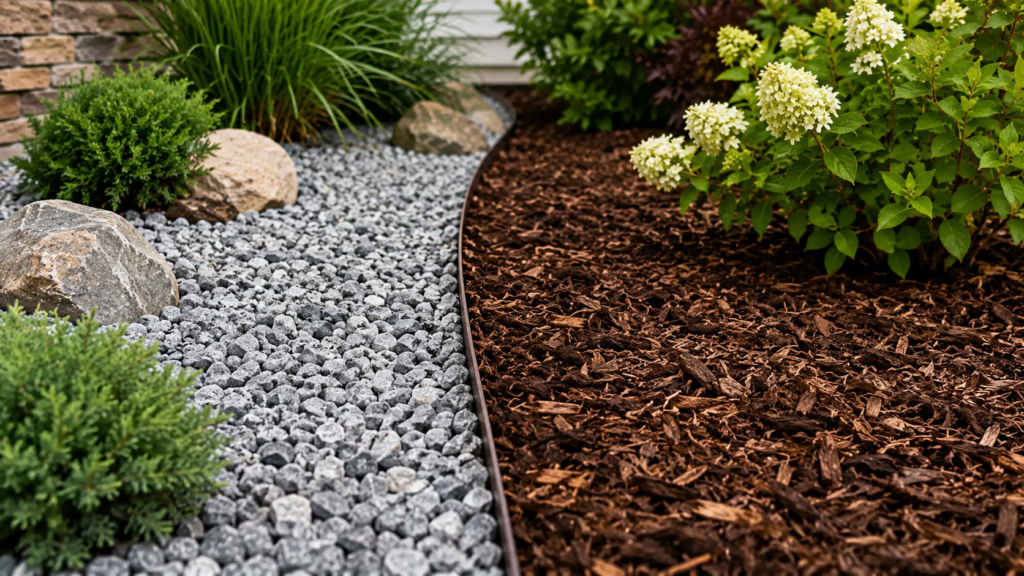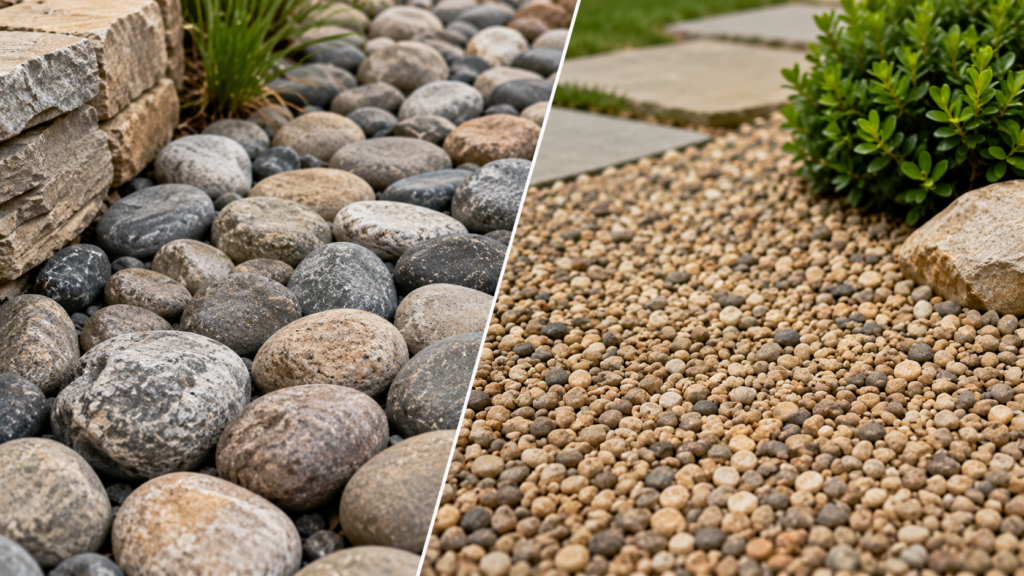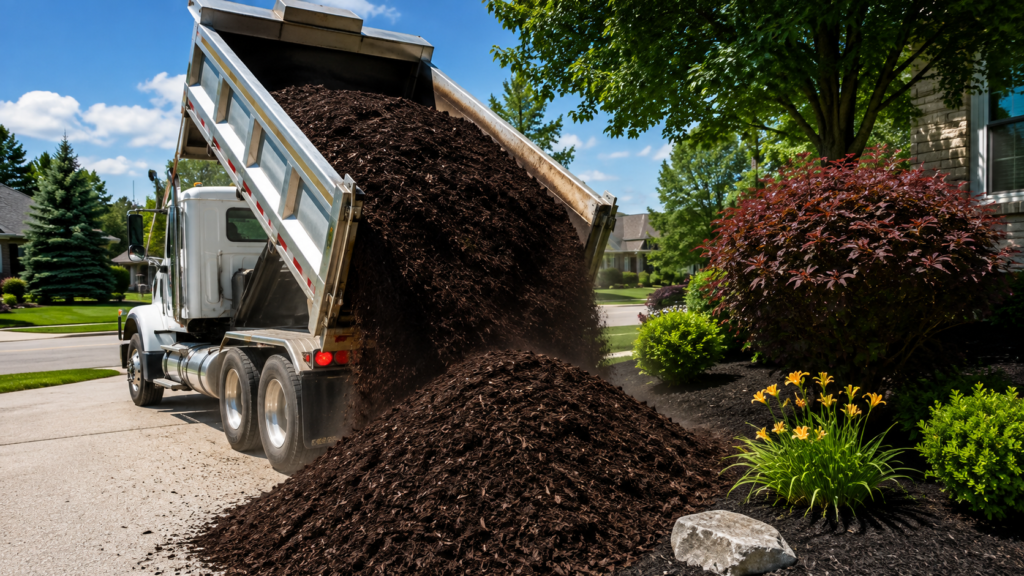
It is the classic battle of rubber mulch vs wood mulch, and in our erratic WNY climate, the choice you make right now will dictate how much time and money you spend in your yard for the next five to ten years.
Let us pull back the curtain on these two heavyweights. We will look closely at what these materials actually do to your soil, your wallet, and your peace of mind when the Lake Erie snowmelt hits.
Cost Per Yard Compared: The Upfront Sting vs. The Long Game
Let us talk raw numbers first, because nobody likes a financial surprise when the delivery truck backs down the driveway.
If you call around looking for a pile of premium wood chips near me, you will find that a standard cubic yard of high-quality, double-shredded hardwood typically runs anywhere from $35 to $48, depending on the specific dye you want.
That means top-dressing a standard 1,000-square-foot garden bed at a healthy three-inch depth will cost you roughly $400 to $550 for the material itself. It is highly affordable, looks incredibly rich on day one, and fits neatly into a standard spring cleanup budget.
Now, take a seat before you look up the price of rubber mulch near me, because the initial sticker shock can give a homeowner whiplash.
A single cubic yard of recycled rubber ground cover commands between $80 and $130, and if you are buying it by the pallet in neat, wrapped bags, that price can climb even higher.
When you run a strict rubber vs wood mulch cost analysis, you are looking at paying nearly triple the amount of money upfront for the synthetic option. For that exact same 1,000-square-foot garden bed, your initial material invoice is going to jump right up into the $1,200 to $1,500 neighborhood.
But as any seasoned property contractor will tell you, the initial invoice only tells a fraction of the story.
Wood is a biological material that naturally breaks down under the elements, meaning you will need to add a fresh one-to-two-inch top layer every single spring to keep it looking sharp and doing its job.
Rubber, on the other hand, sits there completely unchanged year after year, refusing to rot, decompose, or wash away into the storm drain. By year four or five, the persistent re-application costs of natural wood chips will completely overtake that initial investment you made in the rubber ground cover.
Longevity & Durability: Surviving the WNY Climate
Western New York weather is absolutely brutal on outdoor landscaping materials, putting them through a relentless gauntlet of elemental stress.
Our properties endure everything from heavy, suffocating lake-effect snow drifts to intense July heatwaves, followed by rapid freeze-thaw cycles that break down weak materials in record time.
Organic wood products take a beating during these seasonal shifts because fungus, microscopic bacteria, and local insects immediately view the damp wood as a primary food source.
Over twelve months, a thick, plush layer of cedar or oak will gradually settle, fade from a rich dark brown to a dull gray, and physically decompose into the underlying soil.
Synthetic ground cover handles this environmental stress like an absolute tank.
Because it is manufactured directly from vulcanised commercial tires, it is completely immune to the biological decay processes that destroy organic materials. It does not wash away during those sudden, torrential spring downpours that turn our local clay soils into temporary swimming pools, thanks to its heavy weight and dense composition.
A properly installed bed of high-grade rubber nuggets can easily sit in your yard for ten to twelve years without losing its structural shape or significantly losing its protective depth.
The only real element that catches up to rubber over the decades is the intense, direct summer sunlight.
While the material itself will not disintegrate, the industrial color dyes applied to the outer surfaces will eventually begin to dull under constant ultraviolet exposure. Most premium manufacturers will offer a ten-year or twelve-year color warranty, but you should realistically expect a slight loss in brightness after five or six seasons in wide-open, unshaded areas.
Even with a minor amount of fading, you are still completely avoiding the annual back-breaking chore of wheelbarrowing tons of fresh material across your lawn every single spring.
Safety, Heat, and Playground Use: Protect Your Family
When you have kids and pets tearing through the backyard, landscape decisions become much more important than simple aesthetics.
Contractor Safety Note: If you are building a backyard play set with swings, slides, or climbing walls, the ability of the ground cover to absorb a fall is the most important factor to consider.
The federal safety guidelines are incredibly clear on this specific point: recycled rubber provides significantly better impact absorption than standard wood chips at equal depths.
A six-inch layer of rubber nuggets can safely cushion a traumatic fall from a height of up to ten feet, whereas traditional wood options require a much thicker, constantly maintained layer to offer that same level of protection.
It does not compress down into a hard, dense mat over time, meaning it retains its springy bounce even after years of children trampling over the exact same spot.
But before you run out and buy a truckload of rubber for your home beds, you need to understand the dark side of synthetic materials.
Many property owners ask me: Is rubber mulch safe to use around sensitive plants, family dogs, and vegetable gardens? The honest answer requires looking closely at chemical leaching and heat retention.
During our hot July afternoons, rubber absorbs solar radiation like a sponge, heating up to temperatures that can easily scorch delicate annual flowers and emit a distinct, oily tire smell across the patio.
Furthermore, as the rubber slowly wears down over many years, it can release trace amounts of heavy metals like zinc into the soil, which can severely stunt the growth of sensitive ornamental shrubs.
Traditional wood chips keep the soil beneath them remarkably cool, damp, and perfectly conditioned for living root systems.
Wood poses zero chemical risks to your surrounding landscape, and when it inevitably breaks down, it actually feeds the soil by depositing clean organic matter back into the earth.
The only safety drawback to natural wood chips in a high-traffic play area is the unavoidable reality of splinters, along with the tendency of damp wood to occasionally harbor harmless but unsightly fungi, like the infamous “shotgun fungus” that can spray tiny black spots onto your home’s vinyl siding.
Weed & Moisture Control: The Battle of the Garden Beds
To understand how these materials manage water and weeds, you have to look at what happens right where the landscape material meets the dirt.
Natural wood chips act exactly like a giant, natural sponge across your garden beds.
When a summer thunderstorm rolls through, the wood fibers immediately absorb the falling rainwater, holding that valuable moisture right in place and slowly releasing it back down into the root zones as the days dry out. This natural absorption creates a highly consistent, cool, and damp environment that local trees and flowering perennials absolutely love.
The downside is that this fertile, moist environment is also highly inviting to airborne weed seeds, which can easily take root right inside the damp, decomposing wood layer if you do not stay on top of weeding.
Synthetic rubber behaves in a completely opposite manner.
Rubber is entirely non-porous, meaning it cannot absorb a single drop of falling rainwater; instead, it allows moisture to slide right past its smooth surfaces and drain instantly down into the earth below.
Because the surface of a rubber bed stays completely dry and heats up rapidly in the sun, airborne weed seeds that land on top cannot find the moisture they need to germinate, resulting in significantly fewer weeds popping up in your formal display beds.
However, that lack of moisture absorption means the soil beneath can dry out much faster during an extended mid-summer drought, forcing you to run your irrigation systems more frequently to keep your plants alive.
The Verdict: Best Use Case for Each Material
As experienced workers at KD Nursery, we do not believe in a single, one-size-fits-all landscaping solution for every property. Both of these products excel in completely different areas of the yard, and choosing the right one comes down to matching the material to its intended function.
When to Go with Traditional Wood Chips
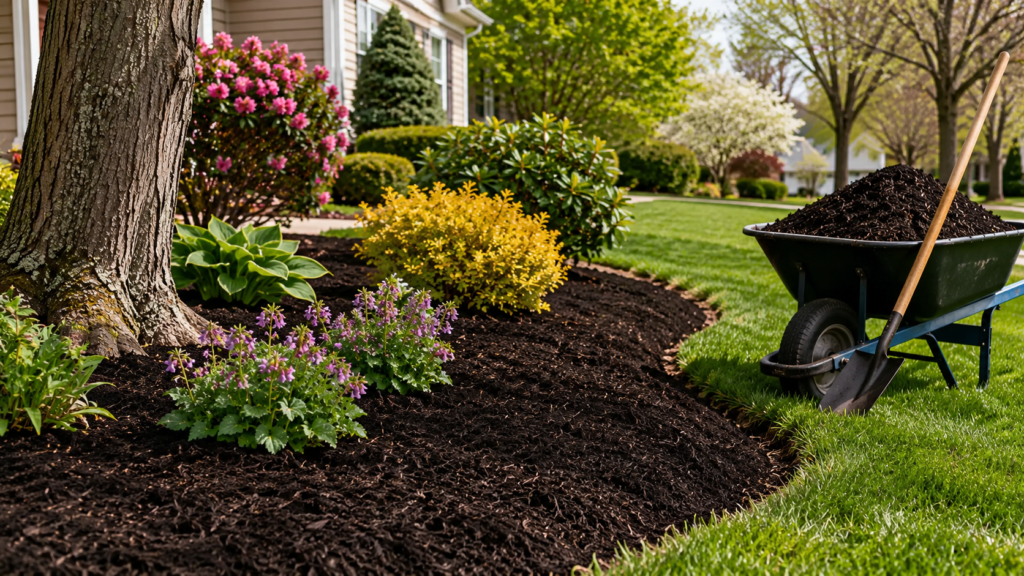
Traditional wood is the undisputed king for any area where plants, shrubs, and trees are the primary focus of the bed. It actively builds up our thin, nutrient-depleted local soils over time, keeps delicate root zones insulated against harsh temperature spikes, and looks beautifully natural against a classic home.
- Foundation beds: Loaded with delicate hydrangeas, hostas, and ornamental Japanese maples.
- Vegetable gardens: Where chemical purity and clean, organic food production are non-negotiable.
- Large perimeter tree lines: Where massive coverage is required on a realistic, manageable budget.
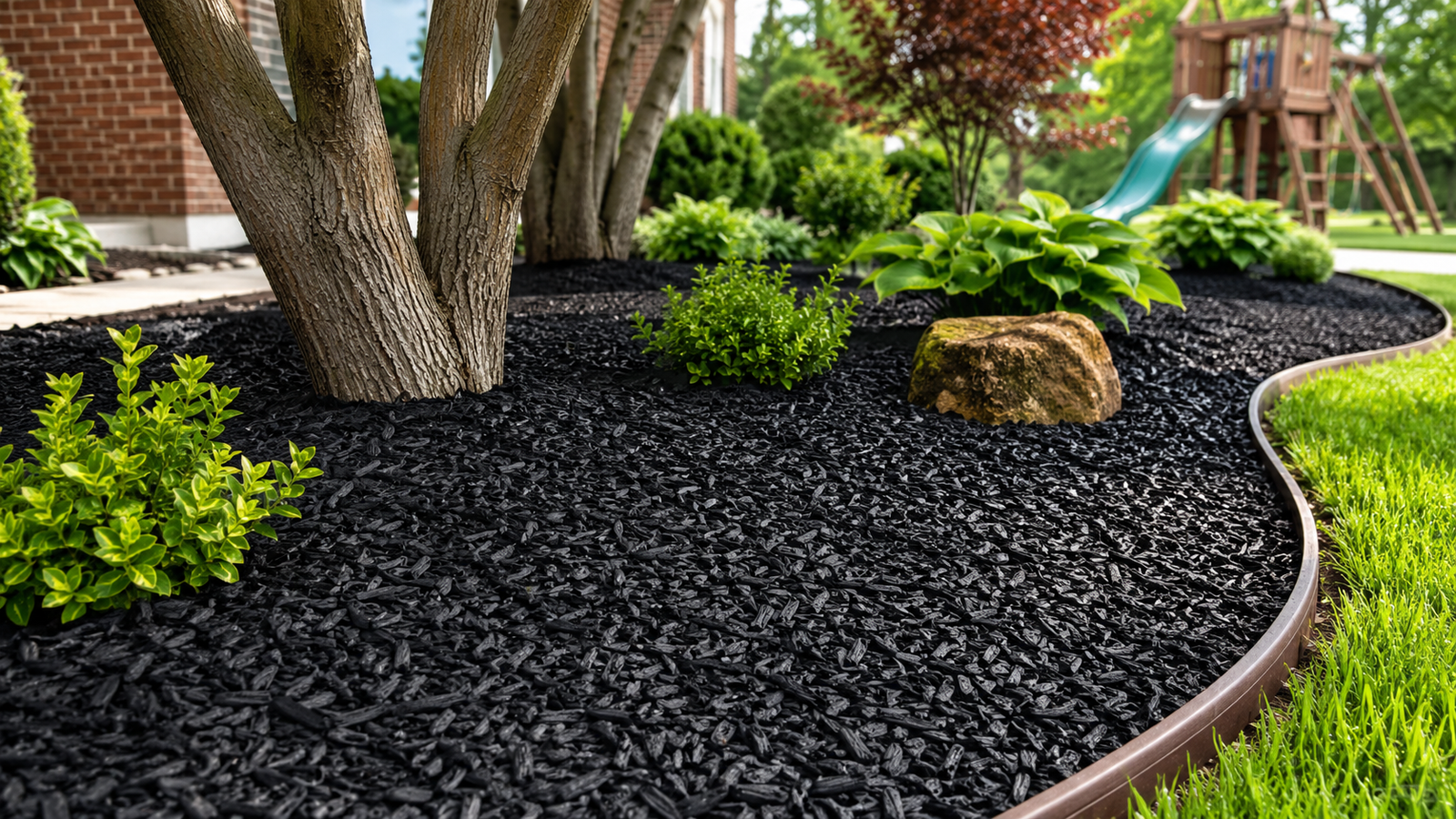
Rubber Mulch Near Me: Benefits, Costs & Buying Guide
Discover the advantages of rubber mulch for playgrounds, garden beds, walking paths, and commercial landscapes. Learn about pricing, durability, color retention, drainage, low-maintenance benefits, installation tips, and how to choose the right rubber mulch supplier in Western New York.
Continue Reading →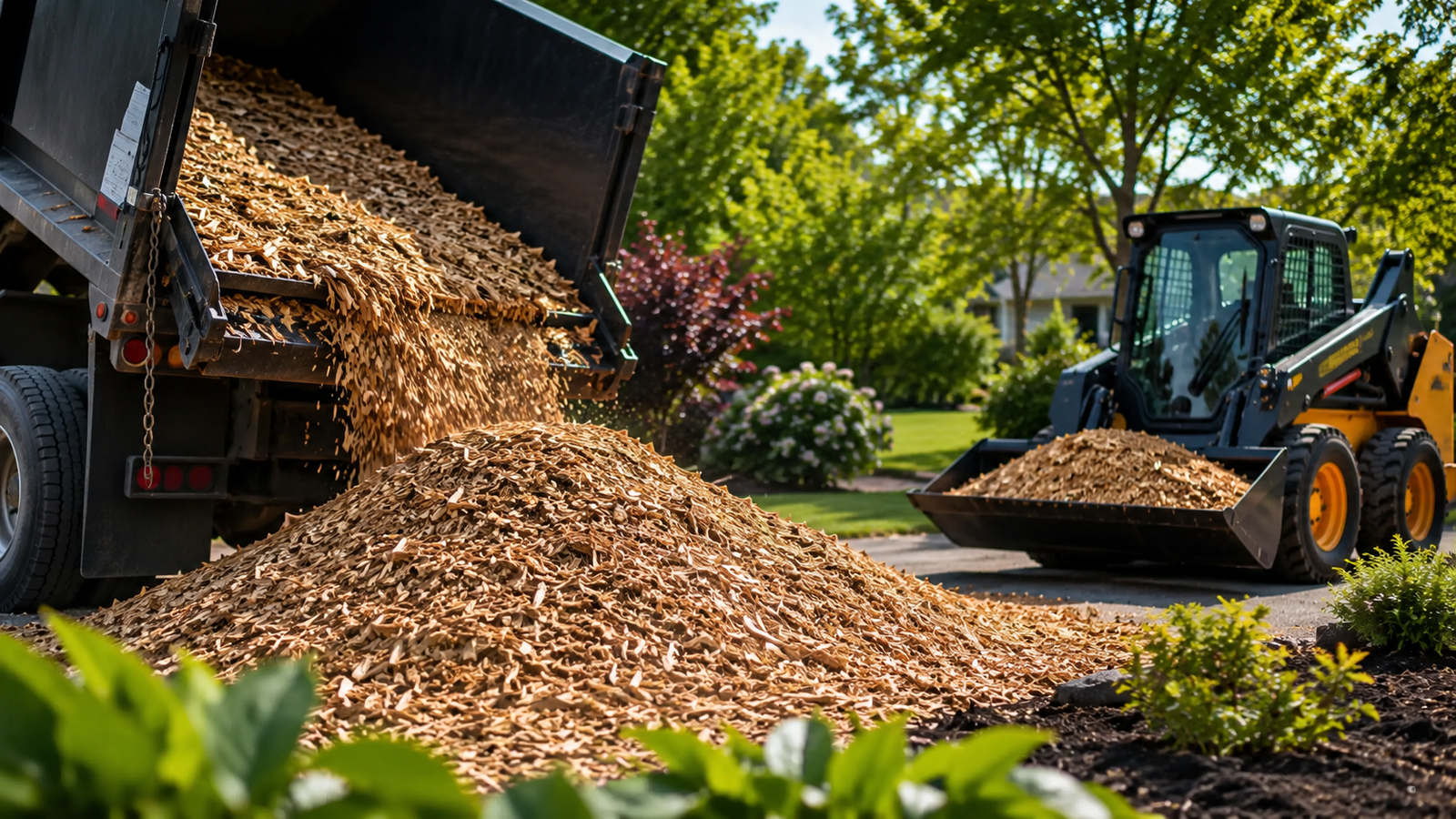
Wood Chips Near Me: Cost, Benefits & Delivery Options
Explore the benefits of natural wood chips for landscaping, tree beds, gardens, and pathways. Compare costs, delivery options, moisture retention, weed suppression, soil health improvements, and expert recommendations for selecting the right wood chips for your outdoor project.
Continue Reading →When to Make the Investment in Rubber
Recycled rubber is a problem-solving product designed for high-use utility areas where biological decay, routine washouts, and heavy foot traffic create constant maintenance headaches.
- Backyard play areas: Where maximum impact absorption is required to protect kids from falls.
- Steep, sloped drainage pathways: Where regular wood chips constantly wash away during heavy rainstorms.
- Commercial pathways: Where you want a completely zero-maintenance border that stays put for a decade.
If you are looking for high-quality wood chips near me to refresh your landscape beds this season, our team at KD Nursery keeps our yards fully stocked with premium, locally sourced materials ready for your property.
Take a close look at your budget, think about how much time you want to spend weeding this summer, and pick the ground cover that aligns with your property goals.
FAQs
Does rubber mulch attract harmful insects to my home’s foundation beds?
No. Unlike traditional wood products, recycled rubber offers zero nutritional value to insects, meaning it will not attract termites, carpenter ants, or earwigs to your home’s foundation. This makes it an excellent, pest-free border material for dry walkway zones.
Can I apply fresh wood mulch directly over an old layer of rubber mulch?
You should never mix these two materials together. Doing so creates a messy, unmanageable layer that prevents proper water drainage and makes future yard work incredibly difficult. If you want to change materials, completely shovel out the old layer first.
How often do I need to completely replace my wood chips?
You do not need to fully dig out and replace wood chips every year. Instead, simply add a fresh one-inch top-dressing over the faded areas each spring to restore color, maintain depth, and replenish the organic material as it decomposes.
Will heavy winter winds blow my rubber mulch across the lawn?
High-quality rubber nuggets are significantly heavier than wood fibers, meaning they stay firmly in place during heavy storms. They will not blow across your yard or wash away down-sloped garden beds during our intense Western New York seasonal shifts.
Does dyed wood mulch cause any long-term damage to garden soil?
Premium wood mulches dyed with natural carbon or iron-oxide bases are completely safe for your soil. As the team at KD Nursery always reminds homeowners, avoid using cheap, untreated construction scrap mulch, which can contain trace chemical contaminants that harm plants.
Does rubber mulch truly stop all weeds from growing in garden beds?
It stops airborne seeds from germinating on the surface, but it cannot stop aggressive perennial weeds from pushing up through the soil from below. For long-term success, you must install a heavy-duty commercial weed barrier fabric underneath the rubber layer.
Can I safely use a leaf blower over my rubber mulch beds?
Yes, you can easily use a leaf blower to clear fall leaves off your rubber beds. Because the individual rubber nuggets are dense and heavy, they stay put on the ground while light, dry autumn leaves lift away with minimal effort.
Deciding between rubber mulch vs wood mulch? Get premium local supplies and professional installation from the team at KD Nursery-contact us today!