If you’ve been searching for rubber mulch near me because you’re tired of replacing wood mulch every spring, you’re not alone.
Homeowners around Clarence ask us about it constantly, usually right after they’ve spent a Saturday raking out last year’s soggy, faded chips. Rubber mulch has a reputation for being the “set it and forget it” option.
Some of that reputation is earned. Some of it isn’t.
We’ve installed it in playgrounds, flower beds, and play areas all over this area, and we’ve also pulled it back out when it wasn’t the right fit. This guide walks through what it actually is, where it shines, where it falls short, and what it costs, so you can make a decision you won’t second-guess in a year.
We’ve been doing landscape work in the Clarence area long enough to see a lot of trends come and go.
Rubber mulch isn’t one of those fads. It’s been around for a couple of decades now, and the manufacturing has gotten a lot better over that time. Early versions had a strong chemical smell and shed color everywhere.
Today’s better products don’t do that nearly as much. We’ll walk through the honest version of this material below, not the version printed on a bag label.
What Is Rubber Mulch and How Is It Made?
Rubber mulch starts as recycled tires.
The tires get shredded, the steel belting is pulled out with magnets, and what’s left gets ground down into small chips or nibs.
Some manufacturers coat the pieces in a colored finish so the mulch looks like cedar, black walnut, or a deep brown hardwood. Others leave it plain black.
The process sounds simple, but the quality gap between a cheap batch and a well-processed one is bigger than most people expect. Cheap rubber mulch still has bits of steel wire in it.
Good rubber mulch is clean, uniform, and doesn’t shed a rubbery smell in the sun. We’ve handled both, and the difference shows up fast once it’s down in a bed.
Benefits of Using Rubber Mulch in Landscaping
The biggest selling point is longevity.
Wood mulch breaks down every season and needs a fresh layer. Rubber mulch can last eight to twelve years without needing to be topped off.
It doesn’t attract termites or carpenter ants the way wood chips can, which matters if your beds sit close to the house.
It also doesn’t wash away in heavy rain the way lighter wood mulch does, so it holds its place on slopes and around downspouts.
For families with kids, rubber mulch for playground areas cushions falls far better than dirt or grass, and it stays springy year after year instead of compacting into a hard crust. It’s a genuinely useful product when it’s used where it makes sense.
Potential Drawbacks and Safety Considerations
Rubber mulch isn’t perfect, and we’d be doing you a disservice if we didn’t say so. It doesn’t improve your soil the way wood mulch does, as it breaks down, there’s no organic matter feeding your plants.
It can get hot in direct summer sun, hotter than wood mulch, which matters if bare feet or paws are involved. There have also been questions raised about chemical leaching from tire rubber, and while current studies haven’t shown a clear health risk in outdoor landscape use, we always recommend keeping it away from vegetable gardens just to be safe.
If you’re chasing safe mulch for kids, look for rubber mulch that’s been tested and certified for playground use, not scrap rubber sold cheap online.
Rubber Mulch vs. Wood Mulch: Which Is Better?
Neither one wins outright.
Wood mulch feeds your soil, smells natural, and costs less up front, but it needs replacing every year or two and can wash out in a downpour. Rubber mulch costs more initially, sits in place for a decade, and doesn’t feed your beds at all.
If you’ve got flower beds full of perennials that benefit from decomposing organic material, wood is usually the smarter call. If you’ve got a play area, a dog run, or a spot where drainage and erosion are constant headaches, rubber earns its keep.
We often recommend a mix of wood mulch around the plantings and rubber mulch in the high-traffic zones where kids and pets spend their time.
Average Rubber Mulch Costs and Installation
Rubber mulch cost typically runs higher than wood, usually landing somewhere between $120 and $200 per cubic yard depending on color and quality, compared to $30 to $50 for standard wood mulch.
Installation adds labor, since rubber mulch needs a proper base, usually a weed barrier fabric underneath to keep it from mixing into the soil below.
A typical playground area of a few hundred square feet might run several hundred dollars in materials plus labor for grading and edging. It sounds steep next to wood mulch, but when you divide that cost across the eight-plus years it lasts, it often comes out cheaper per year than mulch you’re replacing annually.
When we quote a job at KD Nursery, we walk the property first rather than pricing off a phone call. Slope, drainage, existing edging, and how much sun the area gets all change what the install actually needs.
A flat, well-drained playground area is a straightforward job. A sloped bed near a downspout might need extra grading work before any mulch goes down, and that changes the number.
We’d rather give you an accurate estimate up front than a low number that grows once we’re on site.
Best Places to Use Rubber Mulch Around Your Home
We steer people toward rubber mulch in specific spots rather than blanket coverage across the whole yard.
Playground equipment and swing sets are the obvious ones; the cushioning matters, and kids don’t care what color it is. Dog runs benefit too, since rubber mulch doesn’t hold moisture or grow mold the way wood chips can under constant foot traffic.
Walkways and drainage-prone areas near downspouts hold up well because rubber doesn’t wash away. We’d steer you away from using it near vegetable gardens or anywhere edible plants are growing, and we’d skip it in beds where you actually want the soil-building benefits that wood mulch provides.
Maintenance Tips to Extend Rubber Mulch Lifespan
Rubber mulch is low maintenance, not no maintenance. Leaves and debris will collect on top of it, especially under trees, and raking it out a couple of times a year keeps it looking fresh and prevents mold from building up underneath the debris layer.
Fading happens slowly over the years, mostly from UV exposure, so a spot in full sun will lose its color faster than a shaded bed. If it starts to smell rubbery in extreme heat, a quick hose-down usually knocks that back down.
Check the edging every spring too, since rubber mulch can migrate out of a bed over time if the border isn’t holding it in.
Our crew at KD Nursery gets calls every spring from folks who installed it themselves a few years back and just need help resetting the edging. It’s a quick fix when it’s caught early.
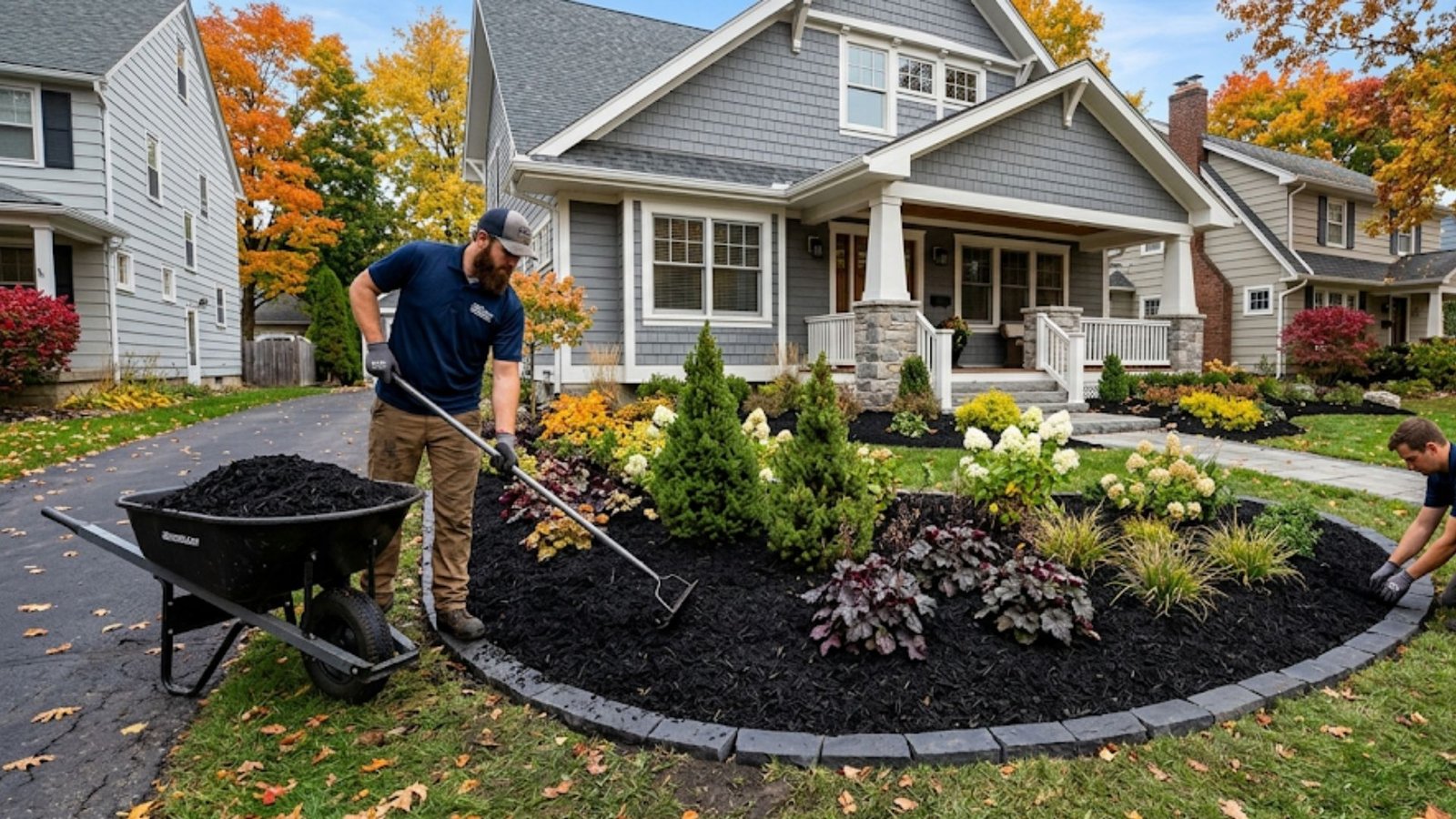
How to Use Black Mulch for a Modern Landscape Design
Discover how black mulch creates bold contrast, suppresses weeds, retains soil moisture, and enhances the appearance of flower beds, shrubs, and walkways. Learn practical design ideas and maintenance tips for achieving a clean, contemporary landscape throughout Western New York.
Continue Reading →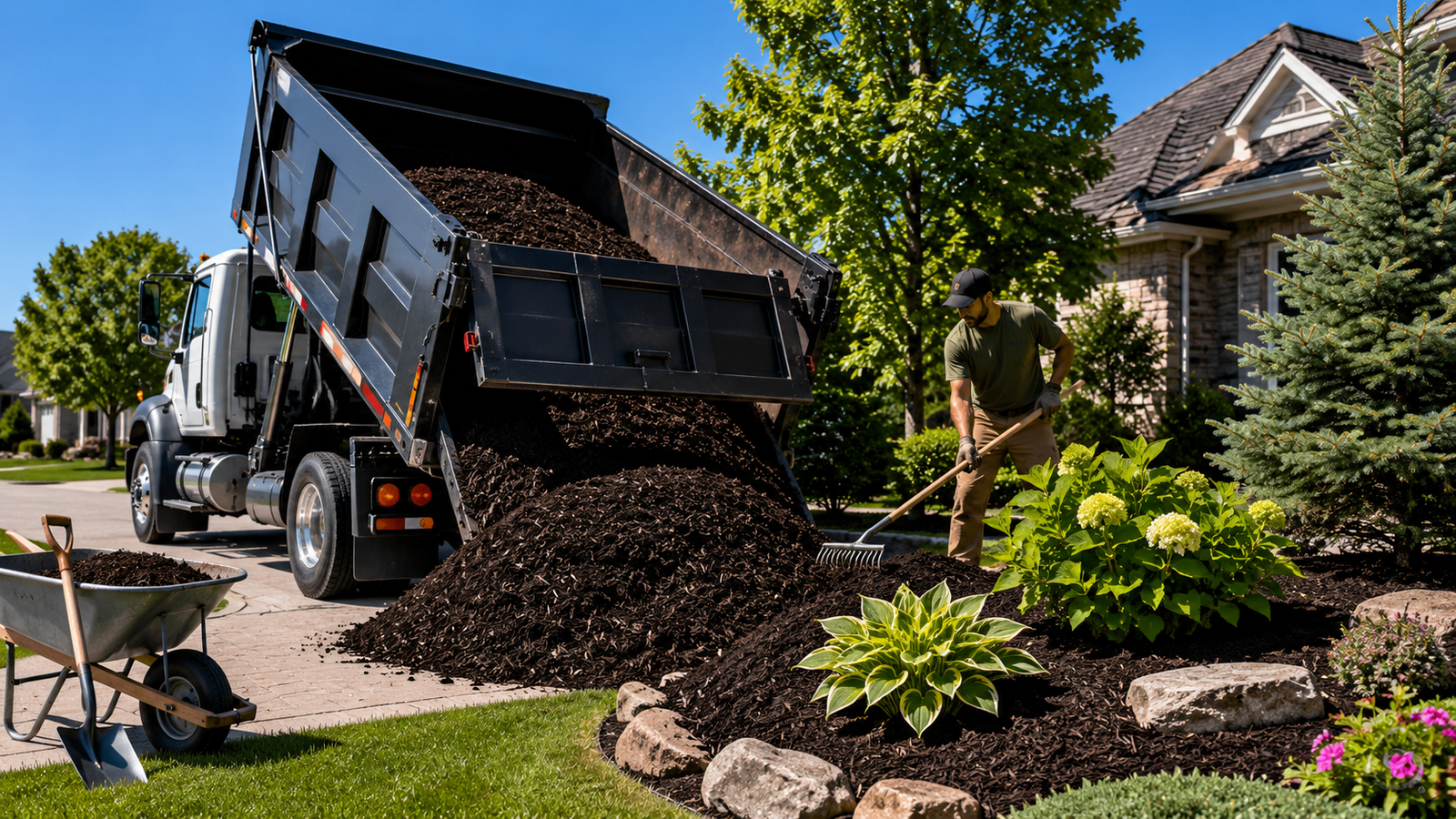
Fast Mulch Delivery in Buffalo, NY: Cost & Installation Tips
Learn what influences mulch delivery costs, how much material your landscape needs, and the benefits of professional installation. Explore mulch types, coverage estimates, and expert tips for improving curb appeal while protecting gardens and planting beds across Buffalo.
Continue Reading →Where to Buy Rubber Mulch Near You
Once people decide rubber mulch is right for their property, the next question is where to buy rubber mulch near me without ending up with the cheap, wire-flecked stuff.
Big box stores carry it, but the quality varies bag to bag, and matching colors across multiple bags can be a headache. We source ours through suppliers we’ve vetted over years of installs, which means consistent color and clean, properly processed rubber every time.
At KD Nursery, we can help you figure out how much you need, deliver it, and install it correctly with the right base underneath so it performs the way it’s supposed to.
If you’re in Clarence and thinking about rubber mulch for a playground, a dog run, or a problem drainage spot, we’re happy to walk your property and give you a straight answer on whether it’s the right call.
FAQs
Is rubber mulch safe for kids to play on?
Yes, when it’s certified playground-grade rubber mulch. It cushions falls better than dirt or wood chips and holds up under constant foot traffic. Look for products tested to playground safety standards rather than generic scrap rubber, especially if young children will be playing on it daily.
How long does rubber mulch actually last?
Most quality rubber mulch lasts eight to twelve years without needing to be topped off. That’s a big difference compared to wood mulch, which typically needs replacing every one to two years as it breaks down and loses its color in the sun.
Does rubber mulch attract bugs or pests?
No, rubber mulch doesn’t attract termites, carpenter ants, or other wood-loving pests the way wood chips can. It also won’t grow mold or fungus the way damp wood mulch sometimes does, which makes it a solid choice near foundations.
Can rubber mulch be used around vegetable gardens?
We don’t recommend it. Rubber mulch doesn’t feed your soil as wood mulch does, and there are still open questions about chemical leaching near edible plants. Stick with wood mulch or compost in vegetable beds and save rubber for play areas.
Why does rubber mulch cost more than wood mulch?
The manufacturing process is more involved, since tires need shredding, sorting, and cleaning before they’re usable. You’re also paying for something that lasts a decade instead of a season, so the higher upfront cost evens out over time.
How do I find the best rubber mulch near me?
The quickest way is to search Google Maps. Read local nursery websites rather than big box stores to find premium wire-free options, and check Google reviews for mentions of bulk delivery.
Will rubber mulch fade or change color over time?
It will fade gradually, mainly from UV exposure, with sunnier spots fading faster than shaded ones. Quality rubber mulch holds its color far longer than wood mulch fades, though, often keeping a decent look for several years before it needs refreshing.