Every spring across Western New York, homeowners deal with patchy, crabgrass-choked yards ruined by our tough lake weather. Dumping fertilizer on a dying lawn year after year is just throwing good money down the drain.
If you want a shortcut to a perfect yard, investing in high-quality sod in Buffalo, NY, gives you an instant, weed-free space without wasting months messing around with grass seed. But out here, you can’t just throw fresh turf onto the dirt and hope for the best.
Between our heavy, dense soil and unpredictable weather, you need a solid plan to make it work. Here is exactly what it takes to get a healthy, thriving lawn, straight from the crew at KD Nursery.
What Is Sod Installation & Why Choose It
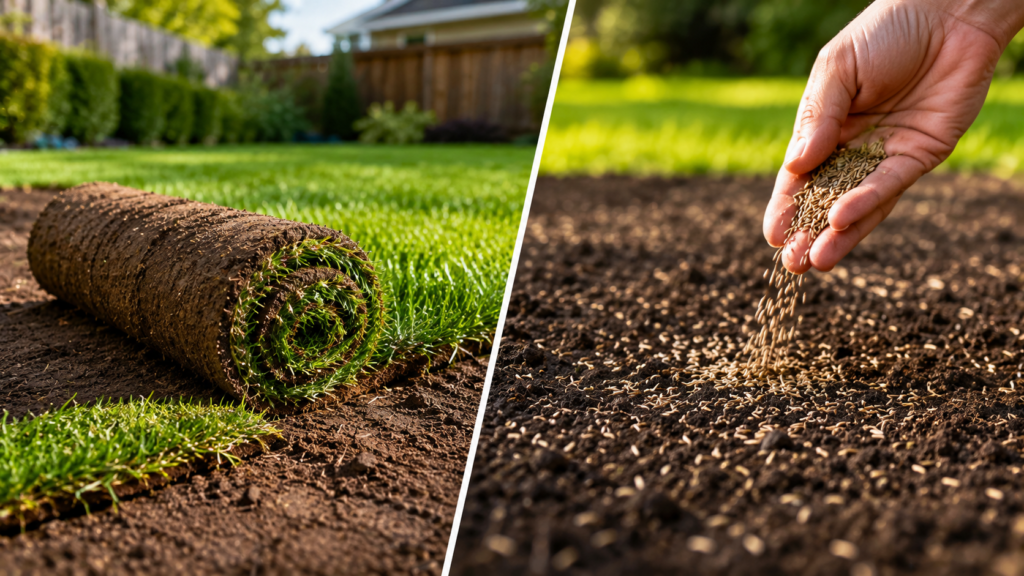
When we talk about installing sod in Buffalo, NY, we mean transplanting mature, farm-grown grass that’s harvested with a thin layer of soil and held together by its own root mat. Think of it as buying a finished yard rather than starting from a tiny seed.
For most local homeowners, the biggest draw is speed. Seeding a lawn takes months of babysitting, and if a heavy thunderstorm rolls off Lake Erie right after you plant, your expensive seed washes straight into the street. Sod gives you an instant green yard that chokes out weeds from day one.
More importantly, it solves a lot of problems with our local terrain. If you live on a slope near the Niagara Escarpment or have a yard that turns into a swamp every April, sod builds a tight root network fast enough to stop erosion immediately. It’s an investment, but it protects your property and saves you years of frustration trying to nurse weak grass to life.
Best Time to Install Sod in Buffalo, New York
Timing is everything around here. If you try to lay turf during a dry, blistering July heatwave, you’ll spend a fortune on your water bill just to keep it from burning up. On the flip side, working too late in November means the roots won’t lock in before the ground freezes solid.
The absolute best window to lay sod in Buffalo, NY weather is early autumn, from late August through October. During these months, the summer heat breaks, the air cools down, and we get regular rain. The soil stays warm, which gets the roots digging deep before heavy winter snow hits.
Your second-best window is early spring, from late April to early June. The ground is thawed, and spring showers handle the heavy watering for you. Just don’t work the ground when it’s completely waterlogged, or you’ll pack our dense soil into a hard brick layer that roots can’t break through.
Step-by-Step Sod Installation Process
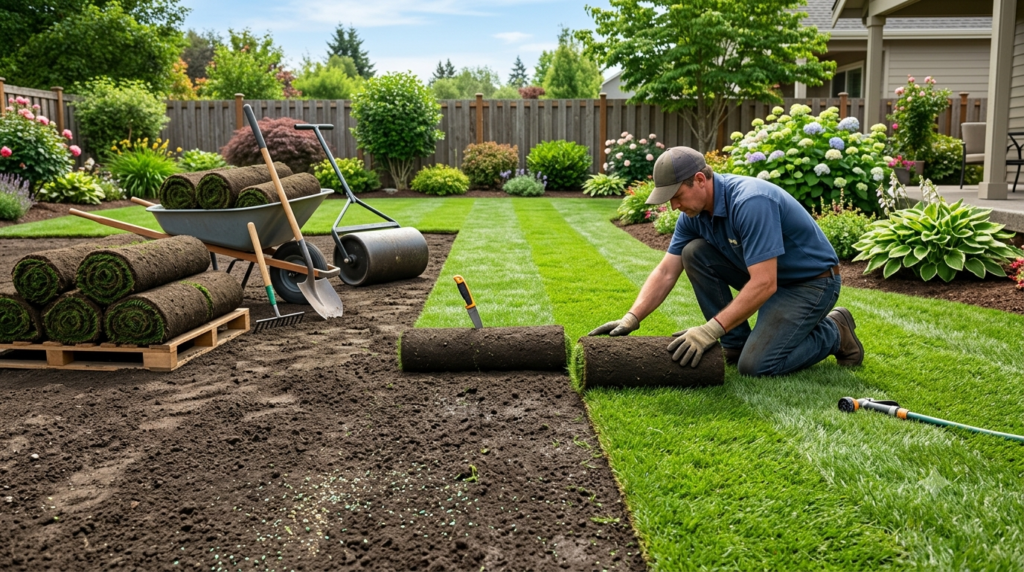
- Site Clearing and Grading: We scrape away old thatch, weeds, rocks, and debris. Then, we re-grade the entire area so water flows away from your home’s foundation instead of pooling.
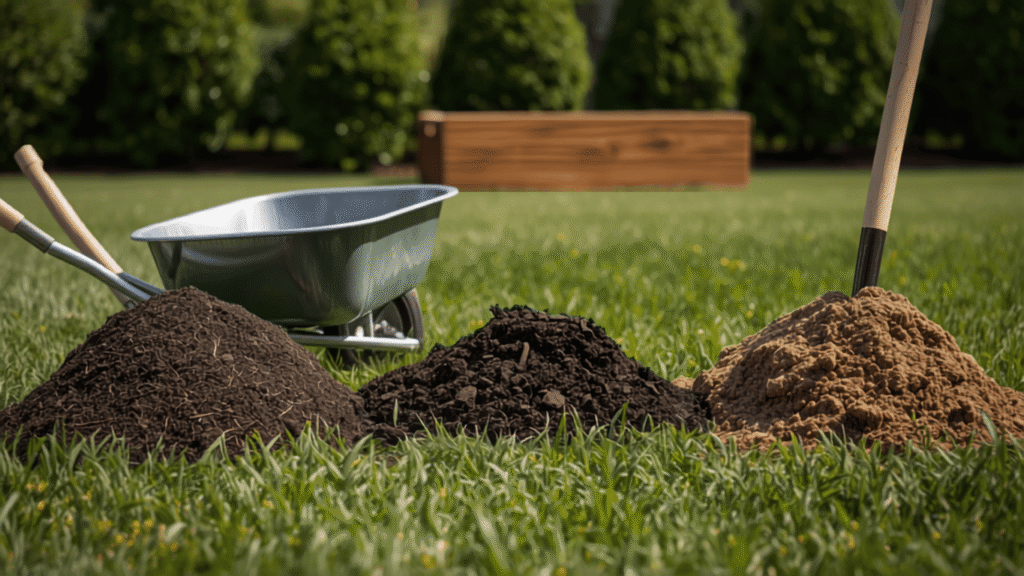
- Soil Preparation: Buffalo soil is notorious for being heavy and dense. We rototill the top few inches and blend in organic compost or topsoil to improve drainage and add vital nutrients.
- Finishing the Bed: We rake the dirt smooth and lightly roll it to firm up the surface. The soil bed must sit an inch below walkways and driveways so the finished grass sits flush.
- Laying the Turf: We lay the rolls in a staggered, brick pattern to minimize visible seams. Edges are tightly butted together without overlapping or leaving gaps for weeds to break through.
- Rolling and Tamping: Once the turf is down, we run a water-weighted roller across the lawn to flatten the roots directly against the prepared topsoil, eliminating destructive air pockets.
- Initial Deep Soak: Within 30 minutes of laying the first piece, water hits the grass. We soak it thoroughly until the underlying soil is damp to lock the roots in place.
Sod Installation Cost Breakdown
Around here, a professional lawn installation costs Buffalo homeowners typically pay between $1.50 and $3.50 per square foot. Your exact quote depends on your yard’s total square footage, how much grading and dirt work we need to do, and the turf blend.
| Yard Component / Service | Average Cost Range (Per Sq. Ft. / Project) | What It Includes |
| Sod Material Only | $0.45 – $0.85 per sq. ft. | Premium turf cut fresh daily at KD Nursery |
| Site Prep & Soil Amending | $0.50 – $1.20 per sq. ft. | Rototilling, grading, and adding topsoil |
| Labor & Installation | $1.00 – $2.00 per sq. ft. | Professional laying, rolling, and cleanup |
| Small Yard Total (approx. 2,000 sq. ft.) | $3,800 – $5,500 | Full service for typical city lots |
| Average Suburban Yard (approx. 5,000 sq. ft.) | $7,500 – $11,000 | Full service for larger residential plots |
DIY vs. Professional Installation
It’s tempting to search for where to buy sod near me, rent a truck, and tackle this over a weekend. But before you call up friends with the promise of free pizza, think about what a DIY mistake actually costs you down the road.
| Factor | DIY Approach | Professional Installation |
| Upfront Cost | Lower (pay only for tools and materials) | Higher (includes skilled labor and equipment) |
| Physical Labor | Extremely heavy (non-stop lifting and hauling) | None. Our crew handles the grunt work |
| Equipment Needed | You have to rent sod cutters, tillers, and rollers | We bring commercial-grade machinery |
| Risk of Failure | High (gaps, bad grading, dried-out turf) | Zero (backed by our crew’s experience) |
| Time Investment | Multiple grueling weekends | Usually wrapped up in 1 to 2 days |
Watering & Maintenance After Installation
- The Critical First Fortnight: Once our sod installation Buffalo, NY crew finishes laying the turf, your main job is moisture management. For the first two weeks, keep the underlying soil consistently damp. Water two to three times a day for 15 to 20 minutes per zone. Never water late at night, as trapped moisture invites fungal diseases.
- Transition to Deep Watering: By week three, the roots should knit into the dirt. Test this by gently tugging a corner of a roll. If you feel resistance, it’s working. Now, water less frequently but more deeply, hitting it with about an inch of water per week, split into two sessions. This forces roots to stretch deep, making your lawn drought-resistant.
- The First Mow: Don’t rush to get the mower out. Wait until the grass hits four inches tall, and make sure your mower blades are razor-sharp. Dull blades will rip young plants right out of the ground. Set your deck high and never cut off more than a third of the grass blade at once.
Common Mistakes to Avoid
The biggest disaster we see is guys dropping turf straight over old weeds and hard, un-tilled ground. Within a few months, those old weeds push right through the seams, and the grass dies because the roots hit a wall of hard dirt.
Drying out during the very first week will permanently ruin your new roots. If you see the edges of the rolls start curling up and turning brown, you need to get the water on them immediately.
Lastly, do not dump heavy chemical fertilizers on the lawn right after planting. Young roots are delicate and burn easily. Stick to a gentle starter fertilizer mixed into the soil bed during our prep work, and let the grass settle in before you feed it again.

Why Emerald Green Arborvitae Is Clarence’s Favorite
Learn why Emerald Green Arborvitae is a top choice for homeowners in Clarence, NY. This popular evergreen provides year-round privacy, rich green color, low maintenance requirements, and an elegant appearance that enhances landscapes throughout every season.
Continue Reading →
The Best Winter Plants for Buffalo Homes: The Boxwood
Discover why Boxwood shrubs are among the best winter plants for Buffalo landscapes. Explore their evergreen beauty, cold-weather resilience, easy maintenance, and ability to provide structure and curb appeal throughout the winter months.
Continue Reading →How to Ensure Long-Term Lawn Health
To keep your investment looking great year after year, you have to build a routine around Buffalo’s seasons. Because our soil is so heavy and dense, it naturally compacts under the weight of deep winter snow.
Core aeration every single fall is non-negotiable out here. It pulls plugs out of the dirt so oxygen, water, and nutrients can actually get down to the root system.
Overseeding every few years keeps the turf thick, leaving zero room for crabgrass to take over. Finally, change your watering habits with the weather. A deep soak once a week during dry spells is always better than a light daily sprinkle.
FAQs
How much does it typically cost to install a new lawn around here?
Around here, a professional lawn installation costs Buffalo homeowners typically pay between $1.50 and $3.50 per square foot. For a standard 3,000-square-foot suburban yard, you’re usually looking at $5,000 to $8,500, depending on how much grading and dirt prep our crew has to do first.
Can I lay fresh turf on top of my existing patchy grass to save time?
Throwing new turf over old weeds and grass suffocates the roots. The old layer rots underneath, breeds nasty fungus, and kills your new yard. We always scrape the old lawn down to clean dirt so the roots can actually lock in.
How many days do I need to wait before my kids or pets can play on the new grass?
Keep your kids and dogs off the grass for at least two to three weeks. Those new roots are incredibly fragile and need time to dig into the soil. Walking on it too early shifts the rolls out of line and leaves deep ruts in the soft mud underneath.
How often and for how long should I run my sprinklers right after installation?
Soak it two to three times a day for about 15 to 20 minutes per section for the first two weeks. You want the dirt underneath to stay completely wet. Just don’t water late at night; trapping that moisture in the dark invites mold and disease.
Which specific type of grass blend handles the Buffalo climate best?
Here at KD Nursery, we grow a heavy-duty mix of Kentucky Bluegrass, Perennial Ryegrass, and Fine Fescue. The bluegrass handles heavy foot traffic and heals itself, while the fescue beats the shade. It’s a tough blend we’ve perfected to survive our freezing, snow-heavy winters and dry summers.
Is it actually possible to install a new lawn during the hot summer months?
You can do it, but mid-summer installs are risky and will absolutely spike your water bill. Intense July and August heat shrinks the rolls right on the pallets before we can even get them down. If we lay it then, you have to water all day aggressively to keep the roots from scorching.
What should I do if I notice the seams between the rolls are starting to gap or turn brown?
Gaps and brown edges mean your grass is thirsty and shrinking. Crank up your watering schedule immediately so the turf plumps back up and closes those lines. We also recommend throwing a light layer of clean topsoil over the open seams to protect the exposed roots until they heal.