By choosing to adopt native garden design, you are opening yourself to a landscape that is in harmony with nature rather than being in conflict with it.
Are you wondering how to create a native plant garden or what the advantages of landscaping with native plants are? You are going to find lots of inspiration and advice here.
In this blog, we shall discuss the process of making our gardens alive with native plants, the basics of it, as well as the hands-on concepts of DIY, and the planning concepts of front and back yard landscape.
Starting Your Design: Principles for a Native Garden Design
You can follow these DIY design principles if you’re planning a native plants garden.
- Right plant, right place – Select a native plant that is appropriate to your site, sun or shade, wet or dry soil, slope or level ground. Incompatibility causes additional care and substandard outcomes.
- Layering and structure – Even in a native garden, one would want structure, groundcovers, perennials, shrubs, and possibly small trees to guide the eye through the space. This is characteristic of gardening with native plants.
- Color, texture, and seasonality – Native can be understood to mean simply grasses, although a sensitive native plant garden can have outbursts of color, contrasting foliage, winter interest, and so on.
- Planting effect – Planting in drifts or masses of the same species. Grouping to create effect and ecology can also aid in making an impression, as well as pollination and wildlife (more effective than solitary plants).
- Transition zones and edges – Consider edges of your planting beds, intercessions with lawn or path, and how native plantings will either merge with or be contrasted with existing features (in the front yard in particular).
- Maintenance mindset– A native plant garden does not usually need as much care as an established one, although it is not maintenance-free. The establishment, proper spacing, and knowledge of seasonal behaviour remain important in weed control.
DIY Design Ideas for Your Native Plants Garden Design
To have a beautiful and environmentally friendly outdoor space, the first step is to ensure that the plants that are chosen are natural in your setting and therefore can be easily adapted.
The aesthetic native garden design will improve the beauty of your home, as well as assist in attracting pollinators and wildlife in the neighborhood. Planting native plants in landscape design will not only be a sustainable garden that promotes the beauty of Western New York but also minimize maintenance, water consumption, and chemicals.
These are creative and practical landscaping ideas with native plants that you can attempt, and they are good for DIY gardeners in Buffalo, NY.
a) Meadow-Style Patch
Turn a sunny part of your yard into a miniature meadow full of color and texture. Plant indigenous grasses such as Little Bluestem and wildflowers such as Purple Coneflower and Black-eyed Susan.
This is a method of native plants garden design so that they produce a natural flow to your landscape and provide a gentle motion to the wind in the grasses. The first year is spent in the routine of weeding to help your plants establish.
In the second season, your meadow will be self-sustaining, which will supply butterflies and bees with continuous flowers.
b) Pollinator Corridor or Hedge
In the event that you have a fence line or a boundary to fill in, come up with a colorful native plants landscape design that doubles up as a privacy hedge and a wildlife corridor.
The flowering shrubs, such as Ninebark and Winterberry Holly, should be mixed with the favorite pollinators, Butterfly Weed and Purple Coneflower.
The design aids the existence of the beneficial insects and birds during the growing season. It is a great illustration of native plant garden ideas that can be useful and also beautiful.
The ultimate outcome is the creation of a living fence that varies throughout the seasons, providing flowers, fruit, and texture throughout the year.
c) Rain Garden or Water-Wise Patch
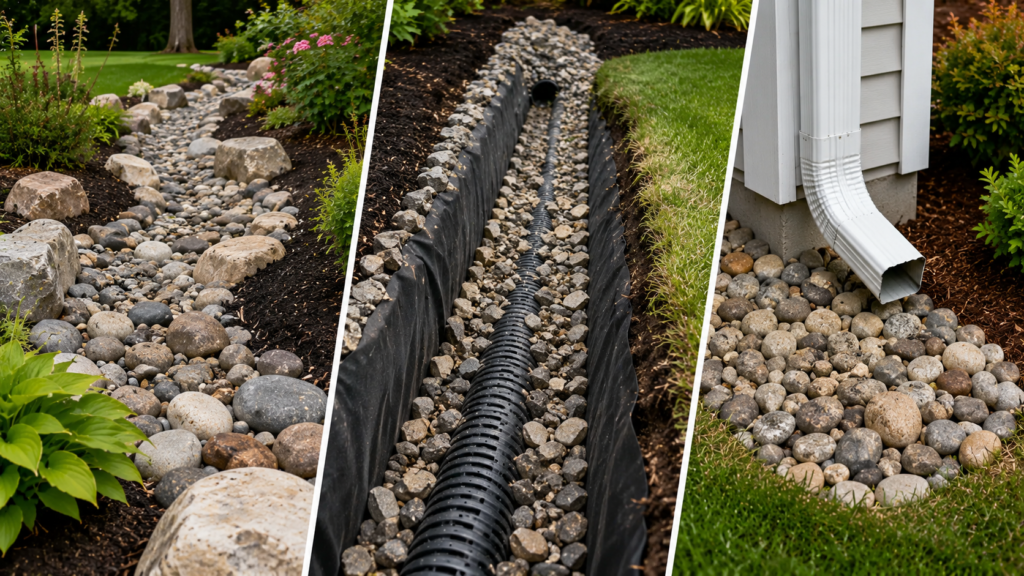
In case your yard is low-lying or in case there is a lot of runoff, then you should use a rain garden. The concept of this kind of native plant garden is that it handles stormwater in a natural way and also provides aesthetic appeal.
Native plants that prefer moisture, e.g., Blue Flag Iris, Swamp Milkweed, and Little bluestem. Their extensive root systems absorb the surplus water, prevent erosion, and aid in pollination.
The benefit of landscaping using native plants is that it is functional, sustainable, and beautiful.
d) Front Yard Welcome Bed
The front yards are the most suitable places to create a strong first impression. Front yard native landscaping ideas are capable of providing a polished and natural look. Substitute a strip of turf or annuals with clumps of Black-eyed Susan, and Little Bluestem, staked by Ninebark shrubs.
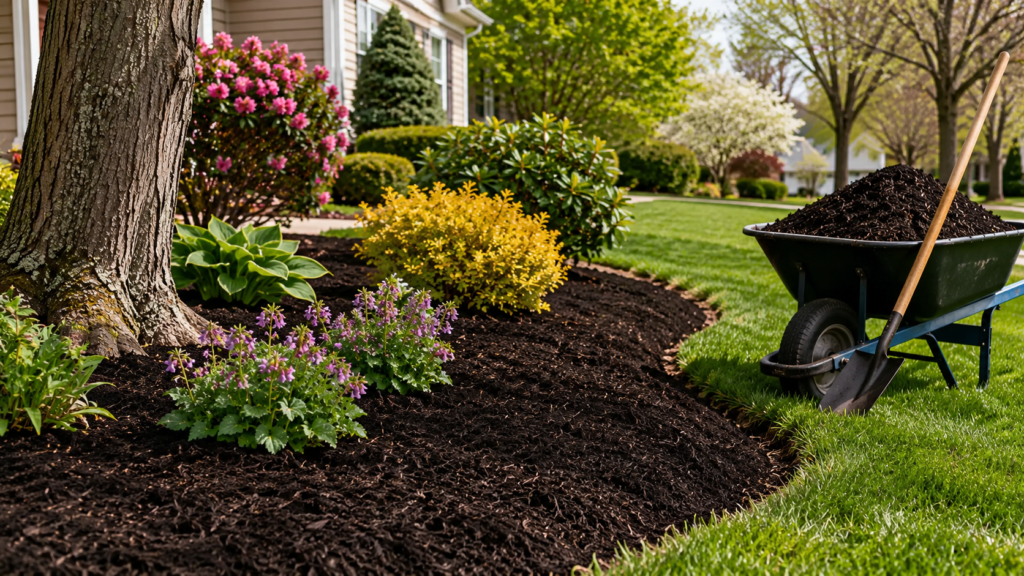
Its sharp edge and compost ensure that it is clean, and the indigenous plants provide long-term color and texture.
This is a low-maintenance, drought-tolerant, and aesthetically appealing native plants garden design that is ideal for enhancing curb appeal as well as benefiting pollinators.
e) Woodland or Shady Corner Garden
Dark places do not have to be dull. Make a serene haven with native plants that are adapted to low light. Combine Pair Columbine with Pennsylvania Sledge in the soft-ground cover and seasonal color.
Add Winterberry Holly to the mix to add vertical structure and sparkling winter berries. This idea of gardening with native plants shows that even shady areas can be turned into a green, welcoming, and simple-to-maintain space.
f) Buffalo-Friendly Plant Choices
To have an attractive and sustainable local native garden design in the city of Buffalo, NY, one should use local-adapted species. Purple Coneflower, Black-eyed Susan, Butterfly Weed, and Little Bluestem are all excellent choices in sunny areas.
Add Ninebark or Winterberry Holly to provide structure; add Columbine or Pennsylvania Sedge to shady places. These are native plants that can be planted naturally, require minimum maintenance, and can be found at a native plants garden center in Buffalo, NY.
A combination of these concepts will allow you to have a functional and beautiful outdoor space. Native plants landscape design enables the integration with nature when you are creating a front-yard pollinator bed, a backyard meadow, or a rain garden, and helps the local ecosystems.
The individual plants also contribute well to the climate of Buffalo, bringing beauty, strength, and home, all the attributes of intelligent gardening with native plants.
For more insights: Native Plants of New York City: NYC Parks
Designing for Front Yard vs Backyard
Although the same concepts hold, front yard and backyard areas should be used differently and thus landscaped with slightly different design considerations in native plants landscaping.
Front yard native landscaping ideas– It is more open, so you will need to balance between aesthetics and functionality in your front yard. Select plants that remain in bounds, appear well, and give structure all year round. Introduce local flora to bed outlines around the entrance and the walkway, maybe to frame the front door.
Indigenous shrubs can be used as a structure, and perennials as a source of color. Regarding front yard native landscape designs, consider the aspect of visibility, curb-appeal, and the way your native plant selections fit the house.
Backyard native landscaping ideas– Here you can be more flexible with larger and looser plantings and can have more ecological emphasis (habitat, pollinators, relaxing spaces). You may amalgamate a patch of meadow, a sitting area in a clump of indigenous bushes, or a rain-garden element.
Backyard landscaping with native plants may be possible to experiment even more and to cross the boundaries between wild and formal areas, consider a delimited patio area near a running native border.
How to Design a Native Plant Garden: Step-by-Step
The following is a basic outline of the steps that you can use to create your own native plant garden.
Check your area well:
–Which places get sun and which places get shade
-Type of soil, how drainage occurs after a rain.
-Already existing trees, shrubs, and plants you can use as cornerstones.
-Terrains, flat areas
Select a combination of the local species:
-Have one or two anchor shrubs, a few perennials, and groundcovers.
-In the case of local sourcing, I would visit a native plants garden center in Buffalo, NY (supposing you are in the area) or otherwise.
-Choose bloom times, heights, and textures.
Prepare bed shapes and planting groups:
-Sketch the planting areas.
-Large shrubs at the back or centre of the bed, smaller perennials in front, and groundcovers on the edge.
-Visual coherence: Use 3-5 plants of each species.
Soil and planting hole preparation:
-Strip turf where it is necessary; enrich soil where it is necessary (native plants are not fond of soils rich in nutrients).
-Plant in clusters, including mature size.
-Lightly mulch weeds, but not the plants.
Maintenance & monitoring:
-Hydrate habitually at the time of establishment (first 1-2 seasons).
-Plant frequently until plants cover.
-Once in place, it becomes cheaper to maintain (one of the advantages of native plant landscaping).
-Monitor the behavior of your plants: they may require thinning, definition of edges, or extensions.
Local-Focused Tip and Example
Consider visiting a native plants garden center in Buffalo, NY, if you live in Buffalo or the surrounding area. In this way, you can easily find plant species suitable for your garden. If your garden center is local, its plants are already adapted to the local climate and soil conditions. Plus, they will guide you in selecting the best.
Wandering where to find these native plants? Then this friendly blog is for you: How to find essential landscaping materials from best nurseries in Buffalo, NY?
Final Thoughts
If you’re looking for native garden design in Buffalo, NY, plants with regional adaptation are often stocked in a local garden centre, and they will be able to advise on which natives will grow well in your region.
As an example, one can change to front yard native landscaping ideas like using clumps of native prairie grasses, native flowering perennials, and shrubs along your front border as a strong first impression and ecologically intelligent.
Creating a native plants garden is not about replacing exotic shrubs with native ones, but re-assessing the way your local landscape is related to natural systems that surround it.
Native garden design can also be done with a careful sense of place, producing outdoor landscapes that are beautiful, easy to maintain, ecologically significant, and place-based.
With the above steps and by taking a look at the DIY ideas, no matter what you are working on, either a patch of meadow, pollinator corridor, or a rather sophisticated front-yard planting, you are well on your way.
In the Buffalo, New York area (or other areas with a similar temperate climate), you can visit a native plants garden center in Buffalo, NY, and buy suitable species.
FAQ:
Q1: How to design a native plant garden?
First, assess your site, plan the design, select plants suited to the region, then mimic the natural environment in your garden and plant. Incorporate different colour plants for more visual impact.
What are the benefits of landscaping with native plants?
Q2: As they are already adapted to the climate, low maintenance, water conservation, soil conservation, resistant to diseases, etc.,
Q3: Can I do backyard landscaping with native plants?
Absolutely. It will be a low-maintenance garden that even helps wildlife.